Japan issues landslide warnings as plum rain front and Typhoon 7 converge
Authorities urge extreme caution in western and eastern Japan as persistent rainfall and an approaching typhoon threaten infrastructure and public safety.
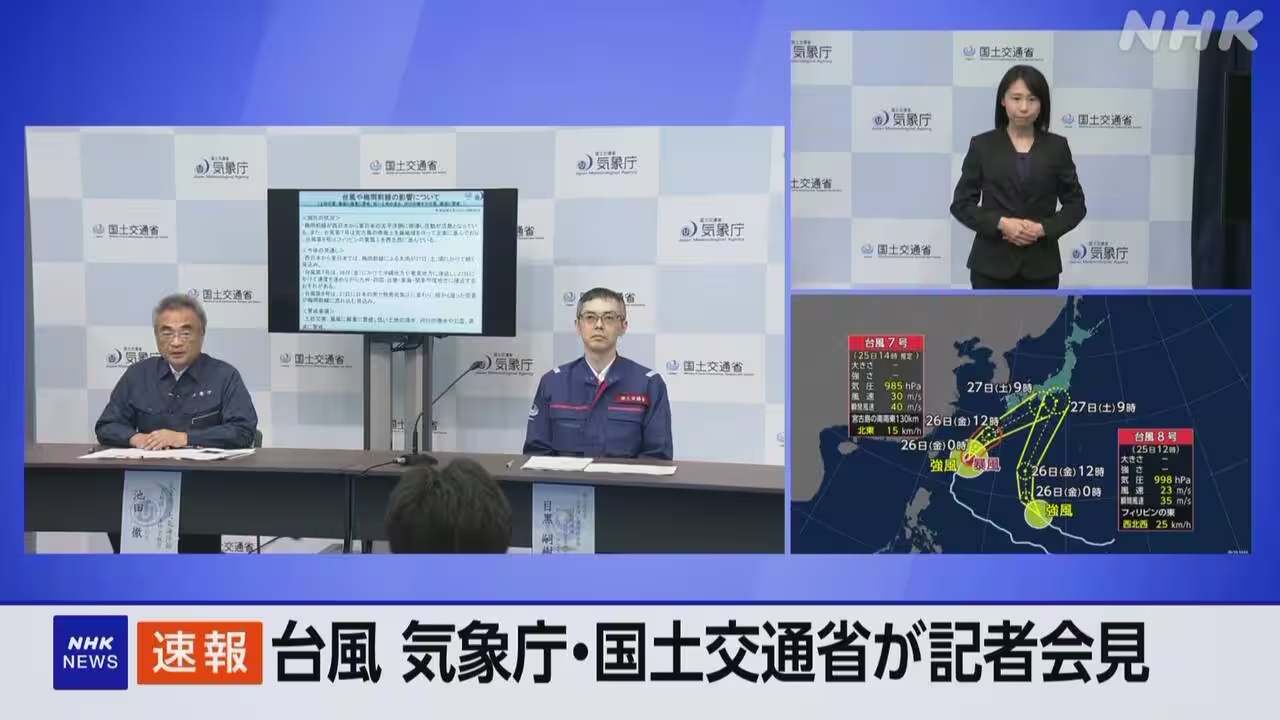
The Japan Meteorological Agency (JMA) and the Ministry of Land, Infrastructure, Transport and Tourism (MLIT) convened a joint press conference on 25 June 2026 to address the dual threat posed by the ongoing plum rain front and Typhoon 7. The briefing, held at 14:00 JST, served to coordinate safety warnings and outline the projected impact of these weather systems on national infrastructure and public safety.
Toru Ikeda, Chief Forecaster at the JMA, confirmed that the plum rain front is expected to persist, bringing heavy rainfall to the Pacific side of western and eastern Japan through approximately 27 June. This prolonged precipitation has already triggered a "Landslide Disaster Warning" in northern Kyushu, where heavy rain continues to fall due to the stalled front.
Concurrently, Typhoon 7 is projected to approach Okinawa over the next 24 hours. The convergence of the seasonal plum rain front and the typhoon’s approach marks a significant escalation in weather risks, particularly as June traditionally signals the beginning of the typhoon season in Japan. This follows Typhoon 6, which recently impacted Okinawa, the Amami Islands, and parts of Kyushu, Kanto, and Chubu.
The weather briefing coincided with recovery efforts in the Tohoku region following a magnitude 6+ strong earthquake in Aomori Prefecture. The seismic event resulted in four injuries in Aomori and additional injuries in Iwate Prefecture. By 14:18 JST, the Tohoku Shinkansen had resumed full-line operations after disruptions caused by the quake, indicating a rapid restoration of critical transport links.
Market indicators also reflected the day’s volatility, with the stock market recovering to the 72,000 yen range by 14:07 JST after a temporary rise of over 3,000 yen. As authorities maintain strict vigilance, the joint statement from the JMA and MLIT underscores the necessity for coordinated disaster preparedness across regions facing compounding environmental hazards.