Japan House of Representatives approves Health Insurance Act amendments targeting OTC-like drugs
The Ministry of Health, Labour and Welfare's proposal to shift costs for specific drug categories has passed the plenary session, marking a significant shift in the national health insurance framework.
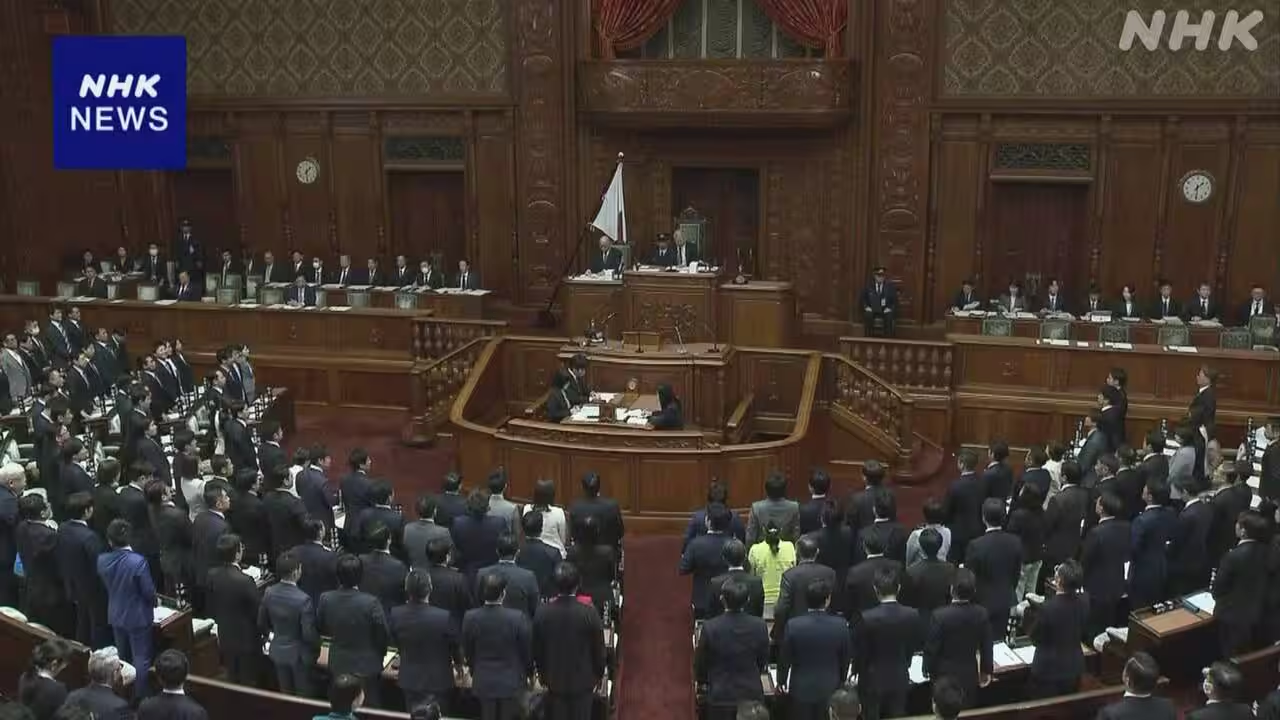
The House of Representatives has approved a proposed amendment to the Health Insurance Act and related laws, mandating additional out-of-pocket payments for patients prescribed medications containing ingredients or effects similar to over-the-counter products. The legislation, which received a majority vote from both ruling and opposition parties, was passed during a plenary session on 28 April 2026. This cross-party support represents a notable instance of consensus on this specific policy issue within the National Diet.
The measure specifically targets what are termed "OTC-like drugs," defined as prescription medicines that possess active ingredients or therapeutic efficacy comparable to those available without a prescription. By requiring patients to bear an additional financial burden for these specific categories, the amendment aims to alleviate the strain on the national health insurance system. The policy shift reflects a broader institutional move to redistribute costs for drugs that bridge the gap between prescription-only and general availability.
Following the vote in the lower house, the legislation has been formally transmitted to the House of Councillors for further consideration. Before this final approval, the Ministry of Health, Labour and Welfare had been engaged in discussions regarding potential exemptions for patients suffering from difficult-to-treat diseases. Reports from earlier in the month indicated that the government was weighing whether to exclude specific patient groups from the extra payment requirements, suggesting the current bill may represent a compromise on those earlier debates.
The passage of the bill in the House of Representatives is a necessary procedural step, though it does not yet guarantee the measure will become law. The legislation must still secure approval from the upper house, the House of Councillors, before it can be promulgated by the Emperor. The inclusion of opposition parties in the majority vote underscores the extent to which the policy has been debated and refined within the parliamentary process prior to this stage.
This development follows a series of reports emerging between 10 April and 24 April 2026, which detailed the ongoing deliberations concerning exemptions for vulnerable patient groups. The final decision to proceed with the amendment without explicitly detailing these exemptions in the initial summary suggests a firm stance on the structural adjustment of the health insurance model. The focus remains on the systemic reduction of the national insurance burden rather than individual case variations at this legislative juncture.
As the bill moves to the House of Councillors, the policy community will be watching closely to determine if the upper house will maintain the cross-party consensus or introduce further modifications. The definition of "OTC-like drugs" and the specific mechanisms for calculating the additional patient payments will be central to the next phase of deliberation. The outcome will ultimately define the new financial landscape for patients prescribed these specific medications under the amended Health Insurance Act.