Japan faces dual weather threats as Typhoon 6 approaches and heatwave persists
Widespread areas are expected to exceed 30 degrees Celsius on May 30, while Typhoon No. 6 brings heavy rain and strong winds to the south and central islands.
The Japan Meteorological Agency has issued forecasts indicating that severe heat will persist across Japan on May 30, with widespread areas predicted to experience hot days exceeding 30 degrees Celsius. The meteorological body defines a hot day as one where the maximum temperature reaches 30 degrees Celsius or higher, a classification that is expected to apply to numerous regions on the specified date.
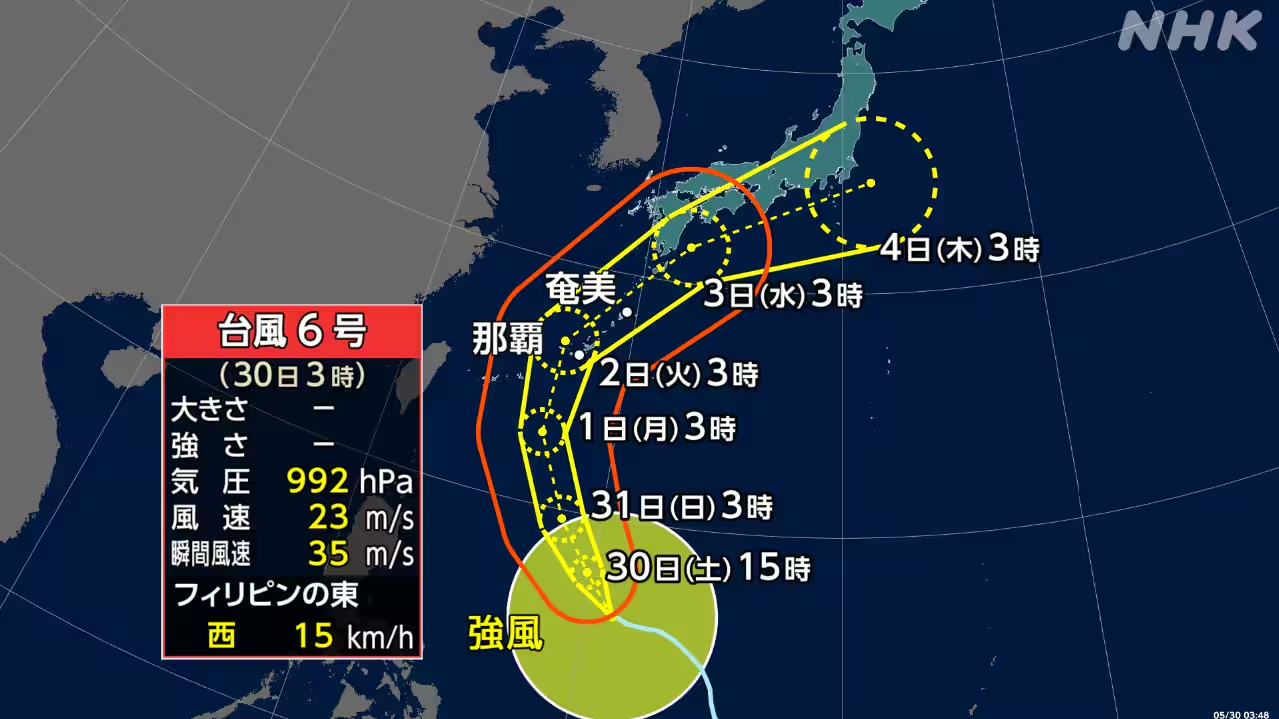
Concurrently, Typhoon No. 6 is forecast to approach the Okinawa and Amami Islands between May 1 and 2. The storm is expected to arrive accompanied by a zone of violent winds, necessitating heightened vigilance in those southern territories. The Japan Meteorological Agency remains the primary source for these trajectory and intensity projections.
As the typhoon moves northward, the approach is also expected to bring heavy rain to regions stretching from Kyushu to the Kanto and Chubu areas. This development follows previous reporting from May 29, which indicated concerns about heavy rainfall in these same regions prior to the storm's arrival.
The dual weather event presents a complex operational challenge for disaster management and public safety authorities. While the southern regions contend with the immediate physical impacts of the typhoon, including violent winds, the broader national grid faces the strain of sustained high temperatures.
The exact intensity and precise path of Typhoon No. 6 remain subject to change as the storm approaches. Similarly, the extent of heavy rainfall in the Kyushu to Kanto and Chubu regions is a forecast that may vary, requiring continuous monitoring by the Japan Meteorological Agency and local governance bodies.