Japan enacts 3.1 trillion yen supplementary budget to counter Middle East tensions
Prime Minister Takako Hashimoto links economic stability to currency confidence as government responds to geopolitical pressures.
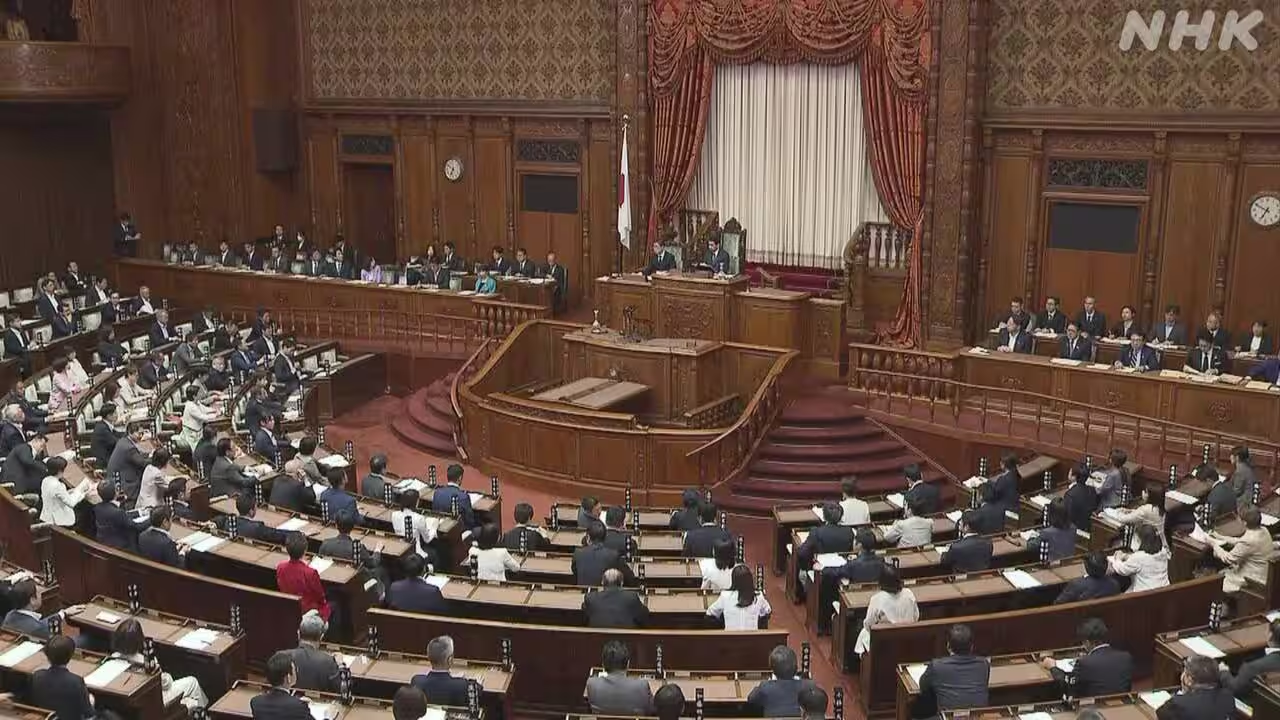
Japan’s House of Councillors has approved and enacted a supplementary budget for the current fiscal year, designed to address economic and geopolitical pressures stemming from tensions in the Middle East. The legislation, which carries a general account total exceeding 3.1 trillion yen, was passed during a plenary session on 5 June 2026.
The bill secured passage through a majority vote from the ruling Liberal Democratic Party (LDP), Nippon Ishin no Kai, and the Democratic Party for the People. The approval marks the final legislative step for the supplementary budget, which the government has framed as a necessary response to the volatile security environment in the Middle East.
Prime Minister Takako Hashimoto articulated the administration’s rationale during the proceedings, stating that achieving a strong economy is intrinsically linked to maintaining confidence in the yen. Her comments underscore the government’s focus on stabilising domestic financial sentiment amidst external geopolitical shocks, although the source material does not detail the specific allocation of funds between defence measures and economic support.
The enactment of the budget occurs against a backdrop of broader political friction within the Diet. Ongoing discussions regarding the reduction of Diet members have drawn sharp criticism, with the LDP proposing cuts limited to proportional representation blocks—a move opposed by opposition parties. This legislative hurdle coincides with the budget’s passage, highlighting the complex political landscape in which the fiscal measure was negotiated.
Geopolitically, the budget’s timing follows a ceasefire agreement regarding Lebanon, although hostilities between Israel and Hezbollah continue. The government’s decision to allocate resources in response to these tensions reflects a strategic prioritisation of regional stability, even as historical US hardline policies towards Iran, rooted in events from 47 years prior, continue to influence the broader regional dynamic.