Japan declares emergency response as magnitude 7 earthquake strikes Kumamoto
The Japan Meteorological Agency recorded maximum seismic intensity of 7 in Uki City and Hikawa Town, prompting widespread evacuation orders and a halt to rail services as authorities assess potential casualties.
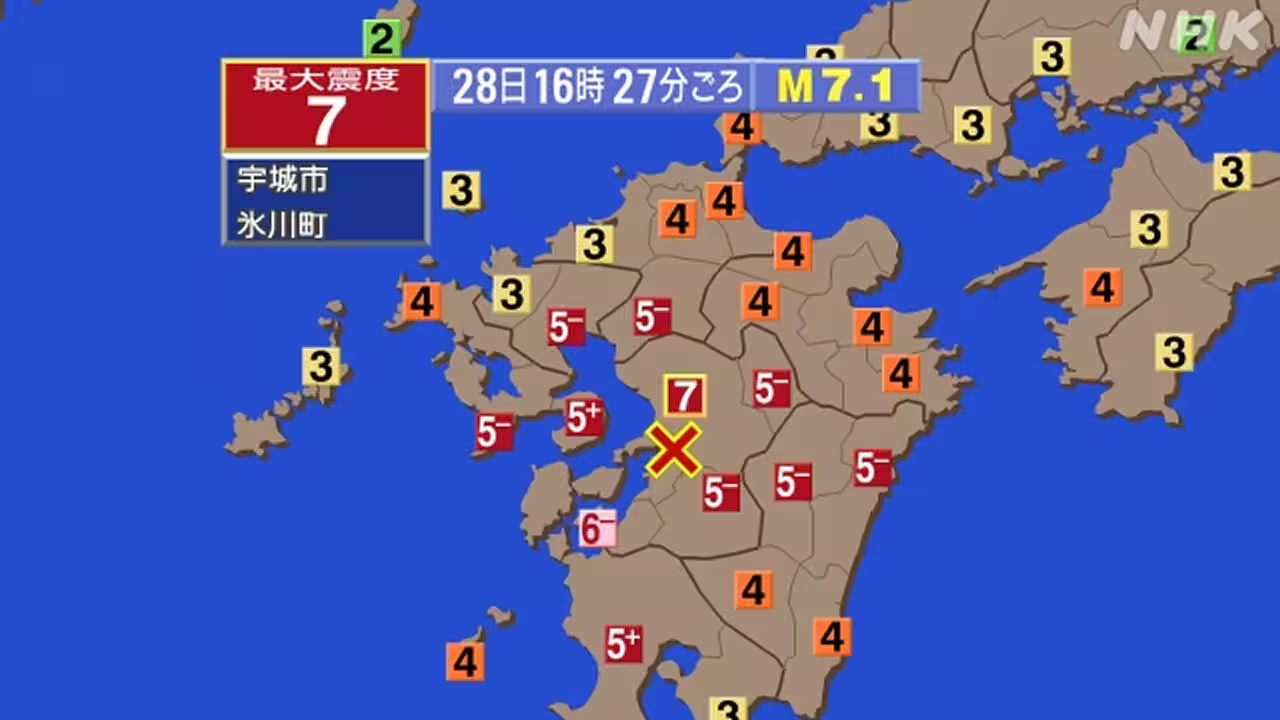
A magnitude 7 earthquake struck the Kumamoto region of Kumamoto Prefecture at 4:27 pm on 28 July 2026, triggering the highest level of seismic intensity recorded in Japan. The Japan Meteorological Agency (JMA) confirmed that intensity 7 shaking was felt in Uki City and Hikawa Town, while strong intensity 6 shaking was recorded in Minami Ward of Kumamoto City, Yatsushiro City, Uto City, Misato Town, and Masiki.
In response to the seismic event, a tsunami advisory has been issued for the Ariake and Yatsushiro Seas. The advisory comes as authorities work to determine the potential impact on coastal infrastructure, with no specific tsunami height details currently available in the initial reports.
Transport infrastructure across the Kyushu region has been significantly disrupted. JR Kyushu has suspended all train services throughout the island to ensure passenger safety and facilitate emergency response operations. The suspension affects regional connectivity as emergency crews mobilise to the hardest-hit areas.
Evacuation measures have been implemented across multiple jurisdictions. Evacuation orders have been issued for the entire area of Minamishimabara City in Nagasaki Prefecture, while Kumamoto City has opened evacuation shelters for residents in affected zones. Reports indicate that some residents have been trapped under furniture, highlighting the immediate physical dangers faced by those in the epicentre.
The Cabinet Secretariat is currently assessing the extent of human and material casualties. Cabinet Secretary Kihara stated that confirmation of injuries and property damage is ongoing. Experts have warned of the possibility of continued seismic activity, urging the public to maintain vigilance as aftershocks remain a significant risk.