Japan Braces for Widespread Heatwave as Typhoon 6 Approaches Southern Islands
The Japan Meteorological Agency and NHK News Japan have issued heatstroke precautions for late May, coinciding with forecasts that Typhoon 6 will bring rough weather to Okinawa and Kagoshima Prefecture early next week.
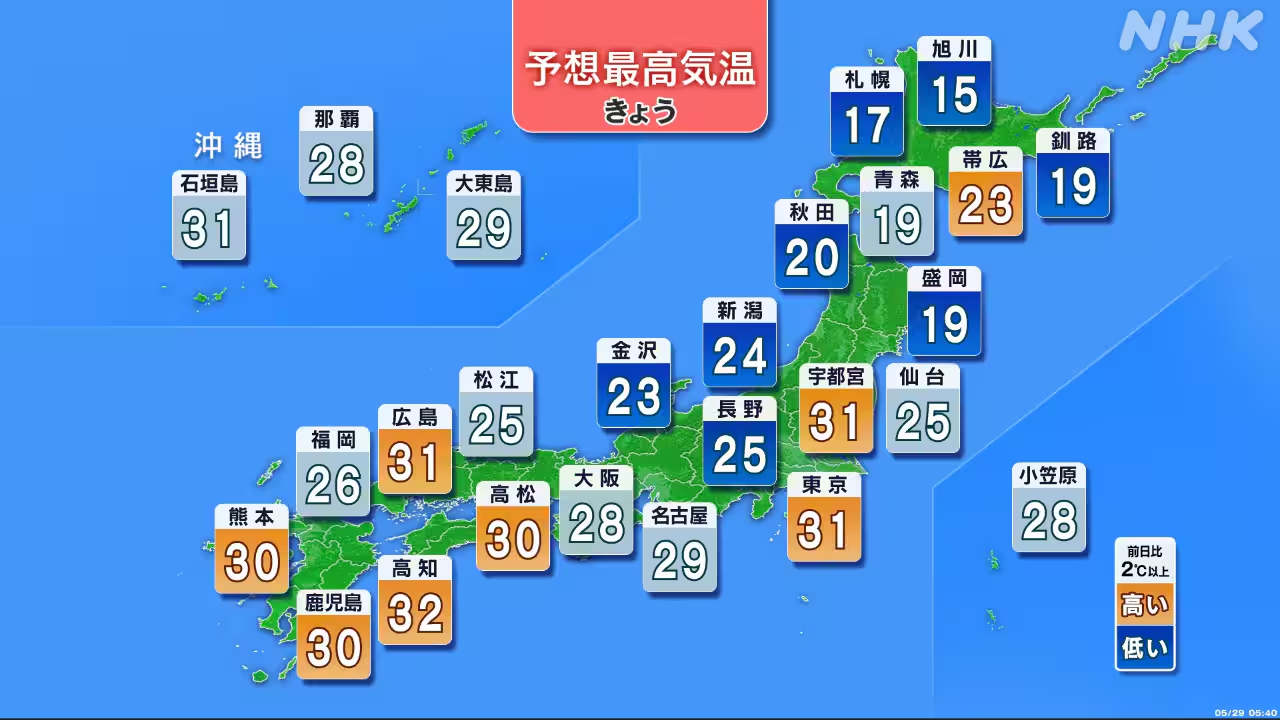
Temperatures are projected to rise significantly across eastern and western Japan on 29 May 2026, with widespread areas predicted to experience hot days exceeding 30 degrees Celsius. The Japan Meteorological Agency has issued warnings prompting heatstroke precautions as the country contends with the onset of these elevated temperatures.
NHK News Japan reported on 29 May 2026 that the heat is expected to be particularly pronounced across broad swathes of the archipelago. Public health advisories are being disseminated to mitigate risks associated with the thermal conditions, urging residents in affected zones to take necessary preventive measures against heat-related illnesses.
Concurrently, meteorological authorities are tracking Typhoon 6, which is forecast to approach Okinawa and the Amami Islands around Monday or Tuesday of the following week. The Amami Islands fall under the jurisdiction of Kagoshima Prefecture, and residents in these southern territories are being advised to prepare for rough weather conditions as the storm draws nearer.
The timing of Typhoon 6’s approach remains subject to change, with current forecasts indicating a window rather than a precise arrival date. Officials caution that the exact path and intensity of the typhoon are evolving, and specific impacts should be monitored closely as weather data updates.
Standard disaster preparedness measures are relevant for residents in the path of the storm. Authorities recommend utilising hazard maps to identify local risks and establishing evacuation timelines to ensure safety should conditions deteriorate rapidly. The intersection of extreme heat and approaching storm systems presents a complex operational challenge for regional governance and emergency response planning.