Japan approves supplementary budget to address Middle East tensions
The House of Councillors Budget Committee passed the measure with support from the Liberal Democratic Party, Nippon Ishin no Kai, and the Democratic Party for the People.
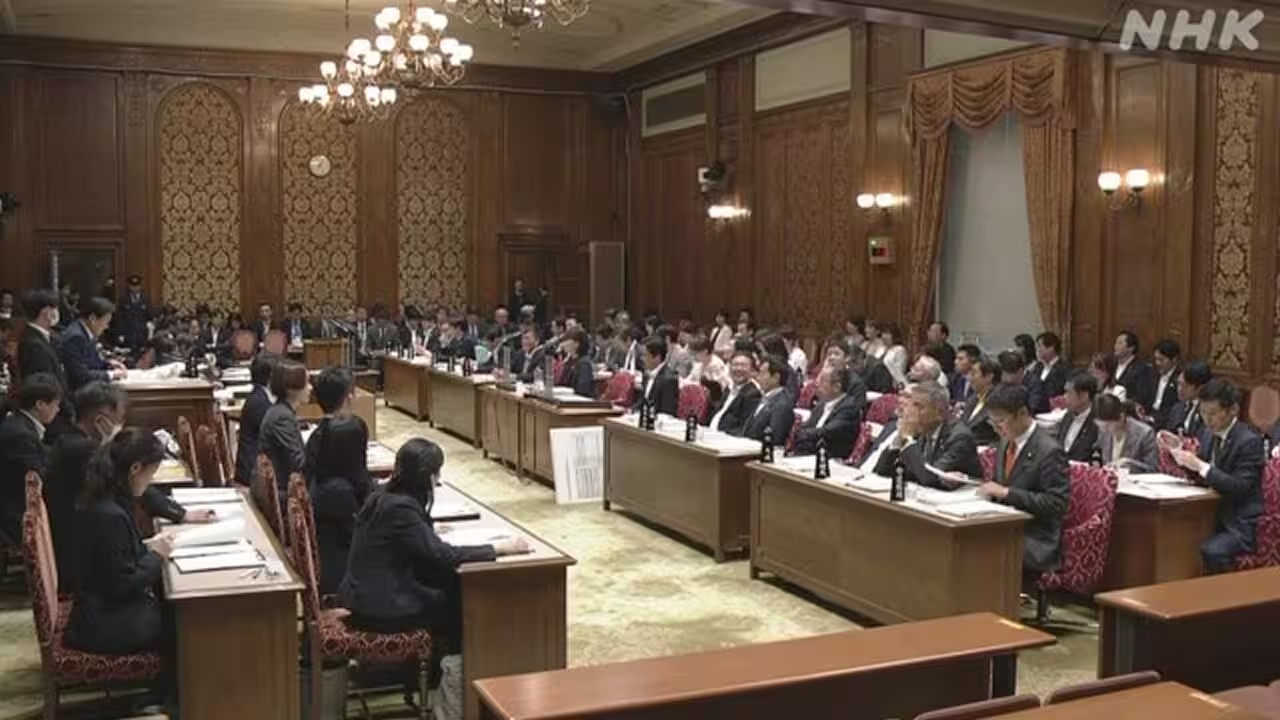
The Japanese House of Councillors Budget Committee has voted to approve the supplementary budget for the current fiscal year, a legislative move explicitly designed to counter the economic and security implications of escalating tensions in the Middle East. The decision underscores the government’s prioritisation of fiscal agility in the face of external geopolitical shocks that threaten national stability.
The bill passed during a committee session on 5 June 2026, securing a majority vote through a coordinated effort by the ruling Liberal Democratic Party (LDP), Nippon Ishin no Kai, and the Democratic Party for the People. This coalition support reflects a unified parliamentary stance on the necessity of additional fiscal measures to mitigate risks associated with regional instability.
Supplementary budgets in Japan are typically utilised to address unforeseen circumstances or emergencies that arise after the initial annual budget has been enacted. In this instance, the fiscal adjustment serves as a mechanism to allocate resources rapidly, ensuring that the state can respond to disruptions in energy security and broader economic impacts stemming from the conflict zone.
While the specific monetary allocations and detailed policy interventions within the supplementary budget were not disclosed in the initial reports, the political consensus suggests a significant commitment to stabilising domestic economic conditions. The approval highlights the intersection of foreign policy developments and domestic fiscal governance, illustrating how international conflicts directly influence legislative priorities in Tokyo.
The passage of this budget comes at a time when global markets are reacting to the volatile situation in the Middle East, with recent reports indicating broader economic ripples such as fluctuations in stock markets. By securing this funding, the Japanese government aims to insulate its economy from the worst effects of the crisis, maintaining fiscal discipline while addressing immediate security concerns.