Japan and Vietnam formalise strategic energy pact amid investment slump
Leaders sign deals to support Nghi Son Refinery under Power Asia Initiative as bilateral investment figures drop sharply
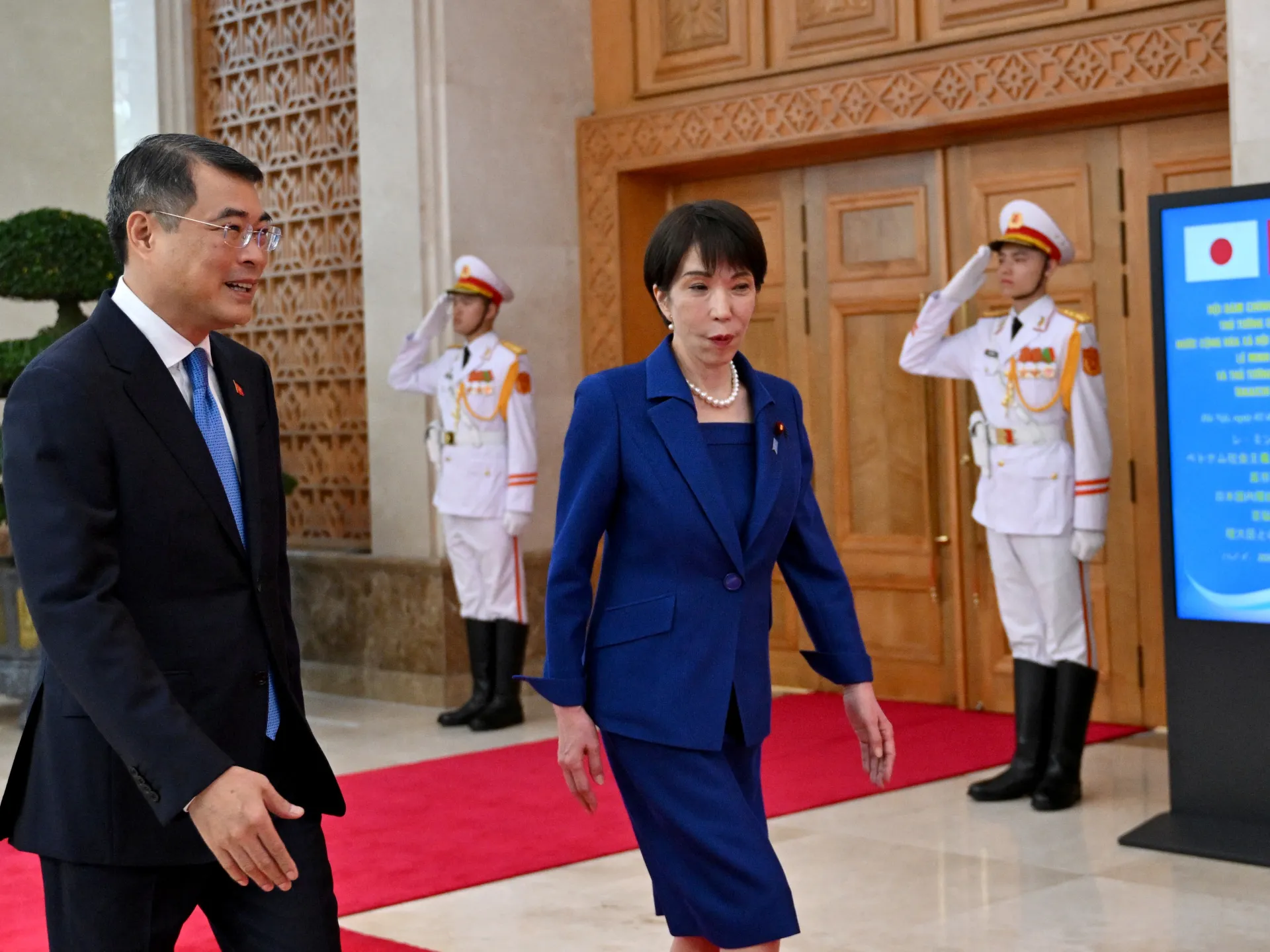
Japanese Prime Minister Sanae Takaichi has signed six bilateral agreements with her Vietnamese counterpart, Le Minh Hung, in Hanoi, marking a significant shift toward formalising economic security as a core pillar of their relationship. The newly inked accords cover a broad spectrum of sectors including energy, critical minerals, infrastructure, agriculture, and space cooperation, reflecting a concerted effort to stabilise supply chains in an increasingly volatile global environment.
Central to these negotiations is the commitment to secure energy independence, driven by the $10bn Power Asia Initiative. Under this framework, Japan has pledged to assist Vietnam in arranging crude oil supplies for the Nghi Son Refinery and Petrochemical Complex. This move responds directly to disruptions in global supply chains caused by conflict in the Middle East, which has heightened the need for alternative energy sources and insulated regional economies from external shocks.
The diplomatic push for deeper integration comes at a time of contrasting economic data, highlighting a divergence between trade volume and direct investment flows. Recent figures from Vietnamese government and customs authorities indicate that while bilateral trade rose 12.3 per cent to $13.7bn in the first quarter, new investment from Japan fell approximately 75 per cent year-on-year to $233m. This sharp decline in capital inflow underscores the urgency for both nations to pivot from traditional investment models to strategic resource and supply chain security.
Beyond the economic metrics, the leaders reaffirmed their shared stance on regional geopolitical stability, specifically regarding the South China Sea. Both Prime Ministers emphasised the importance of resolving territorial disputes through peaceful means and in accordance with international law. This alignment serves as a mechanism to hedge against broader regional pressures, including US-driven trade disruptions and China's expanding territorial claims in the East and South China Seas.
The visit also included scheduled meetings with President To Lam and a keynote address at Vietnam National University, which coincided with the tenth anniversary of former Prime Minister Shinzo Abe's introduction of the Free and Open Indo-Pacific strategy. These engagements signal that the cooperation between Tokyo and Hanoi is intended to be a long-term institutional framework rather than a transient diplomatic gesture, aiming to broaden economic and security ties to counterbalance regional uncertainties.