ISS crew complete spacewalk to install high-speed antenna
Expedition 75 flight engineers Anil Menon and Sophie Adenot spent six hours and 23 minutes outside the station to upgrade its communications capabilities.
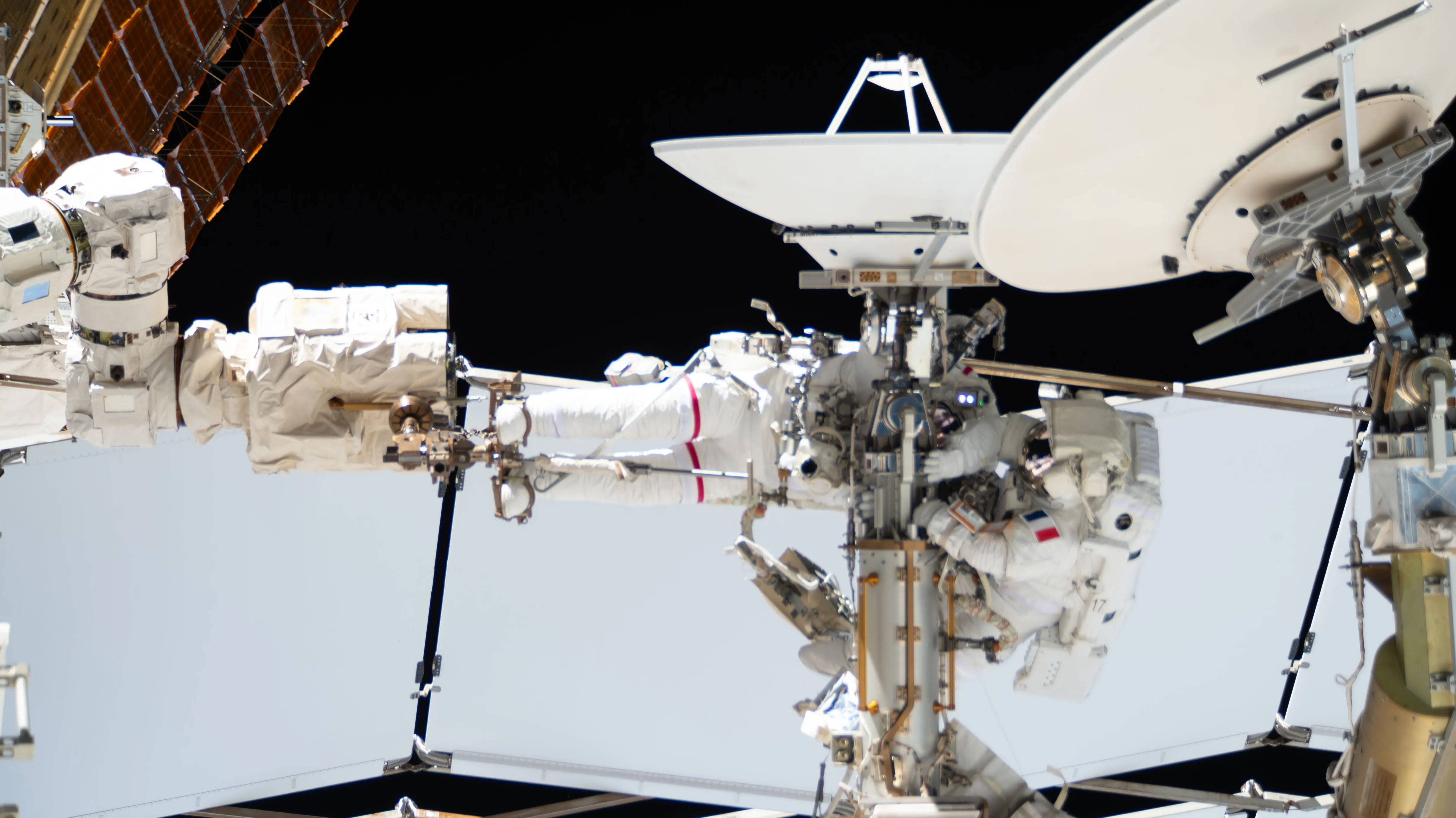
Astronauts Anil Menon and Sophie Adenot have completed a spacewalk outside the International Space Station, marking a significant step for the station’s communication infrastructure. The two flight engineers, representing NASA and the European Space Agency respectively, worked together to install a high-speed communications antenna.
The spacewalk took place on 18 August 2026 and lasted six hours and 23 minutes. During this period, Menon and Adenot performed the primary installation work required for the new antenna system.
According to NASA, the installation process was finalised on 25 August 2026. This timeline indicates that while the physical spacewalk occurred on the 18th, the full completion of the antenna setup extended through the following week.
The pair are serving as flight engineers for Expedition 75. Their collaboration highlights the ongoing international cooperation between space agencies in maintaining and upgrading the station’s hardware.
The new high-speed communications antenna is expected to enhance the data transfer capabilities of the International Space Station. This upgrade is part of the broader efforts to keep the station’s systems current with modern technological standards.
NASA released images of the spacewalk, showing the astronauts in their spacesuits working on the exterior of the station. The visual documentation provides a clear record of the operational tasks performed during the six-hour excursion.