Israel issues displacement orders in Nabatieh as Lebanon demands withdrawal ahead of US talks
Israeli air strikes kill three in southern Lebanon and destroy homes in Tyre, while new evacuation orders target ten villages citing ceasefire violations.
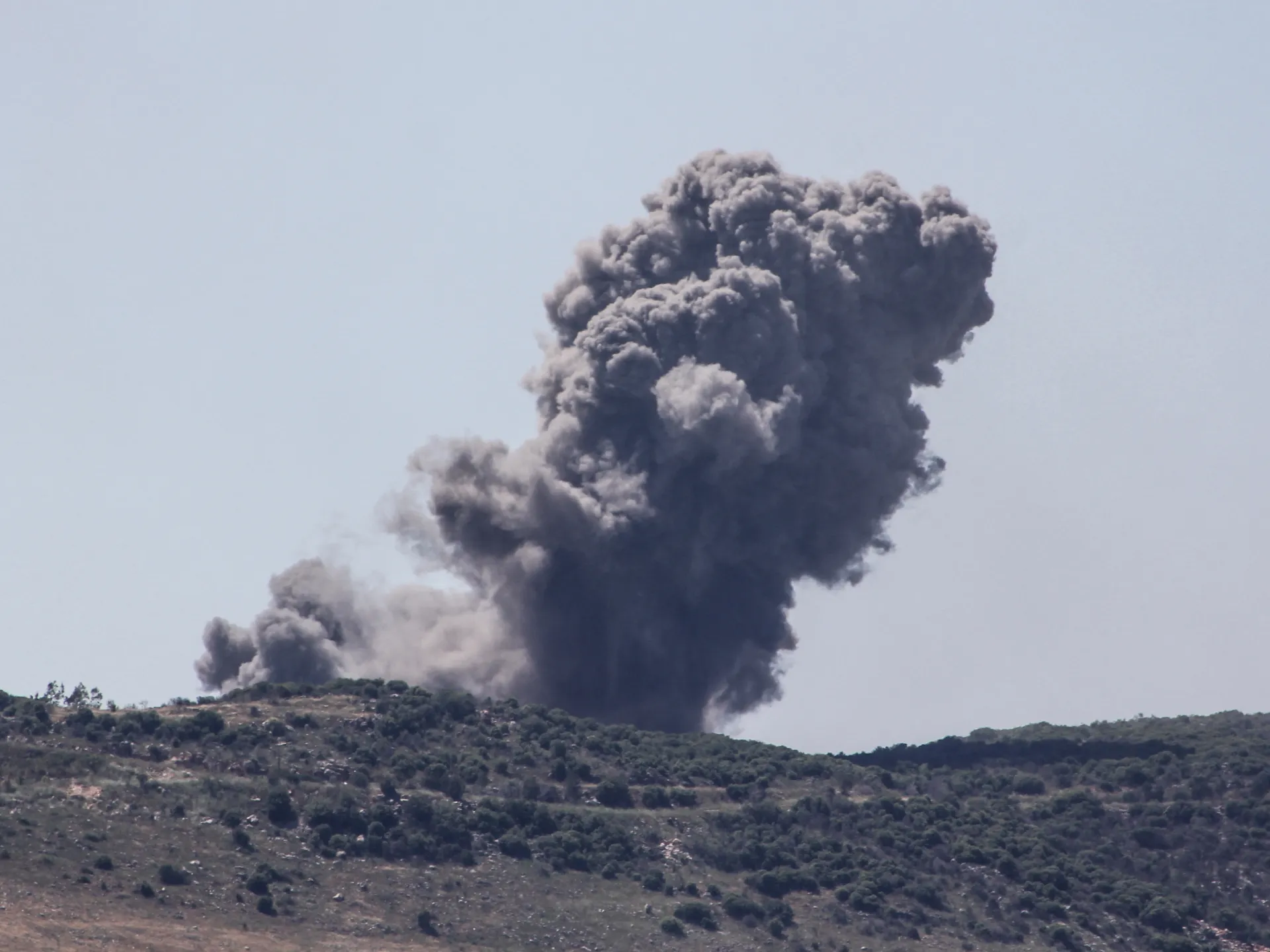
Israeli air strikes killed three people in southern Lebanon on Monday, according to the country’s National News Agency (NNA), as the Israeli military issued fresh forced displacement orders for residents in the Nabatieh area. The attacks targeted vehicles on the Kafr Rumman-Jarmaq highway and the Jarmaq-Khardali road early in the day, resulting in the deaths of three individuals.
In response to the violence, the Israeli military’s Arabic-language spokesman, Colonel Avichay Adraee, announced that residents of ten villages must evacuate their homes immediately. Citing Hezbollah’s violation of the ceasefire agreement, Adraee stated that forces were compelled to operate against the group with force. The affected communities include Nabatieh al-Tahta, al-Louizeh, Sajd, Ain Qana, Harouf, Zibdin, Kfar Reman, Doueir, Adshit al-Shaqif, and Maydun, with residents ordered to move at least 1,000 metres away from these towns.
The violence extended to the southern city of Tyre, where an Israeli attack destroyed two homes in the Arzoun municipality. NNA reported that rescue teams were on site to evacuate the injured. Israeli forces also struck several other towns, including al-Mansouri, Siddiqin, Zibqin, Qlayaa, Yohmor al-Shaqif, Zawtar al-Sharqiyah, and al-Haniya. Meanwhile, Al Jazeera reporter Zeina Khodr noted that Israeli drones were hovering over central Beirut and the capital’s southern suburbs for a second consecutive day, flying at low altitude.
Casualties continue to mount on both sides of the conflict. The Lebanese Ministry of Public Health reported that more than 3,000 people have been killed since fighting resumed on 2 March. The Israeli military confirmed on Monday that one of its soldiers was killed and another wounded in clashes with Hezbollah, bringing the total number of Israeli military fatalities to 23 since hostilities restarted. Israeli media attributed the casualties to a Hezbollah drone attack.
Lebanese President Joseph Aoun declared Israel’s withdrawal a non-negotiable demand ahead of upcoming diplomatic engagements. Speaking on Monday to commemorate the anniversary of Israeli forces’ withdrawal from Lebanon in 2000, Aoun stated that the anniversary arrives as Lebanon suffers under a renewed occupation. He emphasised that the government would pursue this demand through negotiations, even as the country faces ongoing attacks on its southern villages.
Diplomatic efforts are set to intensify with a meeting between military delegations at the Pentagon on 29 May, followed by a fourth round of US-brokered talks in Washington in early June. Despite a US-mediated ceasefire that took effect on 17 April and was extended into early July, military operations have continued. Hezbollah chief Naim Qassem reiterated his opposition to direct talks with Israel and his group’s refusal to disarm, questioning the sovereignty of the Lebanese government.
Iran’s Ministry of Foreign Affairs spokesman Esmaeil Baghaei indicated that broader negotiations between Washington and Tehran, aimed at ending the US-Israel war on Iran, also focus on resolving the conflict in Lebanon. These developments underscore the complex interplay between military escalation and high-level diplomatic manoeuvring as the region approaches critical talks.