Islamic Community in Bosnia and Herzegovina advances women’s roles amid structural gaps
The Islamic Community has established a department for women’s advancement and encouraged female attendance at Friday prayers, but women hold only 11 of 87 seats in its parliament.
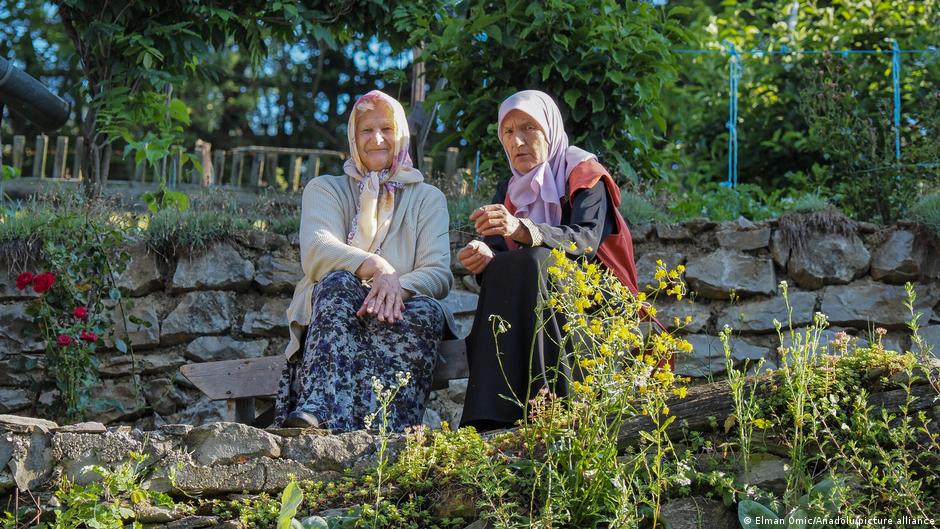
The Islamic Community in Bosnia and Herzegovina is implementing structural changes to accommodate growing demands for greater female participation in religious life. These developments include the establishment of a dedicated department for the advancement of women by Grand Mufti Husein Kavazovic, alongside specific initiatives to facilitate female attendance at Friday prayers. Despite these institutional adjustments, women remain significantly underrepresented in senior leadership positions within the organisation’s governance structures.
In April 2026, the Islamic Community’s council for religious affairs in Zenica formally encouraged women to attend Friday prayers at all mosques within the district. This directive aligns with broader shifts in religious practice, where devout Muslim women are increasingly seeking to assume greater roles in decision-making processes. The movement, often described as Islamic feminism, involves interpreting the Quran from a female perspective to advocate for gender equality without directly challenging established religious texts.
Practical accommodations have also been introduced in the capital. Two mosques in Sarajevo now explicitly welcome women worshippers, providing separate prayer spaces such as distinct rooms or balconies. These measures reflect a gradual loosening of male-dominated cultural norms that previously discouraged female presence in mosques, although participation was never formally prohibited by religious law.
Academic and theological spheres are witnessing similar, albeit slower, transformations. While there are currently no female professors of theology or female imams in Bosnia and Herzegovina, female research assistants are gaining career prospects within Islamic institutions. Scholars such as Zilka Spahic-Siljak have contributed to raising awareness of Islamic feminism through academic work and campaigns against domestic violence, influencing theological debates on gender relations.
However, significant disparities persist in the organisation’s highest decision-making bodies. Only 11 of the 87 representatives in the Islamic Community’s parliament are women, and there are no female members of the Riyaset or the Council of Muftis. Sociologist Dermana Kuric noted that while there is no open resistance from Muslim men against women holding leadership positions, there is a lack of a clear institutional strategy to seriously advance women as believers and theologians.
The Islamic Community’s structure, established under Austro-Hungarian rule, remains largely unchanged in its hierarchical format. Political scientist Djevada Garic highlighted the difficulty for women to attain positions of power, noting that while female teachers are common in Islamic schools, they are absent from the supreme representative office of the Grand Mufti. The establishment of the new department for women’s advancement is viewed as a positive step, yet experts argue that substantive integration requires a more robust institutional framework.