Iran’s military capture: IRGC assumes control as clerical rule fades
Following the death of Ali Khamenei, strategic command has shifted to war headquarters, while economic contraction and 80% public aversion signal a long-term decline for the regime’s theological foundations.
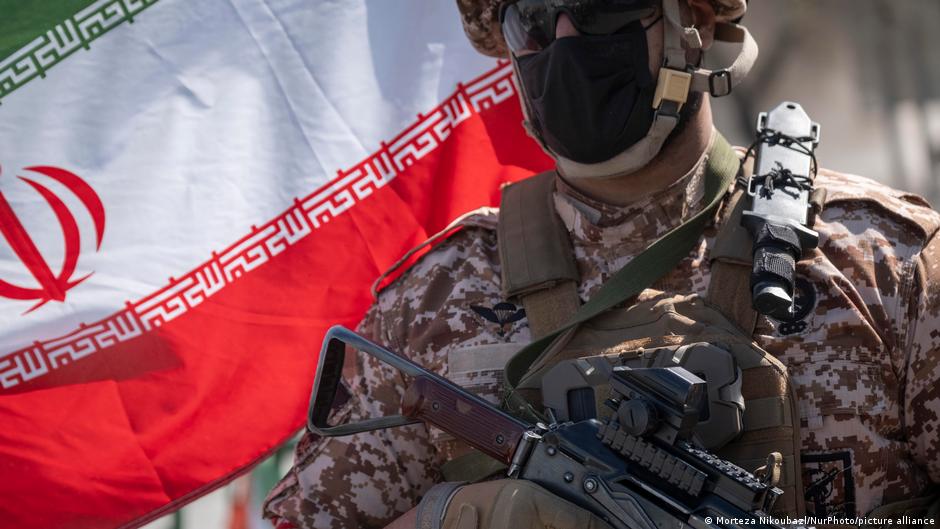
Iran’s political structure is undergoing a fundamental shift from clerical rule to military dominance, with the Islamic Revolutionary Guard Corps (IRGC) emerging as the dominant force in the state. This transition follows the killing of Supreme Leader Ali Khamenei in an Israeli attack on 28 February 2026, an event that has accelerated a decades-long transformation of the IRGC from a military faction into a vast economic and political empire.
Under the current state of emergency, strategic and operational command has officially been handed over to war headquarters and top generals. Faraj Sarkohi, a Germany-based political analyst, noted that while the IRGC commands roughly half of Iran’s oil wealth and holds significant interests in construction and telecommunications, this does not constitute a pure military dictatorship. The institution of Velayat-e Faqih and the clergy remain foundational to the system’s official doctrine.
The Assembly of Experts appointed Mojtaba Khamenei, the late leader’s son, as the new Supreme Leader, reportedly under pressure from the Guard. Analysts describe Mojtaba as a decorative figure who provides ideological cover while the IRGC and security institutions hold real power. Damon Golriz of The Hague Institute for Geopolitics stated that the appointment cements the reality that political calculation and balance of power, rather than religious legitimacy, have become the decisive factors in the Islamic Republic.
Mojtaba Khamenei’s ties to the security establishment date back to his service in the IRGC during the Iran-Iraq War. Since 2009, he has played a direct role in coordinating commanders and mobilizing the Basij militia, establishing key institutional links with the centers of power. While President Masoud Pezeshkian retains official executive power, analysts argue that the real authority lies with Mojtaba and a network of new military and security figures.
The country faces severe economic instability, with the International Monetary Fund estimating a 6% shrinkage in the economy for 2026 and inflation rates of 68.9%. This economic contraction, combined with a sharply rising poverty line, has severely crushed the purchasing power of wage earners. Experts warn that these conditions, alongside widespread public aversion, could precipitate further unrest.
Approximately 80% of Iranians feel a deep aversion to the current system, a sentiment exacerbated by the mass killings of peaceful demonstrators in January 2026. Sarkohi pointed out that the majority of society stands in complete contradiction to the state's culture, having largely broken away from it in social and private life. The regime has lost its intellectual and ideological hegemony, creating a deep divide between leadership and society.
Both analysts agree that the regime can no longer govern as it did in the past. Sarkohi predicts that even if a temporary agreement with the United States is reached, the regime will be forced to make concessions in social areas, such as the mandatory headscarf, while continuing its political despotism. Golriz describes the old mode of governance as no longer effective, noting that the ayatollahs’ political will is gradually being consigned to the archives of history.