Iran’s border militias add pressure to a state facing war and unrest
Iranian authorities have reported arrests, clashes and weapons seizures involving Kurdish and Baloch armed groups, while experts warn that expanded external support could deepen the security challenge.
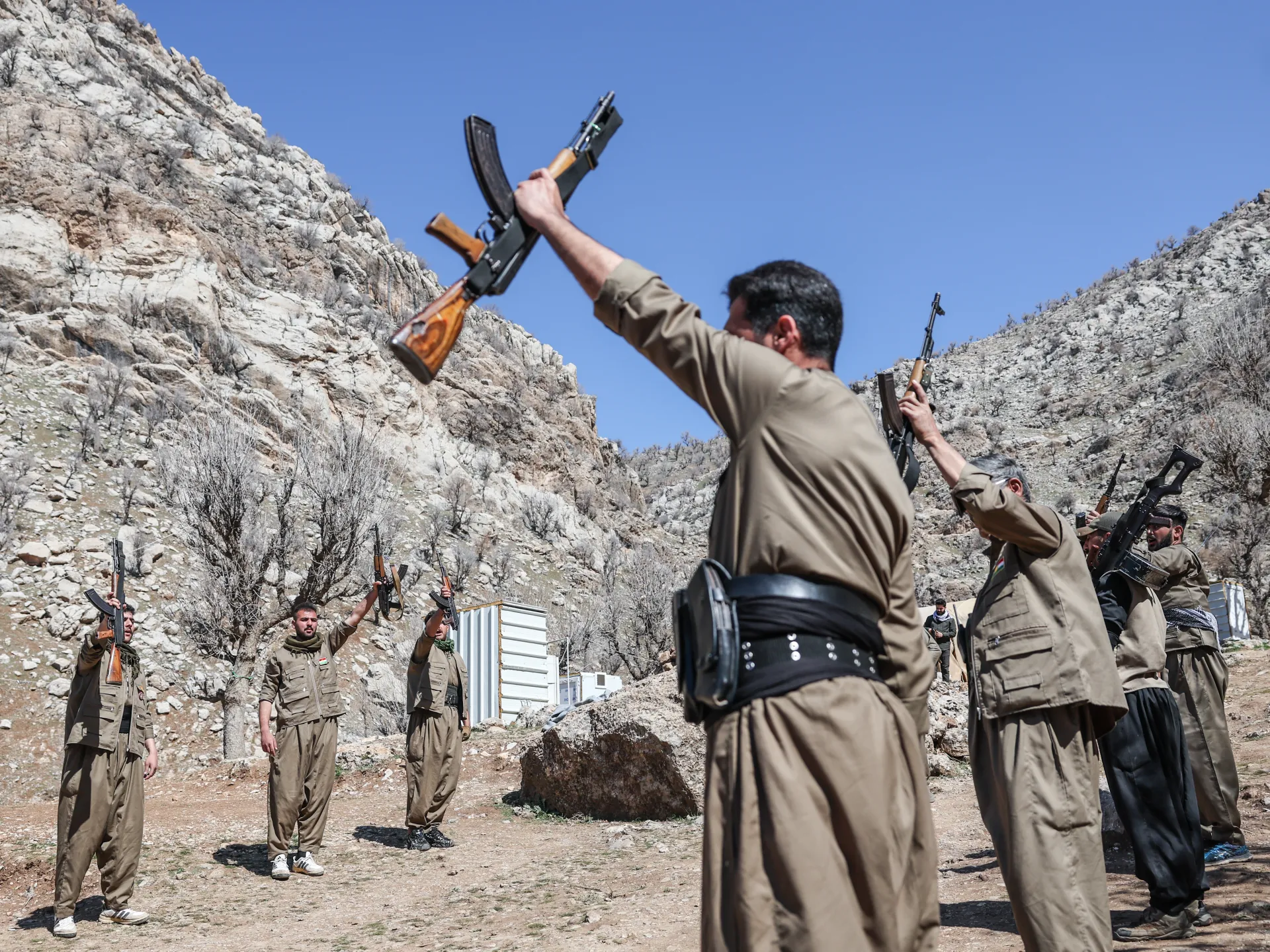
Iran is confronting a domestic security threat from Kurdish and Baloch armed groups as war tensions, economic deterioration and fears of renewed protests put additional pressure on the government.
Iranian state media said on Sunday that authorities had arrested an eight-member network in Fars province allegedly linked to “anti-revolutionary” and “pro-monarchy” groups. The Islamic Revolutionary Guard Corps accused the group of using Molotov cocktails and burning tyres during January’s protests. Those claims have not been independently verified in the available material.
Kurdish groups including PJAK, the Democratic Party of Iranian Kurdistan and the Kurdistan Freedom Party operate near Iran’s western border with Iraq. Reuters, cited by Al Jazeera, reported that between 5,000 and 8,000 Iranian Kurdish fighters had prepared for a possible cross-border operation and held discussions with US and Israeli representatives. The operation was not carried out, with the groups reportedly lacking sufficient weapons and a clear authorisation to proceed.
Iranian forces have previously attacked Kurdish bases in Iraq while pursuing security arrangements with Baghdad. In the southeast, authorities said in late August that they had disrupted a Jaish al-Adl cell, killing one fighter, arresting six others and seizing rifles, grenade launchers and explosives. The reported casualty and seizure figures are official claims.
Experts told Al Jazeera that ethnic militias could become more consequential if external support expands. Alex Vatanka of the Middle East Institute said such support could intensify the challenge facing Tehran, while Quincy Institute co-founder Trita Parsi said the groups could become more problematic if the United States deployed ground troops. The extent of foreign backing, and whether it would materially change Iran’s security situation, remains uncertain.