Iran warns of heavier retaliation after US strikes tankers
Tehran says its policy of proportionate retaliation is over after the United States struck three Iranian crude oil tankers amid a disputed naval blockade.
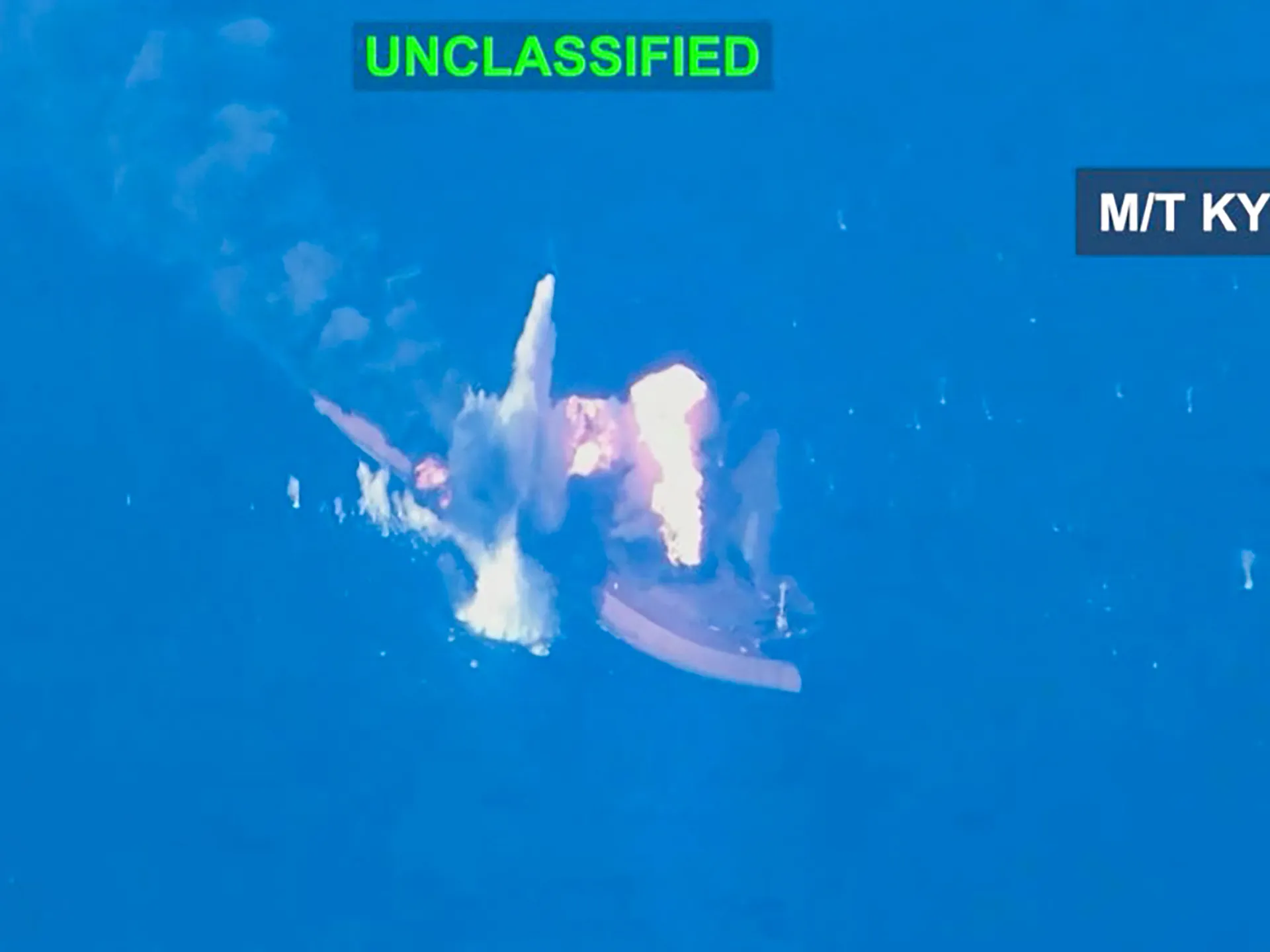
Iran has warned of faster and heavier attacks after the United States struck three Iranian crude oil tankers during a reported blockade of Iran’s southern ports.
US Central Command said one tanker was hit near Kharg Island, another near Jask and a third in the Gulf of Oman. It said two vessels were permanently disabled and the third sank. The claims could not be independently confirmed in the source material.
Iran’s Islamic Revolutionary Guard Corps said it had attacked multiple ships in the Strait of Hormuz, struck a US-built sea drone and fired ballistic missiles towards a US aircraft carrier and another warship. The IRGC said the vessels sustained damage, while CENTCOM said the attacks were evaded and there was no immediate evidence of a successful hit.
Parliament speaker Mohammad Bagher Ghalibaf said Iran’s period of “proportionate responses” had ended and warned that any further attacks on Iranian interests would draw “faster, heavier and more painful” strikes. Iran’s Foreign Ministry described the US attacks as illegal and a “war crime”, an allegation rather than an established legal finding.
The competing accounts come after months of disruption around the Strait of Hormuz, a waterway through which about one-fifth of the world’s oil and gas passes in peacetime. The United States says about 90 commercial vessels have been redirected under the blockade, while Iran says the strait remains closed.
Iran’s Economy Ministry has established an “economic war headquarters” as sanctions and the blockade put further pressure on the country’s trade and energy revenues. TankerTrackers reported that Middle Eastern crude exports in August were 39 per cent below the January-February baseline, although shipping levels and the blockade’s operational status remain disputed.