Iran formalises maritime control over Strait of Hormuz following seizure of Ocean Koi
The Islamic Revolutionary Guard Corps claims to have detained a Barbados-flagged tanker in the Gulf of Oman, citing attempts to disrupt national interests, while officials declare a new framework requiring clearance and fees for all passing ships.
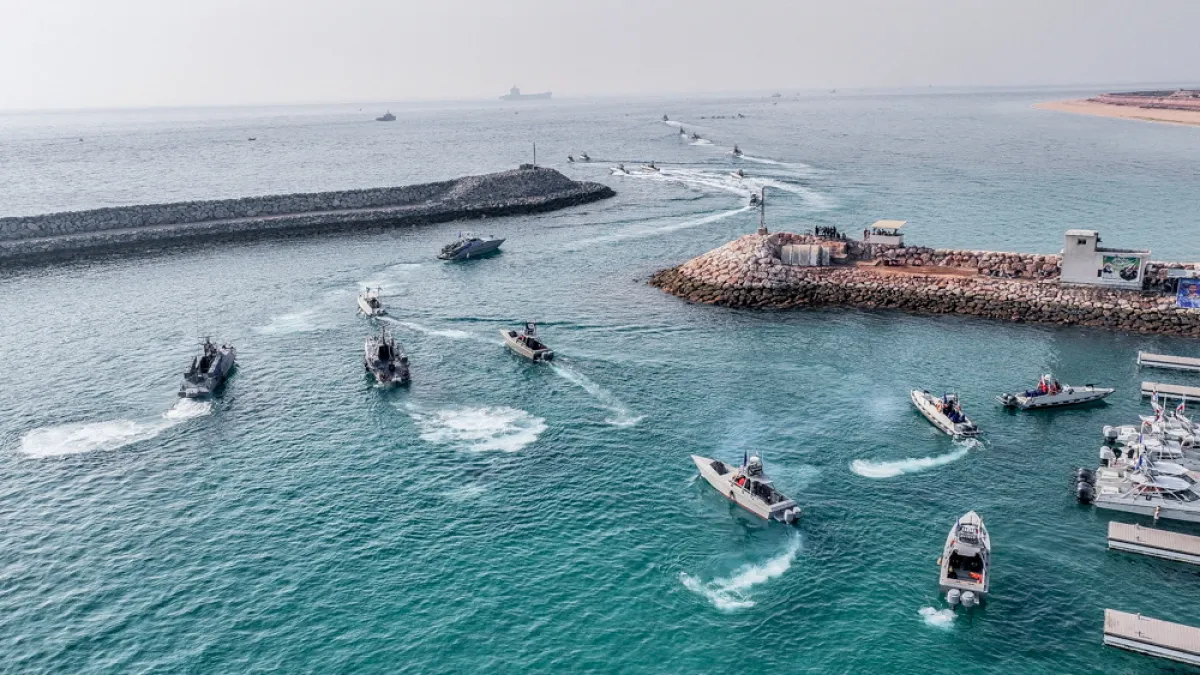
The Islamic Revolutionary Guard Corps (IRGC) has claimed responsibility for seizing the Barbados-flagged oil tanker Ocean Koi in a special operation within the Gulf of Oman. According to reports carried by the Fars news agency and the IRNA news agency, Iranian Navy rangers and marines boarded the vessel, directing it to the southern coast of the country for detention. State television subsequently released footage of the boarding and detention operations.
In a statement disseminated by the army, a spokesperson described the tanker as an offender attempting to disrupt Iranian oil exports and the broader interests of the nation. The IRGC maintains that the vessel was violating national interests within Iranian territorial waters. This incident has been characterised by analysts as a significant shift in Iran's maritime strategy, moving beyond ad-hoc enforcement to a structured approach to regional navigation.
This development coincides with the announcement of a new "maritime regime" designed to regulate passage through the Strait of Hormuz. Under this framework, officials have established the Persian Gulf Strait Authority to manage traffic in the waterway. The new regulations mandate that all ships intending to pass through the strait must obtain full coordination and clearance from Iranian forces prior to transit.
The requirements for the new regime extend to the submission of detailed voyage information via email, including the vessel's country of origin, cargo details, and final destination. Following an assessment by Iranian authorities, vessels will be required to pay toll fees to proceed. Al Jazeera reporter Resul Serder, reporting from Tehran, noted that while the seizure of the Ocean Koi is the third confirmed case in the Strait of Hormuz, the introduction of this formal regulatory system represents a bold escalation.
The Strait of Hormuz remains a critical global chokepoint, through which approximately one-fifth of the world's oil normally passes. By institutionalising control over these strategic waters, Iranian officials are asserting that no ships are allowed in or out without their approval. The creation of the Persian Gulf Strait Authority signals a move to formalise sovereignty claims that have long been a focal point of regional tension regarding freedom of navigation.
The implications of this new maritime regime extend beyond the immediate incident involving the Ocean Koi. By mandating clearance and fees, Iran is effectively altering the operational protocols for international shipping in the region. This shift from reactive seizures to proactive regulation underscores a redefined strategic environment where the control of the Gulf and its straits is central to national security policy.