Intel CEO signals shift in AI investment focus beyond GPUs
Analysts raise price targets on Intel citing stronger server CPU demand, though the company’s foundry division continues to report significant operating losses.
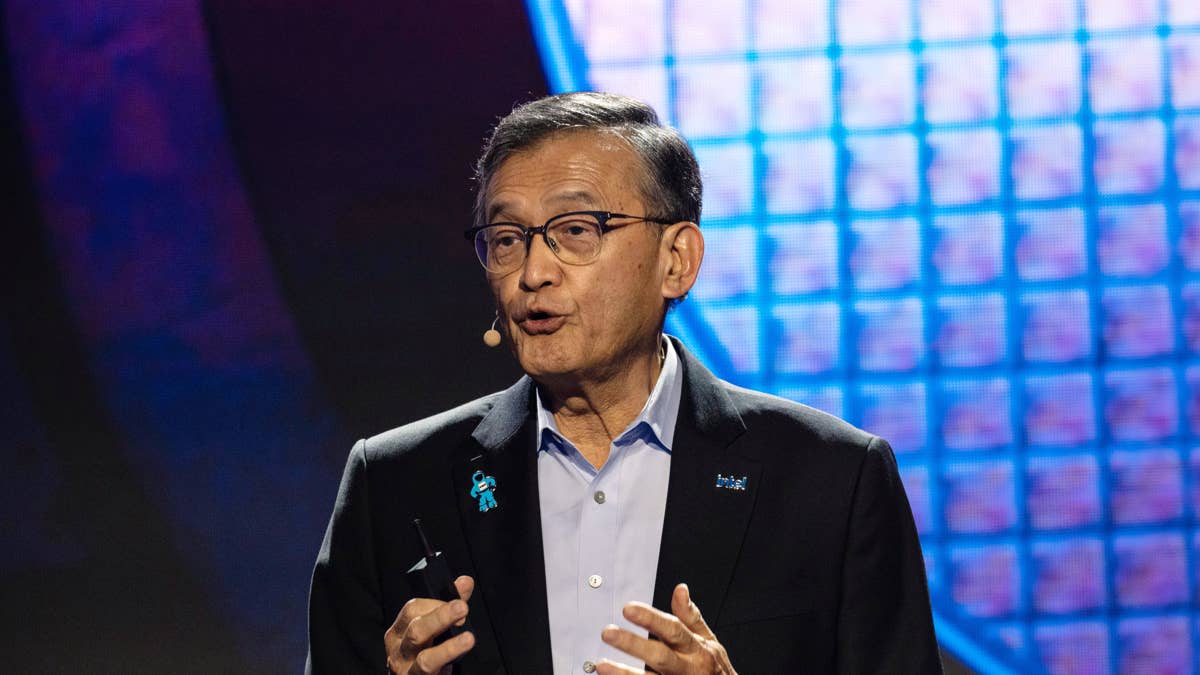
Intel chief executive Lip-Bu Tan has outlined a strategic pivot in the artificial intelligence investment landscape, arguing that capital flows are moving beyond a narrow focus on graphics processing units to encompass broader infrastructure layers. Speaking on the June 18 episode of the No Priors podcast, Tan identified central processing units, memory, power, and manufacturing capacity as critical components for supporting agentic AI workloads, which require increased orchestration and coordination.
Tan highlighted memory shortages and power constraints as significant industry bottlenecks, noting that some nations lack the necessary power capacity to sustain AI growth. He argued that the rise of agentic AI workloads requires increased orchestration and coordination, driving renewed demand for CPUs, which he described as seeing very high current demand. This commentary coincides with positive analyst sentiment from Bank of America, Citi, and Mizuho, which have raised their price targets for Intel to $135, $130, and $135 respectively, citing stronger server CPU demand and foundry momentum.
Despite this optimism, Intel’s Foundry division reported a $2.4 billion operating loss in the first quarter of 2026, with external customer revenue for 2025 remaining low at $307 million. The segment generated $17.8 billion of 2025 revenue, but only $307 million came from external customers, underscoring the challenge of transitioning from internal support to a broader service business model.
Wells Fargo and Barclays maintained cautious ratings despite raising targets, with Wells Fargo lifting its target from $85 to $110 while keeping an Equal Weight rating, and Barclays raising its target from $65 to $100 while maintaining an Equal Weight view. These institutions suggested that while Intel’s AI CPU and foundry story is improving, the stock already reflects much of that optimism or that continued caution is warranted after the stock’s recent run.
Intel announced that its 18A-P process node has entered risk production, claiming improvements in performance and power efficiency. The company also appointed Seok-Hee Lee to lead advanced packaging and back-end manufacturing, areas that matter more as AI chips become multi-die systems. Tan emphasized that a foundry is a service and trust business where customers care about yield, defect density, cycle time, and reliability.