India’s multi-alignment doctrine faces stress test as Iran conflict deepens
Experts warn that the demand for political loyalty from rival camps is challenging India’s traditional balancing act, forcing a re-evaluation of energy security and great-power ambitions.
The ongoing conflict in Iran is placing significant strain on India’s foreign policy of multi-alignment, a strategy that has historically allowed New Delhi to maintain diplomatic, economic, and defence ties with rival nations in the Middle East, including Iran, Israel, the United States, and Gulf monarchies. Prime Minister Narendra Modi is undertaking a diplomatic tour of the United Arab Emirates and four European countries to address the crisis, signalling the urgency with which New Delhi views the potential collapse of its carefully balanced regional relationships.
Amitabh Mattoo, dean of the School of International Studies at Delhi's Jawaharlal Nehru University, told Deutsche Welle that the conflict has made the geopolitical geometry far more unforgiving. While India spent decades perfecting a balancing act rooted in hard-headed realism, Mattoo noted that strategic autonomy works best in a fluid multipolar order. It becomes significantly harder when rival camps demand political loyalty, sanctions compliance, and security alignment simultaneously, effectively turning neutrality from a position into a luxury.
For New Delhi, the Iran conflict is more than an energy crisis unfolding in a distant region; it is a direct challenge to the core assumption that India can maintain its own strategic autonomy while cultivating ties with every major power in the region. Mattoo argued that if push comes to shove, India's first instinct will always be to protect economic stability and energy security, as no government can afford prolonged oil shocks, shipping disruptions in the Strait of Hormuz, or domestic inflation spirals.
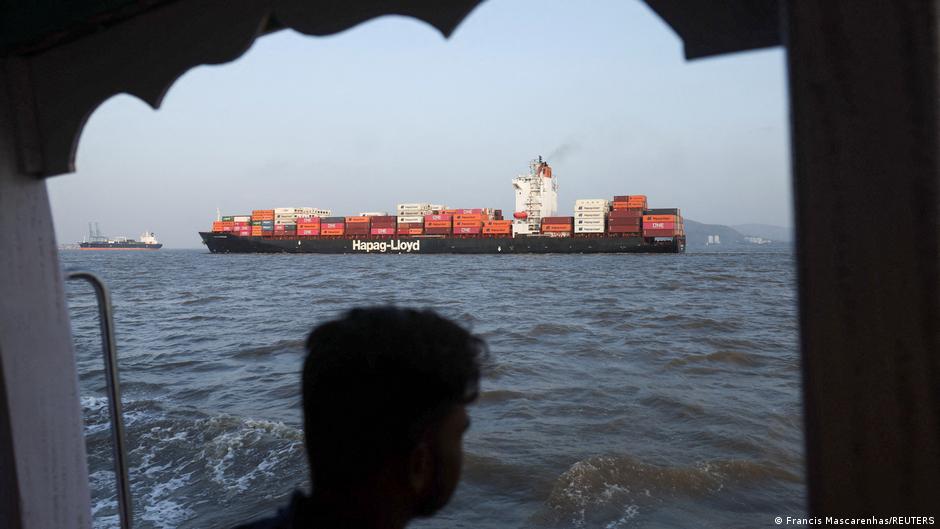
The economic vulnerability of this strategy is underscored by India’s reliance on Gulf nations for crude oil and natural gas, as well as the more than nine million Indian expatriates working in the region whose remittances are deeply tied to India's domestic economy. The Strait of Hormuz remains the clearest pressure point, with even the possibility of disruption sending shockwaves through India's import calculations, insurance costs, inflation, and financial stability.
To mitigate these risks, New Delhi has responded by diversifying suppliers and deploying the Indian Navy to protect commercial shipping, though neither response comes cheaply. Gaddam Dharmendra, a former ambassador to Iran, highlighted that the US, now a major oil and LNG exporter, has a role to play in India's energy import mix. He suggested that this diversification should not be viewed as a zero-sum game but as a net-net win, allowing India to shore up hydrocarbon supply chains without abandoning its traditional reliance on the Gulf.
Not all analysts believe the doctrine is under terminal strain. T S Tirumurti, a retired diplomat and India's first representative to the Palestinian Authority, argued that the Iran war is an argument for New Delhi to keep the present course. He rejected the idea that India faces a binary choice between energy security and strategic partnerships, citing recent history as evidence of the sagacity of India's decisions on energy security while maintaining good relations with Israel and the US.
Shanthie Mariet D'Souza, founder of Mantraya, an independent research forum, noted that while the concept of strategic autonomy itself has not come under strain, India's ability to balance its relations with a group of countries with conflicting interests has certainly come under great duress. She suggested that New Delhi will still bet on the war ending soon through mediation, with Prime Minister Modi's current multi-nation tour likely reflecting these diplomatic efforts to navigate the fault lines.