India’s infrastructure fails to adapt to structural monsoon shifts as death toll rises
With over 100 fatalities recorded since late July and more than 120,000 people displaced in Assam, scientists and policy analysts argue that India must integrate climate adaptation strategies into its core development framework.
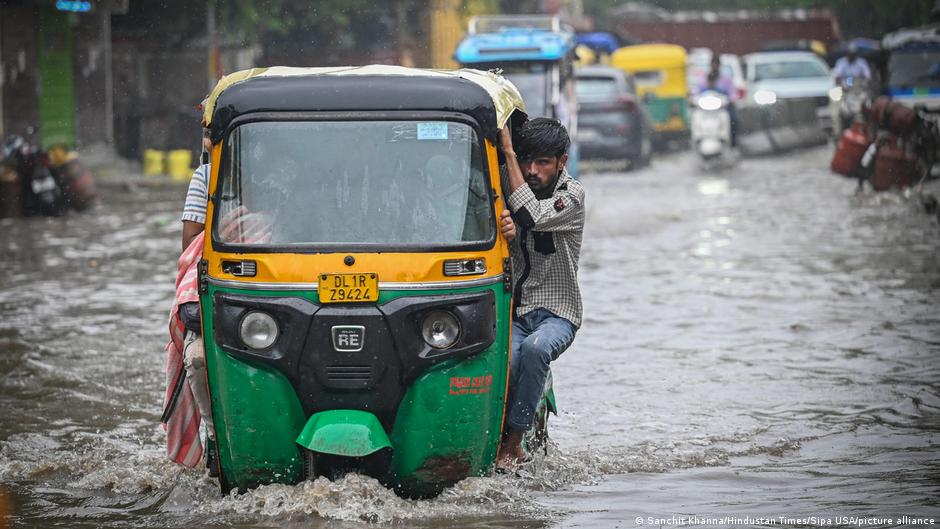
India is grappling with increasingly erratic monsoon patterns characterised by prolonged dry spells followed by intense rainfall, leading to floods, landslides, and over 100 deaths since late July. The northeastern state of Assam has been most severely affected, with more than 120,000 people impacted by flooding. Other regions, including Kerala, Jammu and Kashmir, Bihar, and Jharkhand, have also reported deaths and widespread disruption.
Scientists attribute these structural shifts in rainfall intensity and distribution to climate change, warning that existing infrastructure and urban planning, often designed around historical averages, are ill-equipped to handle the new extremes. Akshay Deoras from the UK's National Centre for Atmospheric Science and the University of Reading cautions against describing the Indian monsoon as having entered "a fundamentally different regime," noting that while active and break spells have always existed, their intensity is changing.
Madhavan Nair Rajeevan, a climate scientist and former secretary in the Ministry of Earth Sciences, states that average seasonal rainfall has not shown a systematic long-term change, but the timing, intensity, and distribution of rainfall are noticeably different, representing a "structural shift." He emphasises that the rise in extreme rainfall is more than natural variability and calls for better flood management and infrastructure designed around short-duration extreme rainfall rather than historical averages.
Ritwick Dutta, an environmental lawyer, highlights that decision-making processes in India fail to consider climate change when planning construction projects, citing Pune as an example where projected rainfall increases have not been incorporated into riverfront development planning. Dutta argues that the concept of "climate proofing" does not exist in India's environmental clearance system, leading to infrastructure that is likely to suffer major damage from climate change.
The Centre for Science and Environment (CSE) reported that extreme weather affected India on 331 of 334 monitored days in 2025, with more than 4,000 deaths, approximately 3,000 of which occurred during the monsoon. Sunita Narain, director general of the CSE, argues that adaptation needs to become part of the country's development strategy, stating that cities, roads, and water infrastructure can no longer be designed for yesterday's climate.
Experts urge the integration of climate adaptation strategies into development projects to mitigate future risks. Narain stresses that the challenge is no longer proving the science, but redesigning the economy and infrastructure to survive extreme weather events. The focus must shift from documenting changes to implementing effective, sector-specific adaptation strategies that account for a future of more intense and unpredictable weather.
India cannot control the monsoon or El Nino and it cannot stop global warming on its own. It can decide, however, where it builds, how it builds and if its new infrastructure is designed for the climate of its future.