Indian Gen Z weaponises digital dissent against Modi government’s social media dominance
Following violent crackdowns in New Delhi, youth activists are leveraging memes, video evidence, and ironic monikers to mobilise opposition, marking a significant shift in India’s political landscape.
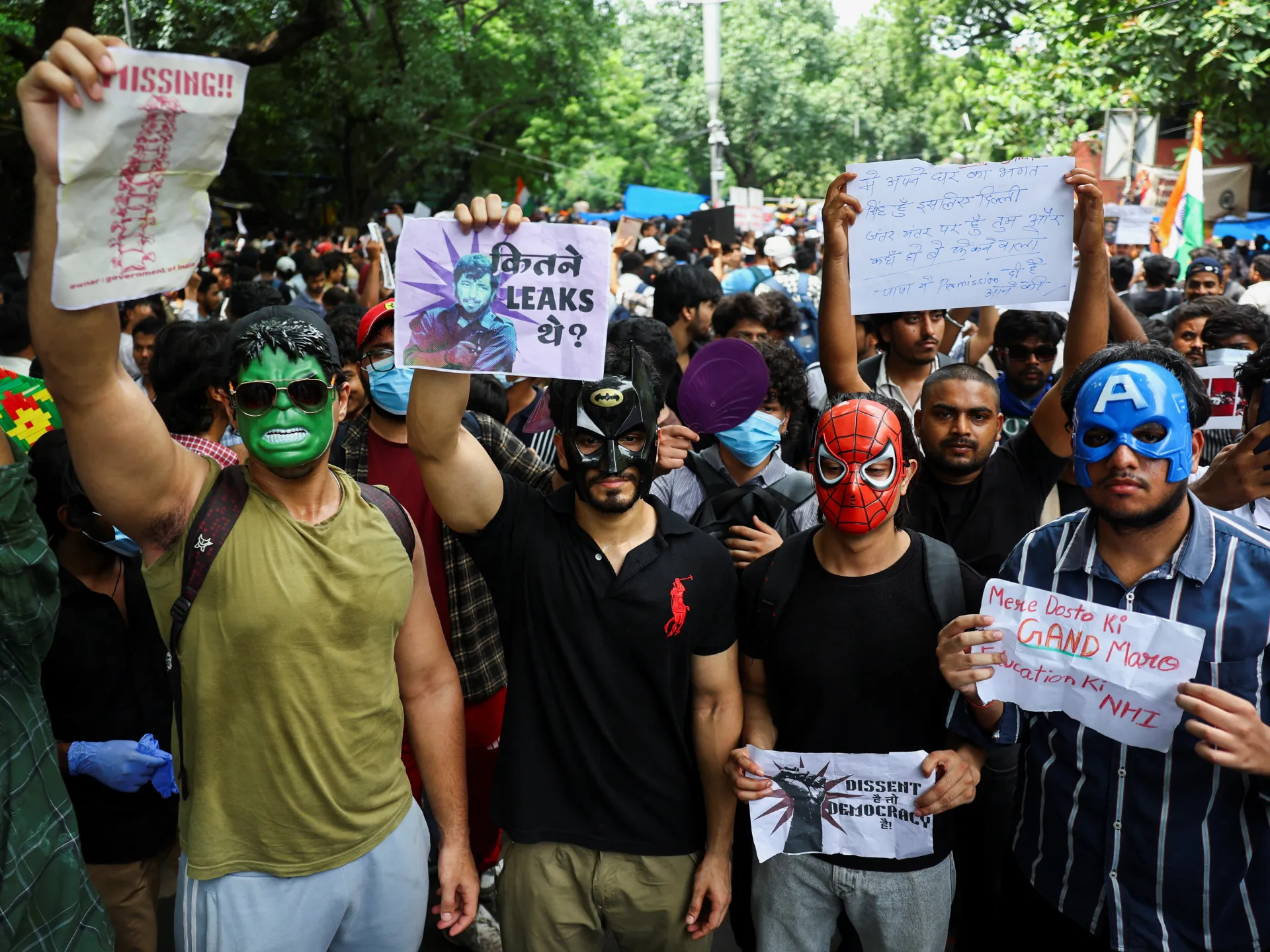
Indian Gen Z protesters are utilising social media platforms to challenge Prime Minister Narendra Modi’s Bharatiya Janata Party (BJP) dominance, following violent police crackdowns on demonstrations in New Delhi. The protests, sparked by national examination paper leaks, resulted in over 100 student injuries and deaths by suicide, prompting demands for the education minister’s resignation and compensation. Youth activists are using memes, video footage of police excesses, and the “Cockroach Janta Party” moniker to mobilise support and mock government authority, marking a significant shift in digital political dissent.
For 12 years, Prime Minister Modi and the BJP have dominated Indian social media, leveraging platforms to reach the masses and mobilise resources through their IT Cell. In contrast, the opposition Congress party has struggled to keep up with the BJP’s social media dominance since losing the 2014 national elections. This event marks a significant shift, as Gen Z activists are leveraging memes, video evidence of police conduct, and the “Cockroach Janta Party” moniker to challenge the government’s narrative.
The demonstrations, which began in response to serial examination paper leaks, escalated into a major confrontation at Jantar Mantar. Police operating under the direct instructions of the government used batons, tear gas, and potentially lethal pellet guns against unarmed students. Video footage captured by protesters showed officers beating students, planting damaged vehicles, and using Meta glasses to monitor the crowd. These visuals have been widely circulated, countering official denials of excessive force and galvanising support across cities including Mumbai, Bengaluru, and Patna.
The emergence of the “Cockroach Janta Party” as a political pressure group was a direct response to comments made by the Chief Justice of India, who likened youth to “cockroaches” and “parasites”. The group has formalised the protest demands, calling for the resignation of Education Minister Dharmendra Pradhan, assurances that no criminal cases would be pursued against protesters, and compensation of approximately $105,000 for families of students who died by suicide.
Cultural analysts note that the movement utilises irony and memes as a coping mechanism and a tool for unity. Anurag Minus Verma, a cultural critic, observed that the government’s previous strategy of criminalising dissent and labelling critics as anti-national has been subverted by the protesters’ embrace of the derogatory label. This approach mirrors tactics seen in uprisings in Nepal, Bangladesh, and Hong Kong, where digital mobilisation played a key role.
Prime Minister Modi issued his first public comment on the protests via X, stating that “nothing is more important than the welfare and future of our youth” and announcing fast-track courts for those behind the paper leaks. The statement was immediately mocked by protest leaders, who used the Prime Minister’s own phrasing to highlight the government’s perceived inaction. The incident underscores the growing disconnect between the government’s traditional narrative and the digital reality constructed by India’s youth.
India has seen a decline in multiple democratic indices, with mounting accusations that the government is criminalising dissent. The current unrest represents a significant challenge to the BJP’s long-standing control over the digital public sphere, as young activists turn the tools of connectivity against the state.