India retain Kuldeep Yadav for Colombo Test despite Galle struggles
Spin bowling coach Sairaj Bahutule cites pitch conditions and ball softness as key factors in Kuldeep Yadav’s one-wicket haul, confirming the left-arm wrist spinner remains central to India’s plans for the second Test.
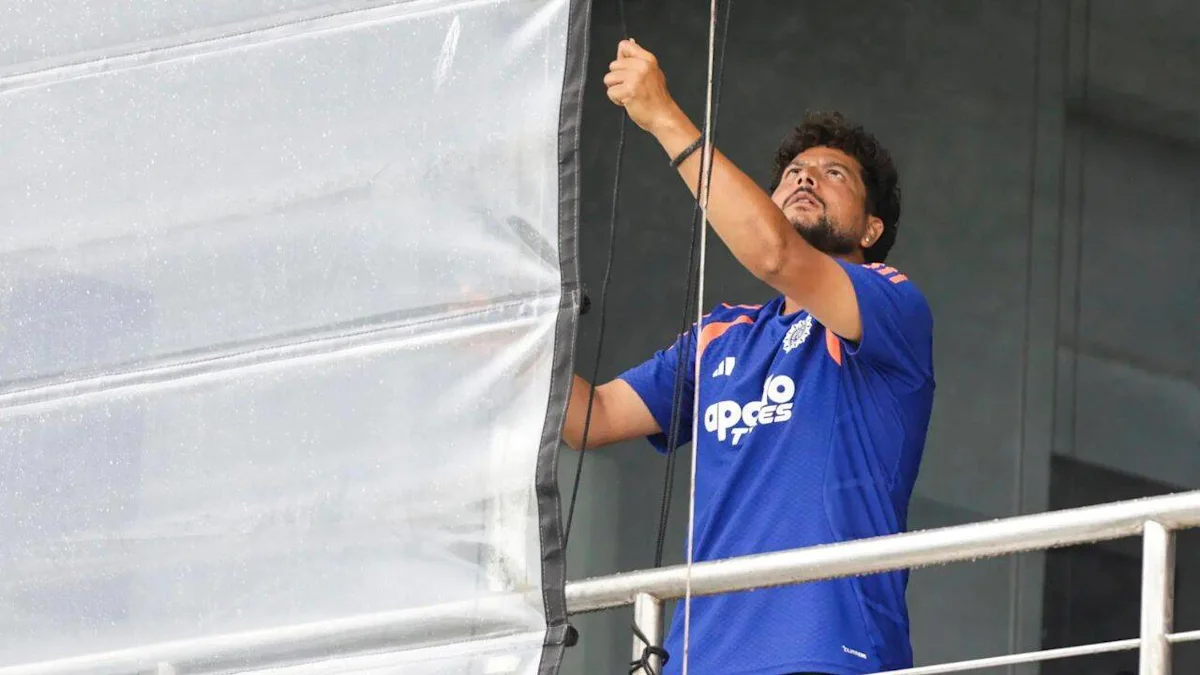
India’s spin bowling coach Sairaj Bahutule has publicly defended Kuldeep Yadav following a statistically quiet performance in the first Test against Sri Lanka in Galle. The left-arm wrist spinner took just one wicket in 25 overs across both innings, a figure that stands in stark contrast to the 14 wickets shared by finger spinners Ravindra Jadeja and Manav Suthar in the same match.
Speaking to reporters at the Sinhalese Sports Club in Colombo, Bahutule insisted that Yadav remains a critical component of the team’s strategy for the upcoming second Test in Colombo. “He’s been bowling extremely well. It’s just the situation which arose in Galle, he had to play a different role,” Bahutule stated. “For me, he has always been a match-winner and he definitely is in the scheme of things.”
The coach attributed the disparity in performance to the specific challenges posed by the Kookaburra ball used in the series. Bahutule explained that as the ball softened, it created a more difficult proposition for wrist spinners compared to finger spinners. “All the spinners are struggling with the soft ball. But for finger spinners (left-arm or off-spinners), it becomes easier,” he noted. “For a leg-spinner, it is that much harder because of the softness of the ball, the seam just goes down.”
Bahutule elaborated on the technical adjustments required, noting that finger spinners can more easily manipulate their grip and pace in response to changing conditions. “Finger spinners, you can manipulate the fingers and bowl with the speeds you want to bowl. It is a tough proposition for a (wrist) spinner,” he said. He argued that a single match should not define a player's overall form or approach.
The coach highlighted that Yadav was required to continuously alter his pace and trajectory as the pitch slowed down over the duration of the Test. “We had to see how the trajectory or the speeds work in every session,” Bahutule explained. “As the days went by and as there was a demand for different types of speeds and different types of trajectories, he definitely was making an effort to bowl that.”
Despite the statistical shortfall, Bahutule maintained that Yadav operated effectively within the constraints of the match. “I think he was playing his role. So, he was operating as a wrist spinner in a way where obviously the wicket got slower and slower each day,” he concluded. “But I’m sure he was bowling the way he normally bowls.”