India launches domestically built hydrogen train to meet 2030 rail emissions target
Prime Minister Narendra Modi inaugurates the 10-coach service on a 90km Haryana route, marking a strategic step toward net-zero carbon emissions in Indian railways.
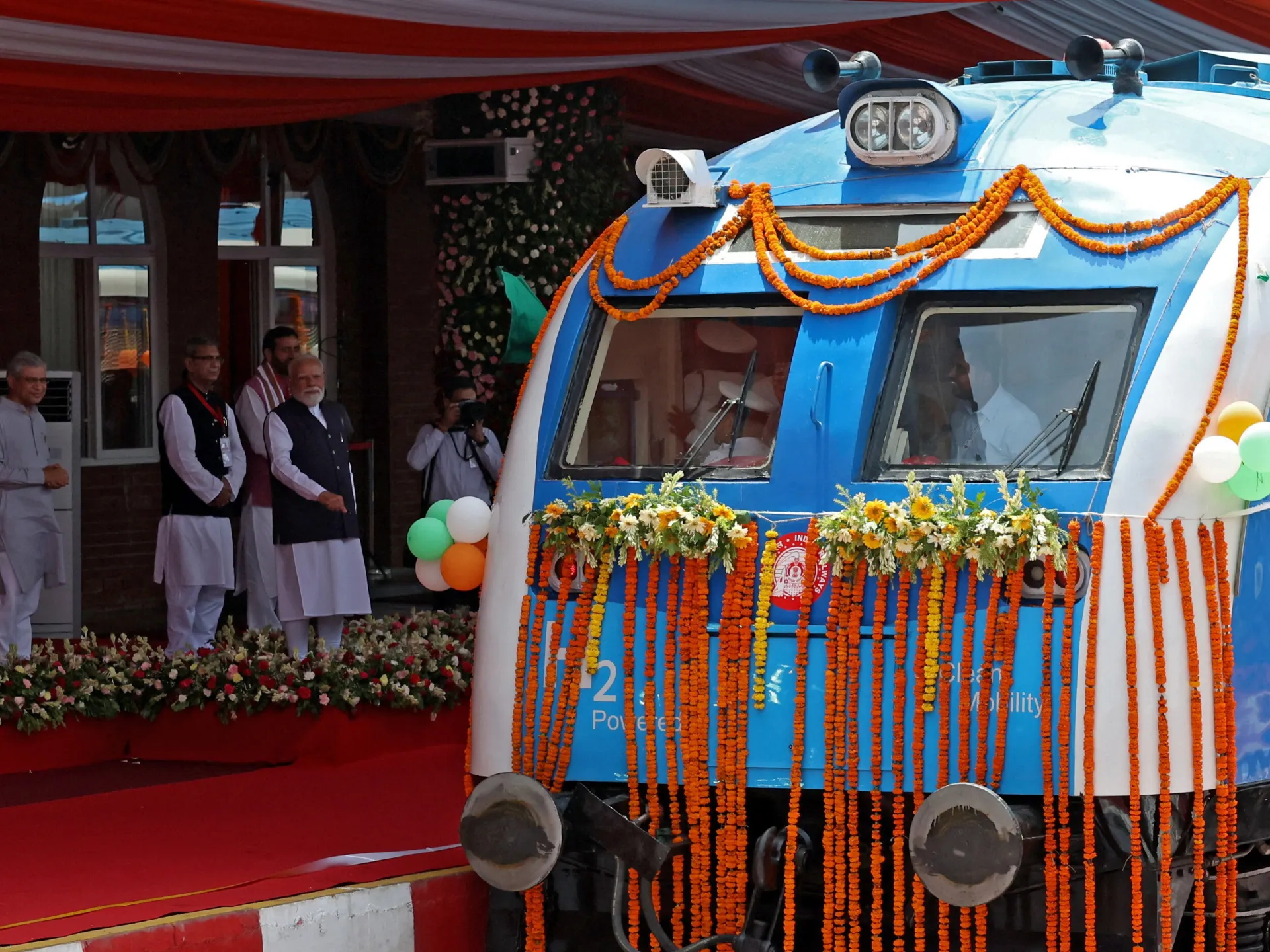
India has officially launched its first domestically constructed hydrogen-powered train, a move that positions the country among a select group of nations, including Japan, China, the United States, and Germany, that have successfully deployed zero-emission rail technology. Prime Minister Narendra Modi inaugurated the locomotive, dubbed the “NaMo Green Rail”, ahead of its inaugural journey on Friday, framing the deployment as a critical milestone for both national sustainability and self-reliance.
The 10-coach service operates on a 90km route between Jind and Sonipat in the state of Haryana. Designed to carry approximately 2,600 passengers at speeds of up to 75km/h, the train is scheduled to make two return trips daily. During operation, the locomotive emits only heat and water vapour, providing a clean alternative to diesel engines for sections of the network where full electrification is not feasible.
While India has already electrified nearly its entire 70,000km railway network, one of the largest in the world, the government has identified hydrogen as a necessary complement for non-electrified lines. The rollout is a key component of the Indian government’s broader strategy to expand hydrogen usage and achieve net-zero carbon emissions within the railway sector by 2030.
The initiative underscores Prime Minister Modi’s ongoing push for domestic industrial capability, with the NaMo Green Rail being designed, engineered, and built entirely within India. This focus on local manufacturing aligns with the Prime Minister’s broader policy objectives to reduce reliance on foreign technology and strengthen the nation’s clean energy infrastructure.
The launch places India in the company of early adopters of hydrogen rail, notably Germany, which introduced the world’s first hydrogen-powered fleet in 2022. The deployment follows a series of clean energy initiatives promoted by the Modi administration, including the expansion of renewable energy sources and the advancement of the country’s nuclear energy programme, as the government seeks to address climate policy challenges through technological innovation.