IBM targets enterprise predictability with new Granite 4.2 open-weight models
The latest release prioritises agentic capabilities and chain-of-thought reasoning over raw speed, positioning the models as a cost-effective alternative to frontier cloud services.
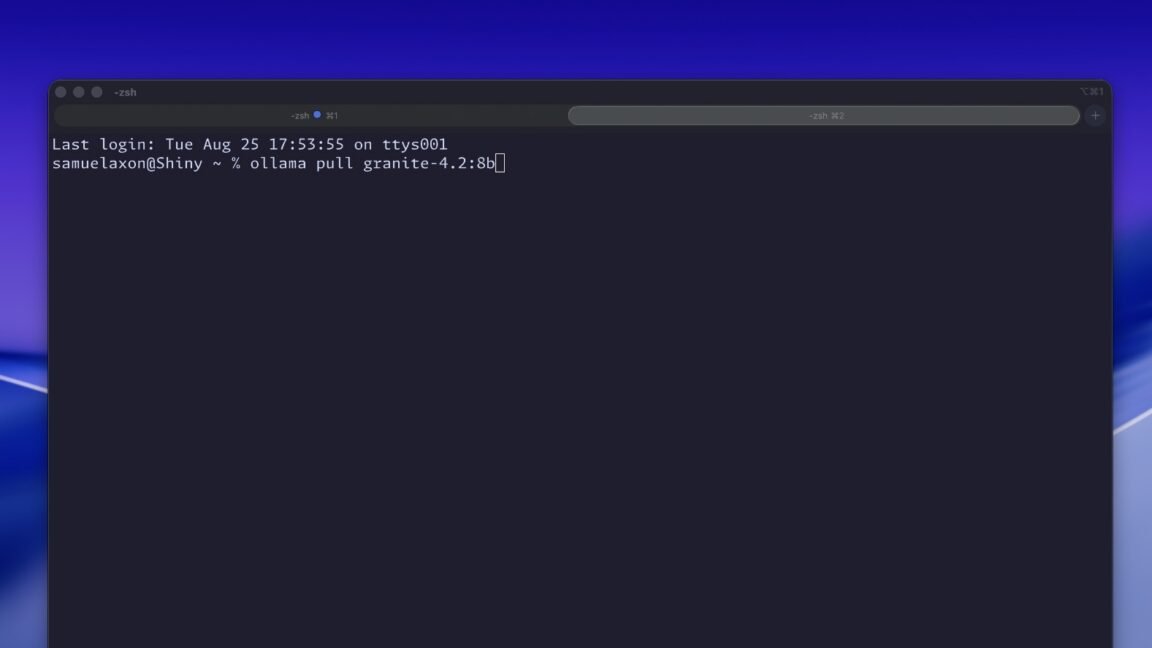
IBM has released the Granite 4.2 family of open-weight large language models, available in 3B, 8B, and 30B parameter variants. The launch is designed for developers and enterprises seeking to download and self-host models, offering a native 128,000-token context window and a decoder-only architecture consistent with previous versions in the series.
The 8B and 30B variants distinguish themselves through an agentic reinforcement learning block, which trains the models for expanded capabilities such as terminal usage, web searching, and external tool integration. While the 3B model also supports tools, it lacks this specific level of specialised training, serving a different segment of the local deployment market.
IBM explicitly describes Granite 4.2 as the reasoning-focused release of its language-model family. This approach utilises chain-of-thought processing to carry intermediate results forward through multiple steps, a method often referred to as functional reasoning. For users, this can result in more rigorous and accurate responses, though it typically demands higher compute resources and may lead to slower response times compared to non-reasoning models.
The release targets the growing market for local, self-hosted models, which have gained traction as a cost-effective alternative to frontier cloud models from companies such as Anthropic and OpenAI. With significant discourse surrounding the cost and compute crunch of cloud-based solutions, both individual developers and enterprise organisations are increasingly exploring local options to balance performance, speed, and cost.
IBM’s Granite family has historically been positioned for predictable enterprise deployment rather than being the fastest or most aggressively innovative. Relative to other competitors in the local enterprise space, such as Nvidia’s Nemotron, the new models emphasise reliability and predictable performance. This strategy aligns with IBM’s broader corporate focus on stability, appealing to organisations that prioritise consistent outcomes over cutting-edge speed.
The rise of these local models has also spurred interest in model routers, AI tools that interpret user prompts and direct them to appropriately scoped models. By allowing users to tinker with models on local hardware without incurring per-token API fees, the Granite 4.2 release caters to hobbyists, AI researchers, and individual developers seeking greater control over their AI infrastructure.