Hyogo murder suspect lacked ID and smartphone prior to discovery, police reveal
Authorities confirm the wanted 42-year-old man was interviewed while sleeping on the street, possessing neither a driver’s licence nor a mobile device, as surveillance footage analysis continues.
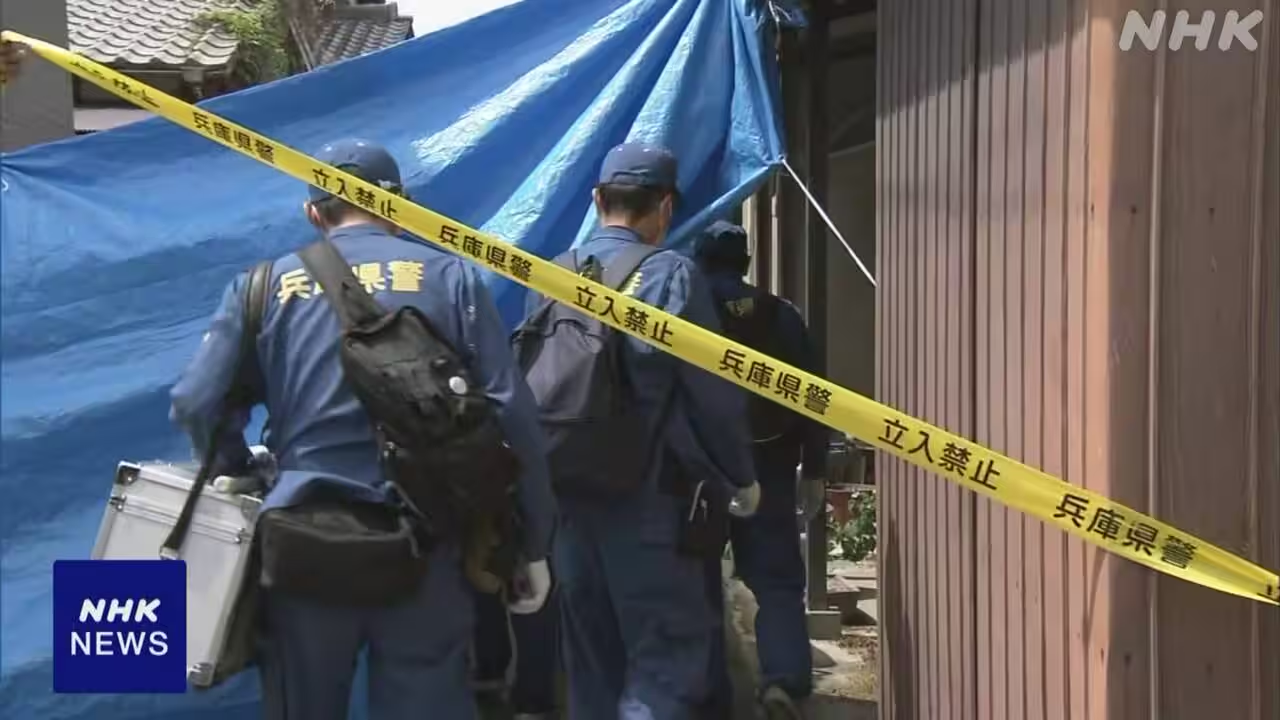
Police investigating the murder of a mother and daughter in a residential property in Tatsuno City, Hyogo Prefecture, have disclosed that the primary suspect was encountered by law enforcement three days before the crime was officially discovered. According to NHK News Japan, the suspect, who is currently on a wanted list, was found sleeping on a street during this earlier encounter.
During the police interview conducted at that time, investigators noted that the suspect did not possess a driver’s licence or a smartphone. The absence of these standard identification and communication tools has become a focal point in the ongoing inquiry into the suspect’s movements and potential methods of evasion.
The suspect has been publicly identified as a 42-year-old man wanted for the murder of the daughter. Police are currently analysing surveillance camera footage captured at multiple stations within Tatsuno City. This visual evidence suggests the possibility that the suspect utilised public transport, although such details remain under active investigation rather than confirmed fact.
Investigators are also considering whether the suspect changed clothes and fled after the incident. This theory is part of the broader effort to reconstruct the timeline of events, though authorities caution that the connection between the street encounter and the subsequent homicide is currently circumstantial. The exact nature of the suspect’s activities between the initial police interview and the discovery of the bodies remains under scrutiny.
As the investigation proceeds, Hyogo Prefecture Police continue to seek public assistance in locating the wanted individual. The case highlights the complexities of tracking individuals who operate without standard identification or digital connectivity, requiring reliance on physical surveillance and witness accounts to establish a definitive chain of events.