Hungary's New Tisza Government Sworn In With Mandate for Systemic Overhaul
The incoming cabinet includes a foreign minister from the former pro-European wing of Fidesz and the country's first blind minister, yet faces immediate internal challenges regarding judicial appointments and international policy alignment.
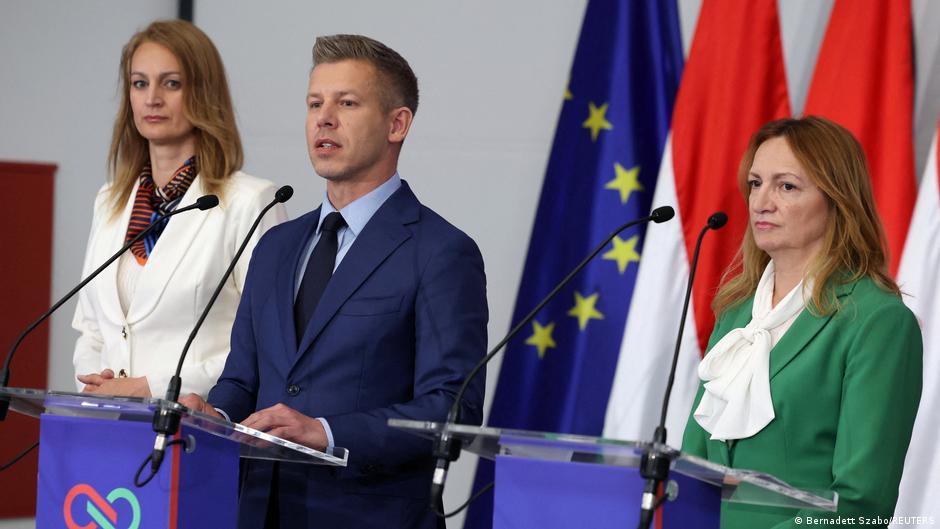
Hungary's incoming Prime Minister Peter Magyar and his Tisza party cabinet have officially sworn in with a declared mandate to dismantle the previous administration's systems, restore the rule of law, and address an acute economic crisis. The transition is marked by a series of symbolic gestures designed to signal a sharp departure from the prior era, including the declaration of the swearing-in day as a "system change holiday" and the raising of the European Union flag over parliament for the first time in twelve years.
The new administration has announced plans to establish anti-corruption and asset recovery authorities to reclaim state funds improperly allocated to loyalists of the former regime. Concurrently, the government intends to replace pro-Orban state media with an independent public broadcaster. These structural reforms are underpinned by a cabinet featuring diverse appointees, including Anita Orban as Foreign Minister, who hails from the former pro-European wing of the Fidesz party, and Vilmos Katai-Nemeth, who will serve as the country's first blind minister.
However, the transition faces immediate internal challenges before the cabinet is fully operational. Marton Mellethei-Barna, the nominated Justice Minister and Prime Minister Magyar's brother-in-law, has withdrawn from the position to avoid casting a shadow on the reforms. He has been replaced by Marta Gorog, a law academic described by Magyar as the "uncrowned queen of Hungarian jurists." This development highlights the delicate balance the new government must strike between political loyalty and the perception of impartiality.
The path to implementing these reforms is further complicated by the potential resistance from President Tamas Sulyok and senior members of the judiciary, whom the new government identifies as obstacles to the transition. Magyar has warned that if President Sulyok does not step down, he could significantly delay the necessary changes. Despite holding a two-thirds majority in parliament, the administration must navigate this internal friction to ensure the dismantling of what it terms "Orban's puppets" within the state apparatus.
Internationally, the new government aims to rejoin the EU and NATO while securing frozen EU funds, which are critical as Hungary's budget deficit approaches six per cent due to previous spending policies. Magyar has also linked Ukraine's accession to the European Union with the treatment of Hungarian minorities within that country, a stance that contradicts recent assurances from Ukrainian officials regarding non-discrimination. This diplomatic approach seeks to position Hungary as a reliable partner while prioritizing the interests of its ethnic minority communities abroad.