Hungary and EU agree deal to unlock frozen funds
The agreement, finalised after talks between Magyar and European Commission President Ursula von der Leyen, requires Budapest to meet 27 binding conditions by 31 August or forfeit the funds, including €10 billion in pandemic recovery money set to expire.
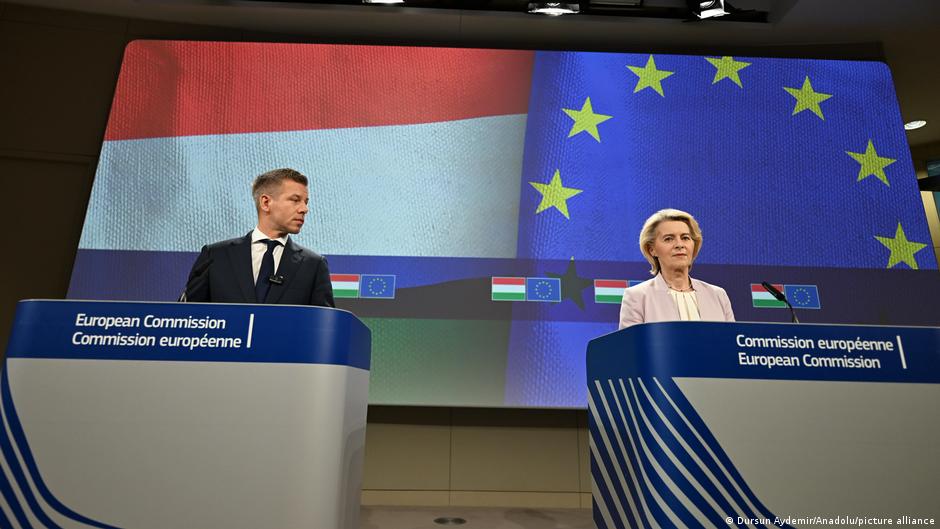
Hungary’s new government, led by Prime Minister Peter Magyar, and the European Commission have reached an agreement to potentially unlock €16.4 billion ($19 billion) in EU funds previously frozen under former Prime Minister Viktor Orban. Magyar has until August 31 to meet 27 binding conditions, including structural reforms, anti-corruption measures, and steps to bolster academic freedom. Failure to meet these milestones will result in no funding disbursement. The funds consist of €12.9 billion in nonrefundable grants and €3.5 billion in loans, with €10 billion from pandemic recovery funds expiring if not secured.
The deal was announced following a meeting between Prime Minister Peter Magyar and European Commission President Ursula von der Leyen. Hungary’s Tisza party won the early May parliamentary election on a platform of unlocking these frozen funds. Magyar’s government has indicated willingness to join the European Public Prosecutor’s Office (EPPO) to protect EU funds from corruption. Specific project allocations include approximately €1.5 billion for the energy grid, €1.8 billion for railway investments, and €500 million for an AI "gigafactory."
University governance reforms are expected to free up about €2.2 billion for academia, while the national investment bank may receive a €2 billion cash injection. Changes to pension and tax systems were removed from the requirement list as they were deemed unfeasible within the short timeframe. Hungary’s position on opening Ukraine’s EU accession negotiations was not part of these specific negotiations.
Orban, who has not taken up his parliamentary mandate, criticised the deal on social media, asking what Hungarian interests Magyar had "sold out to Brussels." Hungary is set to submit a formally revised list of planned reforms and projects in early June, with approval expected from the European Commission and Council in July.
Senior EU officials clarified that the agreement establishes conditions rather than guaranteeing immediate disbursement. The European Commission has removed less feasible requirements, such as changes to pension and tax systems, to ensure the remaining milestones can be met by the August deadline. This adjustment reflects the economic constraints and the tight timeline facing the new administration.
The financial package represents approximately 14 per cent of Hungary’s GDP, offering significant relief to a fiscal situation described by EU officials as extremely poor. Economists note that the potential unlocking of funds signals strengthening legal certainty, which could stimulate investment appetite independently of the direct cash injections. The Tisza party’s electoral victory was predicated on resolving the stagnation left by Orban’s long tenure.
Hungary will submit its formally revised list of planned reforms and projects in early June. This plan will then be approved by the European Commission and the European Council in July. In the meantime, the government is expected to initiate the necessary legislative steps to meet the criteria for the disbursal of the funds by August 31.