Humanitarian operations under strain as Lebanon crisis deepens
Elsa Softic, deputy chief of operations at Première Urgence Internationale, told FRANCE 24 that millions of Lebanese remain displaced as the ongoing war between Israel and Hezbollah continues to worsen the humanitarian situation.
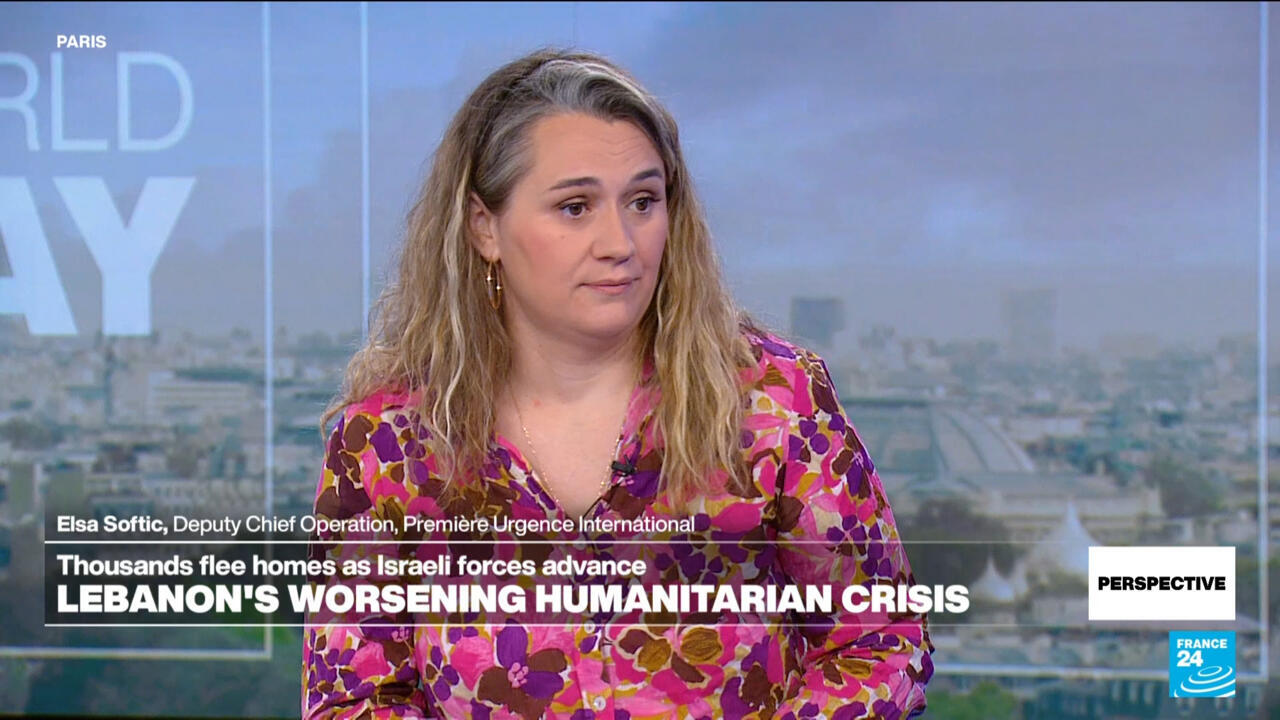
The humanitarian landscape in Lebanon continues to deteriorate as the conflict between Israel and Hezbollah persists, leaving millions of citizens displaced from their homes. Elsa Softic, deputy chief of operations at Première Urgence Internationale, provided commentary on the escalating crisis to FRANCE 24, outlining the challenges faced by aid organisations operating in the region.
Speaking to the FRANCE 24 programme Perspective, Softic detailed how her organisation is working to assist those affected by the ongoing war. The displacement of large segments of the Lebanese population has created urgent logistical and operational demands for international aid groups attempting to deliver essential support to vulnerable communities.
The scale of the displacement remains a central concern, with Softic noting that millions of Lebanese have been forced to leave their residences. This mass movement of people has placed significant pressure on local infrastructure and resources, complicating efforts to maintain stability and provide consistent humanitarian assistance in the affected areas.
Première Urgence Internationale has been actively engaged in responding to the needs arising from the conflict. Softic’s discussion with FRANCE 24 highlighted the organisation’s ongoing efforts to navigate the complex security and logistical environment to reach those impacted by the hostilities.
The report underscores the growing severity of the humanitarian situation as the war between Israel and Hezbollah shows no immediate signs of abating. Aid workers such as Softic remain on the ground, attempting to mitigate the impact of the conflict on civilian populations amidst the worsening conditions.