Human microbes could survive in Moon’s South Pole, NASA study finds
Research published in Science Advances reveals that Earth-origin organisms may persist in shadowed lunar regions, posing challenges for future exploration and the search for extraterrestrial life.
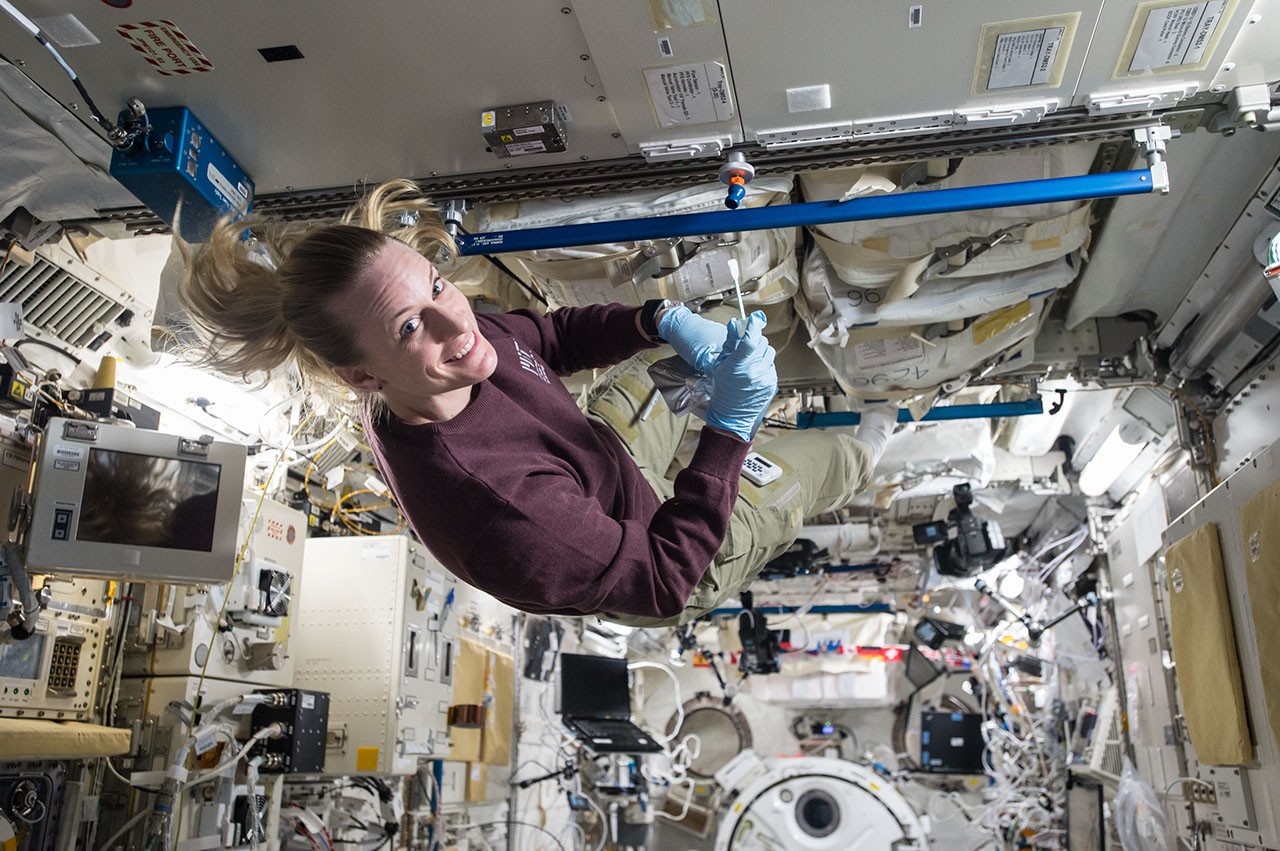
A study published in Science Advances indicates that microbes from Earth could survive in the shaded regions of the Moon’s South Pole when transported by human explorers. The research, led by planetary scientist Prabal Saxena at NASA’s Goddard Space Flight Center, identifies specific "survivable niches" where common spaceflight organisms might remain alive for at least one Earth day. This finding highlights the complexity of distinguishing ancient lunar chemistry from contamination introduced by visiting astronauts.
The team tested five microorganisms commonly found in spaceflight environments and on human skin: Aspergillus niger, Bacillus subtilis, Staphylococcus aureus, Deinococcus radiodurans, and several species of Fusarium. Using detailed environmental maps derived from data collected by NASA’s Lunar Reconnaissance Orbiter, the researchers simulated conditions at three specific sites near the lunar South Pole: Nobile Rim, Connecting Ridge, and De Gerlache Rim. The Moon’s low axial tilt causes the Sun to hover near the horizon at the poles, creating deep shadows in low-lying terrain that shield against radiation and preserve cold temperatures.
Aspergillus niger, a fungus often found in household bathrooms and heating systems, demonstrated the highest resistance to ultraviolet radiation. It was able to survive even in areas with some sunlight exposure, a finding that surprised scientists as it is not typically classified as an extremophile. The organism has previously been detected on the exterior of the International Space Station, confirming its resilience in the vacuum of space.
The study notes that while these microbes can survive in a dormant state, the Moon lacks the ingredients necessary for microbial growth and replication, such as liquid water and a moderate atmosphere. However, the persistence of these organisms raises significant concerns for the Artemis program, which aims to establish a permanent human presence on the Moon. Standard sterilisation methods used for robotic spacecraft, such as baking at temperatures above 400 degrees Fahrenheit, cannot be applied to astronauts, making contamination control more difficult for crewed missions.
Andrew Needham, a NASA Goddard-based co-author and Artemis contamination-control scientist, emphasised the need for baseline measurements of contaminants before crewed missions begin. "We need to understand what was there before us, because when we go to Mars to search for signs of life beyond our planet, we will want to make sure it’s not stuff we brought," Needham said. The findings underscore the importance of characterising lunar chemistry before human visits alter the environment.
The authors suggest that the Moon could serve as a natural laboratory to test the real-life limits of microbial survival in extreme environments. By understanding how these hitchhiking microbes persist, scientists can better prepare for future explorations of Mars, where distinguishing between native life and Earth-borne contaminants is critical.