Hubble Telescope Reveals Starry Spiral NGC 3137 in Constellation Antlia
NASA's Hubble Space Telescope has released a striking new image of the spiral galaxy NGC 3137, located 53 million light-years away.
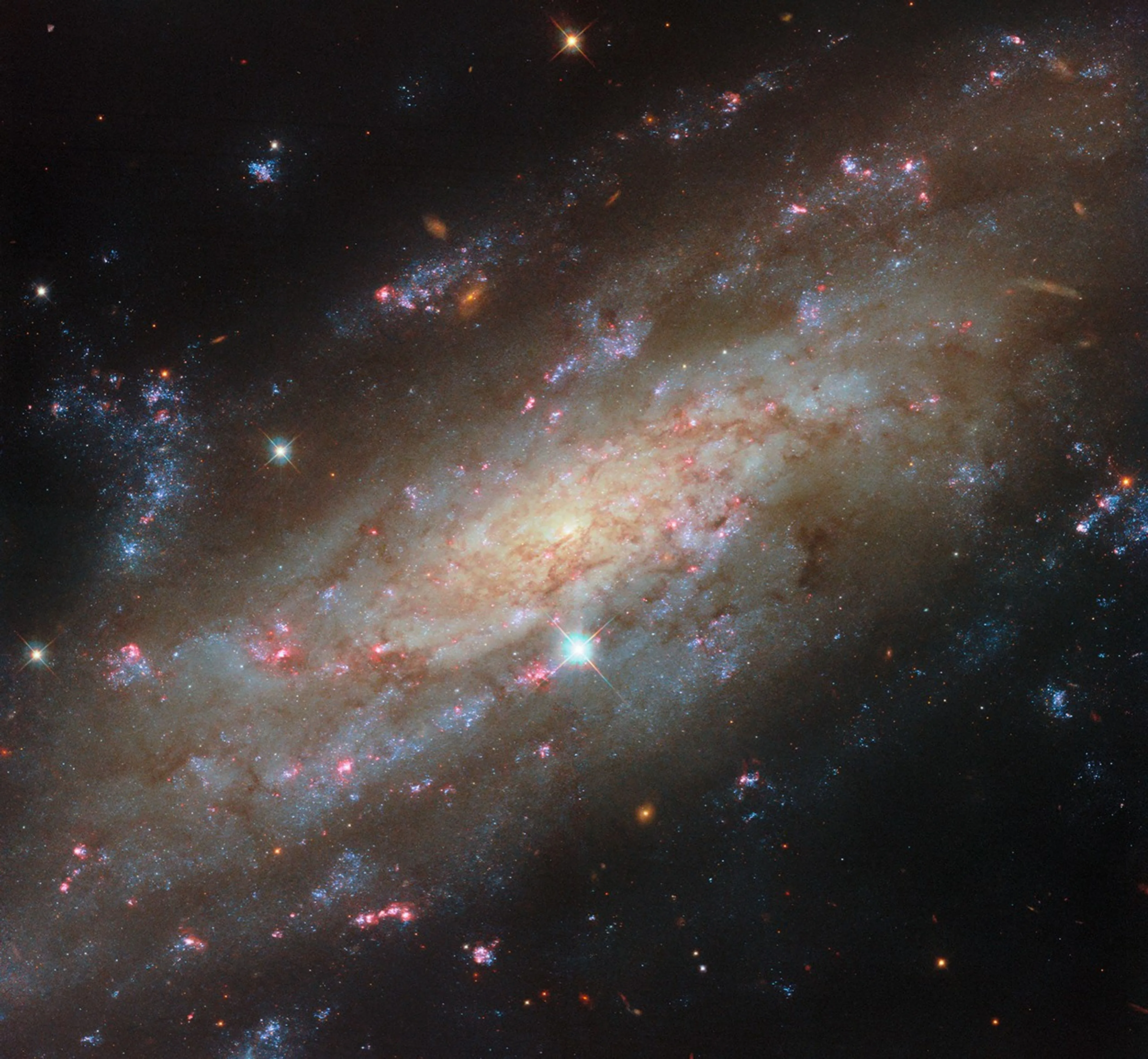
NASA's Hubble Space Telescope has released a new high-resolution image of the spiral galaxy NGC 3137, which glitters with dense clusters of stars. The galaxy is situated 53 million light-years away in the constellation Antlia, offering astronomers a vivid view of a cosmic system that bears a strong resemblance to our own neighbourhood.
This target is of particular interest because it travels through space as part of a group of galaxies thought to be similar to the Local Group, which contains the Milky Way and the Andromeda galaxy. The NGC 175 group, to which NGC 3137 belongs, features two large spiral galaxies, NGC 3137 and NGC 3175, mirroring the structure of the Local Group where the Milky Way and Andromeda are the dominant members.
Researchers are utilising this nearby system to investigate the fundamental cycle of stellar birth and death, as well as broader galactic dynamics. By observing a system so comparable to our own, scientists can gain valuable insights into the mechanics of our galactic home without the limitations of observing distant, less detailed structures.
In addition to the two primary spiral galaxies, the group is known to contain numerous smaller dwarf galaxies. However, while researchers have identified more than 500 dwarf galaxy candidates within the NGC 175 group, the exact number of confirmed tiny companions remains unknown. This distinction between candidates and confirmed objects highlights the ongoing nature of the study and the complexity of mapping such systems.
The new visual data provides a clear look at the galaxy's structure and star formation activity. The image credit is attributed to ESA/Hubble & NASA, D. Thilker and the PHANGS-HST Team, reflecting the collaborative effort behind capturing these distant details.
As astronomers continue to analyse the data from this group, the findings will contribute to a deeper understanding of how galaxies evolve and interact over cosmic time. The study of NGC 3137 and its companions serves as a crucial comparative tool for cosmologists seeking to explain the history and future of the Local Group.