Hubble captures soft glow of barred spiral galaxy IC 486
The Hubble Space Telescope has produced a new image of the barred spiral galaxy IC 486, highlighting its central bar and smooth spiral arms against the backdrop of deep space.
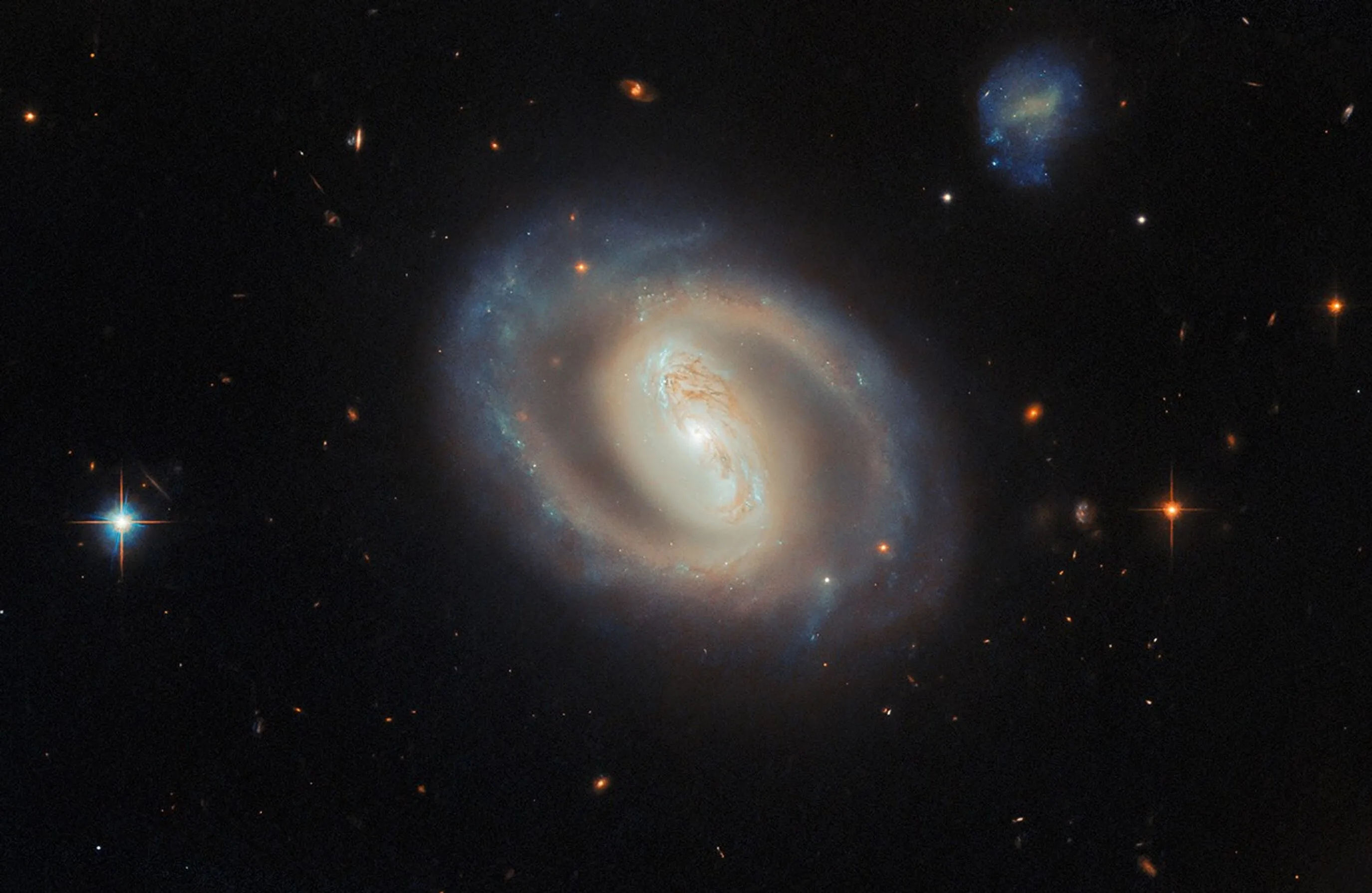
NASA released a striking new image on 13 April 2026 that captures the barred spiral galaxy IC 486 in vivid detail. The photograph, taken by the Hubble Space Telescope, depicts the galaxy as a luminous swirl set against the deep black of space. Its appearance is characterised by a bright central bar from which smooth spiral arms unfurl in a pattern that is almost ring-like.
Located approximately 380 million light-years from Earth, IC 486 sits right on the edge of the constellation Gemini, also known as the Twins. The visual data reveals the galaxy glowing with a soft, ethereal light, offering astronomers a clear view of its structure. This specific observation allows researchers to study the dynamics of galaxies that lie so far beyond our own solar system.
The image is credited to ESA/Hubble and NASA, with specific processing contributions from M. J. Koss and A. J. Barth. Released as part of ongoing efforts to document deep space phenomena, the photograph serves as a testament to the capabilities of the Hubble Space Telescope in capturing distant celestial objects. It provides a fresh perspective on a known barred spiral galaxy, emphasising the intricate beauty of cosmic structures.
While the primary focus of this release is astronomical observation, the broader context of space activity remains relevant. Concerns regarding space debris are growing as lunar activity expands, with plans for semi-permanent outposts near the South Pole by both NASA and China. Experts suggest that the cadence of launches to the Moon is expected to increase significantly, necessitating careful management of orbital debris to prevent future incidents involving upper stages striking celestial bodies.
Despite these operational challenges in near-Earth and lunar space, the release of the IC 486 image underscores the continued success of deep space exploration. The clarity of the photograph allows for detailed analysis of the galaxy's form, reinforcing the importance of long-term observation missions. Scientists continue to utilise such data to better understand the evolution and composition of galaxies across the universe.