Hubble captures active galaxy Messier 88 on long journey to Virgo Cluster
Messier 88, located 63 million light-years away, is currently moving towards the centre of the Virgo Cluster, a process expected to take hundreds of millions of years.
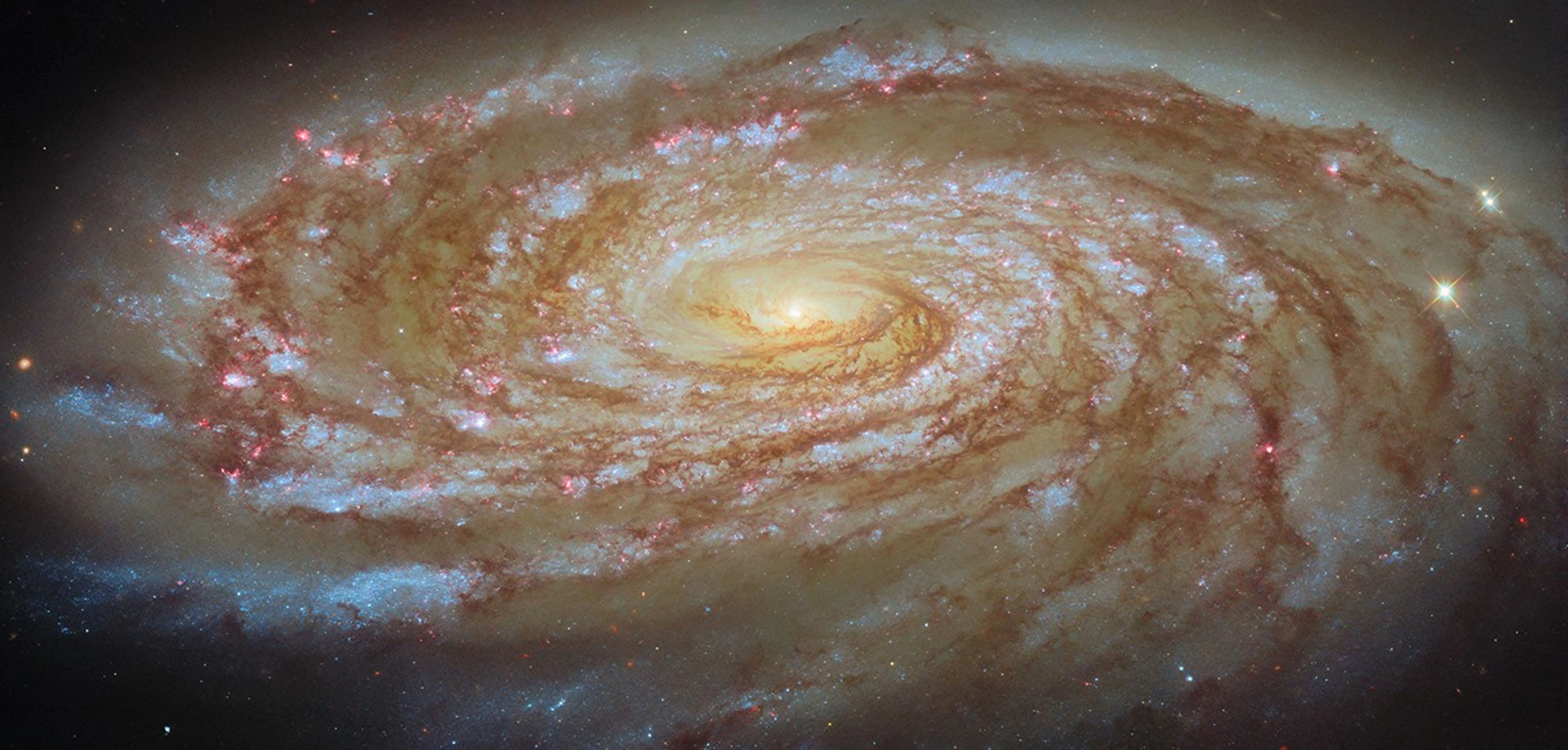
NASA and the European Space Agency have released a new image from the Hubble Space Telescope featuring Messier 88, an active spiral galaxy situated approximately 63 million light-years from Earth. The image, released on 29 May 2026, highlights the galaxy’s dynamic nature as it travels through space.
Messier 88, also designated as NGC 4501, resides in the constellation Coma Berenices. It is currently on a trajectory towards the centre of the Virgo Cluster, a vast collection of galaxies. This journey is estimated to last hundreds of millions of years, illustrating the slow but inevitable gravitational interactions that shape large-scale cosmic structures.
The galaxy is classified as active due to the energetic phenomena occurring at its core. Astronomers have identified a supermassive black hole at the centre of Messier 88, which is estimated to be around 100 million times the mass of the Sun. This immense object is actively consuming gas and dust from its surroundings.
The accretion of material by the black hole is powering significant outflows of gas from the galaxy’s centre. These outflows are a characteristic feature of active galaxies, where the central engine releases substantial energy into the interstellar medium. The image provides a visual record of this ongoing process.
The photograph is credited to ESA/Hubble and NASA, with contributions from D. Thilker. It serves as a documentation of the galaxy’s current state, offering context for its movement within the Virgo Cluster and the physical processes driving its activity.