Houthis emerge as Iran’s most potent proxy in Red Sea expansion
Analysts suggest the Yemeni group is surpassing Hezbollah in strategic value to Tehran, leveraging new control over coastal waters and demonstrated air-defence capabilities.
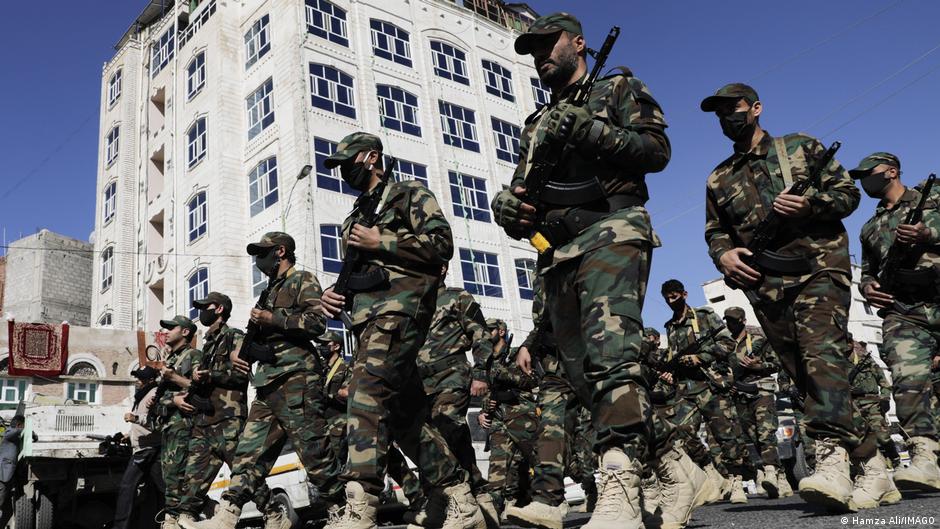
The Houthi rebel group in Yemen is increasingly viewed as the dominant force within Iran’s “axis of resistance,” a network of allied militias that may now hold greater strategic weight than Lebanon’s Hezbollah. This shift follows recent military campaigns in which Houthi fighters expanded their control over the Yemeni coastline and several islands in the Red Sea. According to the US-based Institute for the Study of War, these territorial gains set the conditions for establishing an axis-controlled body of water, a move designed to assert influence over regional oil exports.
The group’s rising profile coincides with a period of degradation for Hezbollah, which has been weakened by recent Israeli attacks and the loss of its base in Syria. In contrast, the Houthis have demonstrated enhanced military capabilities, most notably by downing a Saudi F-15 fighter jet this week using a missile they claim to have modified themselves. This feat marks a significant escalation, as Hezbollah has previously targeted Israeli jets and drones but had not successfully shot one down.
Farea al-Muslimi, a research fellow at the UK think tank Chatham House, noted that Houthi chief Abdul Malik al-Houthi now possesses more leverage than former Hezbollah leader Hassan Nasrallah ever held. Al-Muslimi observed that while Hezbollah provided Tehran with deterrence against Israel, the Houthis offer Iran leverage over Saudi Arabia, Israel, and global shipping routes. Andreas Krieg, a senior lecturer at King’s College London, confirmed that the Houthis are performing a similar, and in some respects more useful, strategic function for Iran as Hezbollah did in the past.
Despite this alignment, questions remain regarding the degree of direct control Tehran exerts over the Yemeni group. A review by the Iraq-based outlet Amwaj found that while Iranian media framed Houthi gains as a victory for the broader axis, Houthi-run channels focused primarily on their own fight against the Saudi blockade. Krieg highlighted that the Houthis maintain a distinct leadership, ideology, and territorial project, meaning Tehran can arm and benefit from them but cannot necessarily switch them on and off at will.
However, the strategic distance between the two groups appears to be closing. Allison Minor, previously the US deputy special envoy for Yemen, stated in Foreign Affairs magazine that while Houthi leaders frame their actions in local terms, their alignment with Tehran has tightened over the past two years. Reports indicate that Iranian leadership has discussed with the Houthis the possibility of closing off the Bab el-Mandeb Strait, a critical chokepoint for global trade.
The governance implications of this shift are significant for regional stability. Unlike Hezbollah, which operates a political branch and provides social welfare services in Lebanon, the Houthis adopt a “zero sum approach,” collecting taxes for warfare without providing public services. Al-Muslimi argued that this lack of domestic restraint makes the Houthis potentially more dangerous, as their ideology of martyrdom and sacrifice allows them to absorb military setbacks that might destabilise other proxy groups.