High Representative Christian Schmidt resigns from Bosnia and Herzegovina post
The Office of the High Representative confirms the resignation after five years, a move analysts interpret as a strategic withdrawal by external powers rather than a personal decision.
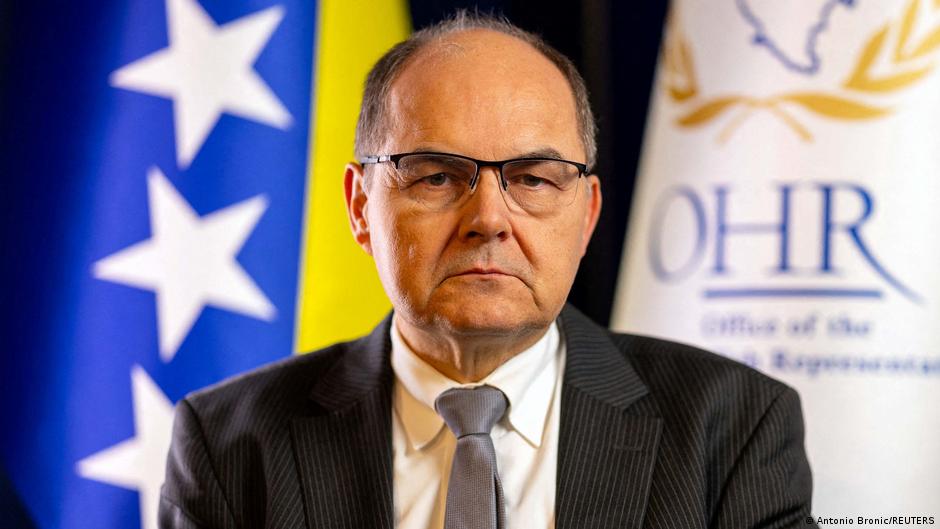
The Office of the High Representative (OHR) in Bosnia and Herzegovina confirmed on Monday that German politician Christian Schmidt will resign from his post following a five-year tenure. While the OHR characterised the departure as a personal decision made by the envoy, the nature of the exit suggests a more complex reassessment of the role's utility by key international actors. Schmidt's departure is not viewed by many observers as a routine diplomatic handover, but rather as a strategic withdrawal orchestrated from above, signalling a potential shift in how the region is managed.
Schmidt's tenure was defined by his confrontations with the leadership of Republika Srpska, particularly former president Milorad Dodik. The High Representative enforced criminal code amendments that led to Dodik's conviction and removal from office after he was sentenced to prison for disregarding OHR decisions. Dodik's legal team has since framed Schmidt's resignation as a victory in their campaign to remove the international overseer, a sentiment echoed by analyst Tanja Topic, who warned that the Republika Srpska authorities have won a battle to drive the envoy out at any cost.
The friction surrounding Schmidt's appointment created a deep fault line within the country's political structure. Unlike previous envoys, Schmidt's appointment was not confirmed by the UN Security Council, a procedural omission that Republika Srpska leadership never accepted. This lack of formal confirmation undermined his authority in the eyes of the Serb-majority entity, where he was never viewed as an uncontested leader. Consequently, his interventions, while demonstrating the international community's ability to impose legal and political decisions, also highlighted the fragility of a model where an authority stands above domestic democratic accountability.
Schmidt is scheduled to present his bi-annual report to the UN Security Council on Tuesday before departing, where he is expected to warn of a looming disintegration of Bosnia and Herzegovina. His exit raises significant concerns about the future stability of the country's institutions and the evolving geopolitical interests of the EU, US, Russia, and Turkey in the region. The resignation coincides with heightened tensions over state-owned assets and infrastructure projects, such as the Southern Interconnection pipeline controversy, which has become a focal point for competing economic and political leverage.
Political observers note that Schmidt's departure may signal a shift from direct external management to a different pressure mechanism or a change in the type of international figure deployed to the region. The role of the High Representative was established post-1995 to oversee the implementation of the Dayton Peace Agreement, evolving over time to possess extraordinary powers including the ability to impose laws and dismiss officials. However, the current exit suggests that even such an authority is neither stable nor politically protected once it becomes inconvenient to larger powers, exposing the fragility of the entire governance model.
For political Sarajevo, this development leaves an uncomfortable question regarding the availability of external corrective measures when domestic institutions fail to contain crises. The resignation underscores that the country is now a place where the interests of several major international actors intersect, with the control over Bosnia's state-owned assets becoming a sensitive issue of who shapes the country's future. As the region moves into a new phase, the focus shifts to how these competing interests will influence the next chapter of Bosnia and Herzegovina's complex political landscape.