Hezbollah deploys fibre optic drones to bypass Israeli radar and electronic jamming
New asymmetric tactics in Taybeh render multibillion-dollar defence systems ineffective, prompting military admission of inadequate preparation for the specific threat
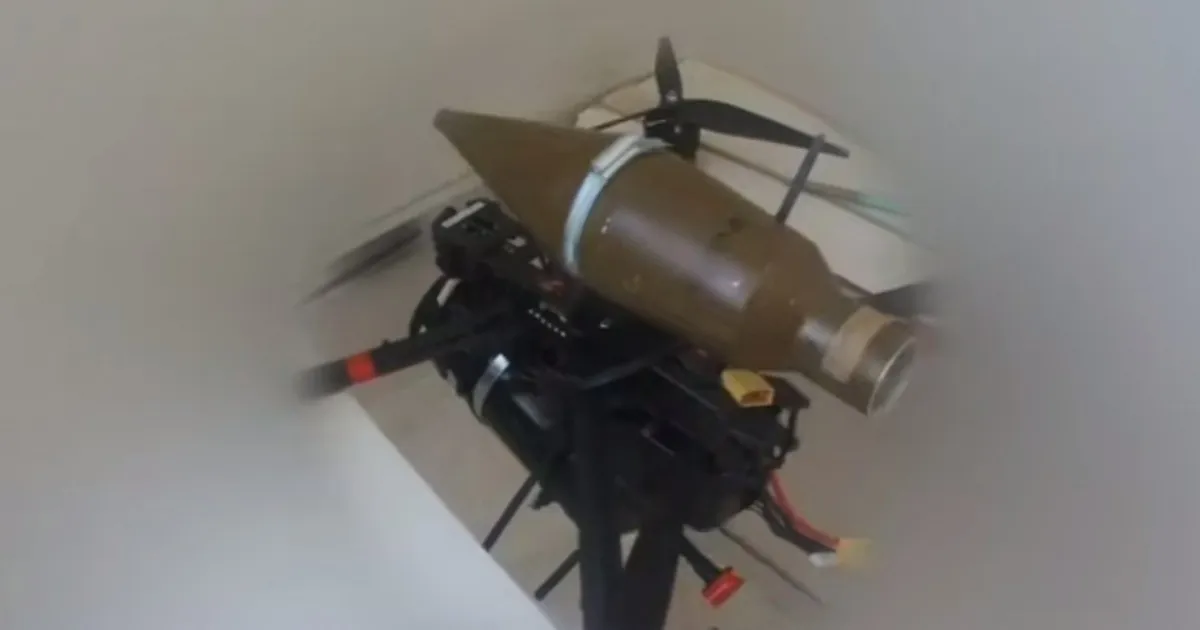
Hezbollah has introduced a new class of first-person view attack drones in Lebanon that utilise a physical fibre optic cable for guidance rather than radio frequencies. These tethered drones, constructed from lightweight fibreglass, successfully penetrated Israel's multibillion-dollar defence systems in the town of Taybeh. The mechanism of action relies on a physical thread extending between 10km and 30km from the operator, which renders the aircraft immune to electronic warfare jamming and invisible to radar due to their lack of wireless signals and low thermal signature.
During a specific incident on 29 April 2026, a drone struck an Israeli armoured unit in Taybeh, killing soldier Idan Fooks and wounding six others. The attack demonstrated the lethality of the technology, as the explosive-laden drone bypassed the Trophy active protection system installed on Merkava tanks. When a medical evacuation helicopter arrived on the scene to assist the wounded, Hezbollah launched two additional drones; one detonated metres from the aircraft, while the other was engaged by ground fire.
The inability to stop these attacks has caused deep frustration among front-line Israeli commanders, who acknowledge they entered the conflict in Lebanon without sufficient tools to counter this asymmetric threat. Despite prior knowledge of similar tactics used in the Russia-Ukraine war and by Palestinian fighters in Gaza, senior military officials admit that the forces were not adequately equipped with systematic countermeasures for this specific modus operandi.
In the absence of effective high-tech solutions, reports indicate that some Israeli combat units have begun independently developing improvised defences. Front-line personnel are resorting to physical nets hung over military positions and windows in the hope that the drones will become entangled before detonating, while relying heavily on manual visual spotting and rifle fire. One commander noted that the current briefing to forces essentially amounts to being alert and shooting at any spotted drone, a strategy described by an officer as far from enough.
Analysts note that while the lightweight fibreglass bodies make the drones highly vulnerable to poor weather, such as heavy rain and strong winds, the thin fibre optic cable can also easily snap if the aircraft flies into a physical obstacle. Nevertheless, the drones are fitted with anti-armour shaped charges, offering a cheap and precise alternative to conventional antitank missiles that can be manually steered into specific vulnerabilities like a tank's turret or tracks.
The deployment underscores a lethal new reality in the escalating conflict, where advanced military capabilities are rendered useless by a simple wire. Troops on the ground find themselves facing an asymmetric nightmare, forced to use assault rifles and window nets to fight off a low-cost fibreglass drone that no radar can see until it is too late.