Hegseth’s testosterone push signals shift in rightwing military rhetoric
The Financial Times characterises the advocacy as a manifestation of the rightwing movement’s aesthetic, though specific policy details remain unclear.
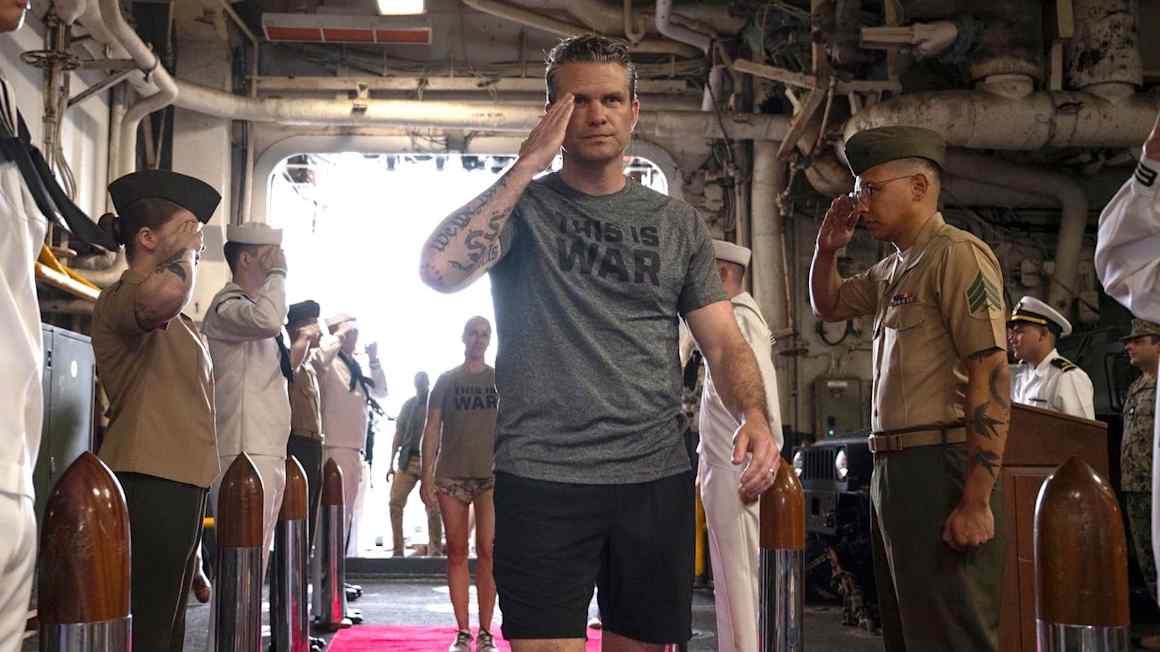
Pete Hegseth has drawn attention for his advocacy regarding the use of testosterone among military personnel, a stance that has been analysed as a significant indicator of contemporary political culture. According to the Financial Times, this position represents the latest manifestation of the rightwing movement’s aesthetic, suggesting a deeper ideological alignment rather than a mere operational suggestion.
The publication frames Hegseth’s comments within a broader context of cultural and political signalling. By linking the proposal to the movement’s aesthetic, the analysis implies that the advocacy serves a rhetorical purpose, reinforcing specific gendered narratives within the military sphere. This interpretation positions the issue not solely as a matter of health or performance, but as a symbol of wider cultural battles.
Despite the prominence of the claim, the source material does not provide specific details regarding the nature of Hegseth’s advocacy. It remains unclear whether the comments constitute a formal policy proposal, a personal opinion, or a rhetorical device intended to mobilise a specific political base. The Financial Times notes the vagueness of the term "testosterone for troops," which lacks the precision typically associated with implemented medical protocols or official defence strategies.
The report highlights the role of Hegseth as a prominent figure in political discourse, whose statements often intersect with broader rightwing ideological trends. His advocacy is viewed as part of a larger pattern where cultural symbols and biological arguments are utilised to define military identity and strength. This approach aligns with the rightwing movement’s focus on traditional aesthetics and hierarchical structures.
While the Financial Times provides this interpretive analysis, it is important to note that the characterisation of Hegseth’s stance as a "manifestation of the rightwing movement’s aesthetic" is an opinion rather than an objective fact. The source material does not offer evidence of any formal policy changes or medical guidelines being adopted by the military as a result of these comments. The focus remains on the political and cultural implications of the advocacy rather than its practical application.
The broader context of military health and performance policies is implied by the nature of the claim, but no specific data or regulatory frameworks are detailed in the source. The Financial Times’ coverage suggests that the debate surrounding testosterone and troops is less about clinical efficacy and more about the symbolic power of the issue within current political debates. This underscores the complex interplay between military tradition, political ideology, and public discourse.