Hegseth demands allied burden-sharing amid China and Iran tensions
Pete Hegseth warns that the era of American subsidisation of wealthy allies is over, as Washington seeks to counter Chinese expansionism and manage the fallout from the ongoing conflict with Iran.
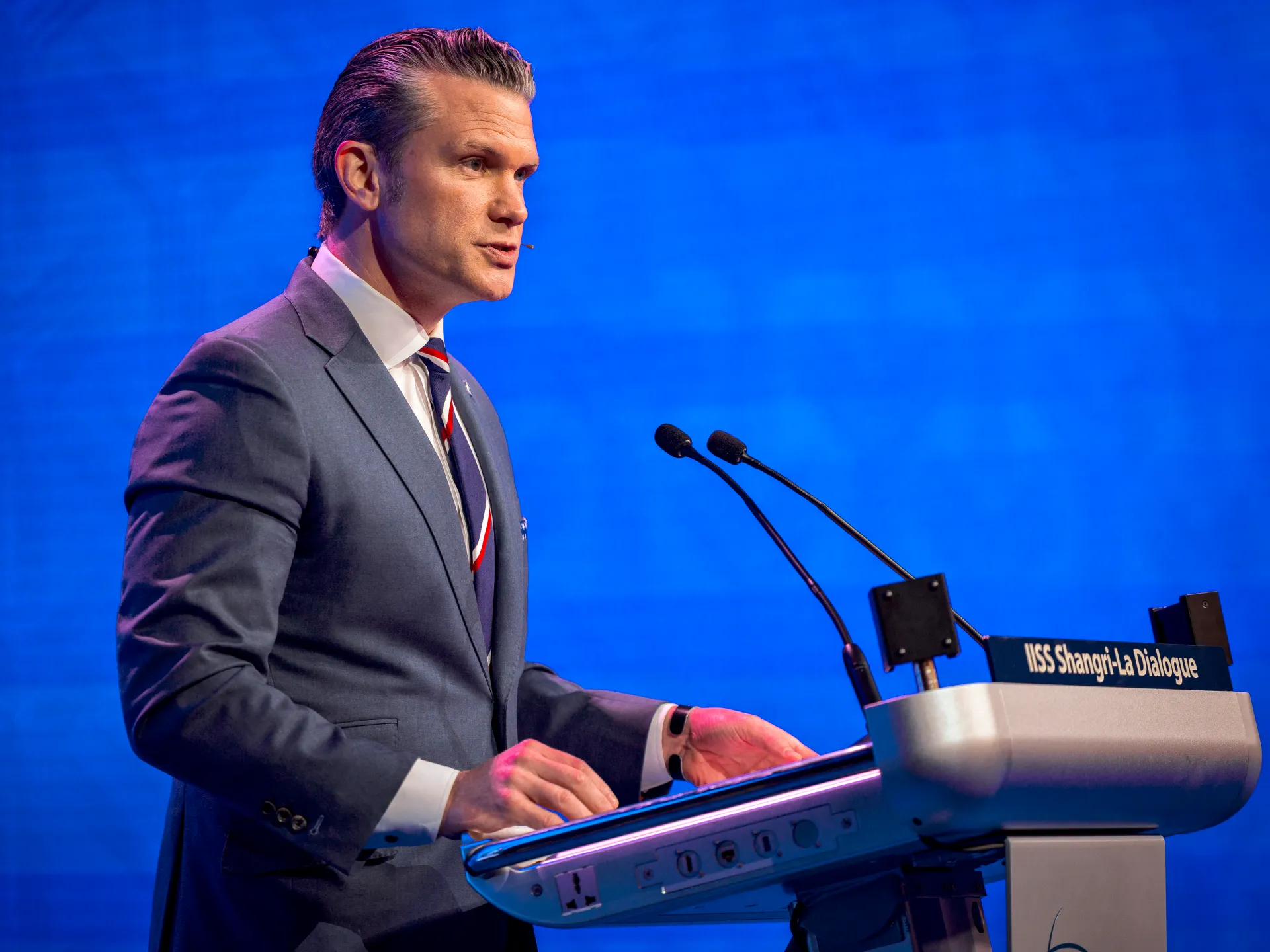
US Defense Secretary Pete Hegseth addressed defence leaders at the Shangri-La Dialogue in Singapore on Saturday, outlining a foreign policy framework defined by heightened scrutiny of Chinese military expansion and a strict recalibration of alliance obligations. Speaking at the major regional security summit, Hegseth declared that the United States would no longer subsidise the defence capabilities of wealthy nations, insisting that partners must demonstrate "skin in the game" to maintain a robust security architecture.
Hegseth expressed "rightful alarm" at China’s historic military buildup and its expanding activities in the Asia-Pacific region. He warned that a Pacific dominated by a single hegemon would unravel the regional balance of power, asserting that no state, including Beijing, can impose its hegemony without threatening the security and prosperity of US allies. Despite noting that relations with Beijing were "better" than they had been in many years, Hegseth emphasised that Washington’s latest National Defense Strategy continues to identify China as the world’s second-most powerful country and its primary geopolitical challenge.
The Defence Secretary’s remarks on Taiwan followed closely on the heels of President Donald Trump’s summit with Chinese President Xi Jinping in Beijing on 14 May 2026. While Hegseth reaffirmed Washington’s commitment to the island, he clarified that final decisions on a potential $14bn arms sale rest with the president. This clarification comes after Trump cautioned Taipei against declaring formal independence, prompting a statement from the island asserting its sovereignty while pledging to maintain the status quo. Hegseth stated that the nature of the relationship and the president’s approval would determine the outcome of the weapons deal.
On the subject of the ongoing conflict with Iran, Hegseth warned that US attacks would resume if negotiators fail to reach a satisfactory memorandum of understanding. The comments were delivered as diplomatic talks continued in Doha, following recent US strikes on Iranian targets in southern Iran. Hegseth sought to reassure regional allies that the Strait of Hormuz, which Iran closed at the start of the war to deter attacks, would soon reopen. The waterway is critical to global energy markets, having previously facilitated the flow of approximately 20% of the world’s oil and liquefied natural gas.
The strategic shift towards burden-sharing also extends to European allies, reflecting Trump’s "America First" doctrine. Hegseth stated that the era of the United States subsidising the defence of wealthy nations was over, declaring, "We need partners, not protectorates." This stance follows recent confusion among European capitals regarding troop deployments, including a pledge to send 5,000 additional troops to Poland amidst reported reductions in Germany. The demand for increased allied spending coincides with reports from the Center for Strategic and International Studies that replenishing critical munitions depleted during the war with Iran could take two to three years.