Hamas rejects full disarmament, proposes police-only security ahead of Cairo talks
Tensions mount between Palestinian factions and Israeli officials as negotiations stall over phase one obligations and the future of Gaza’s security architecture.
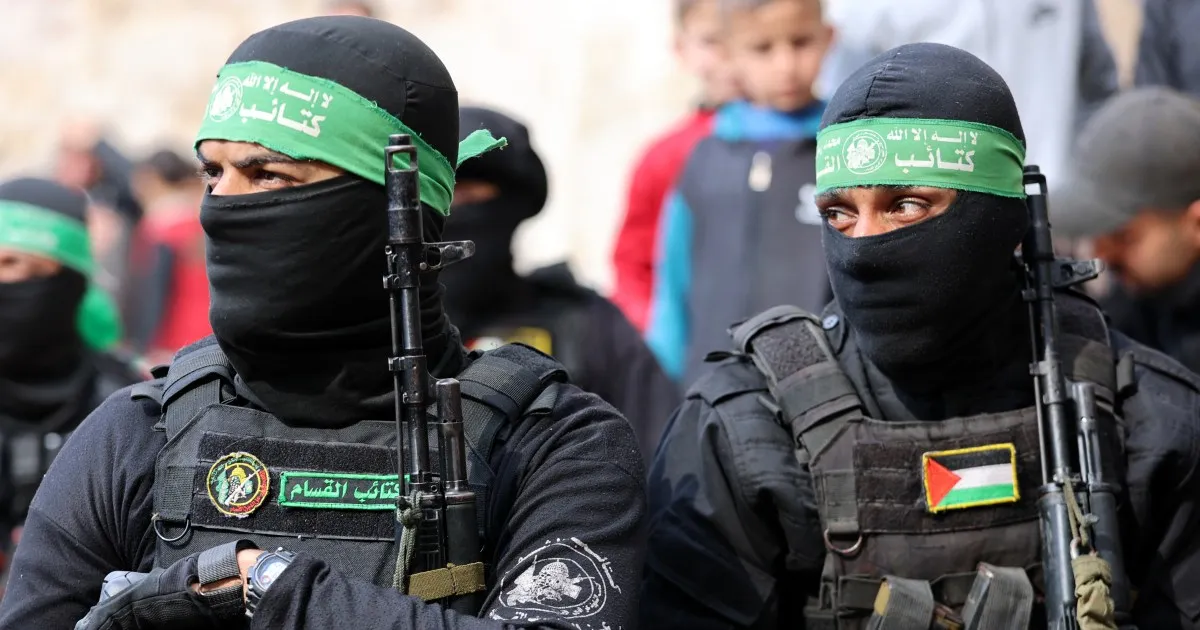
Hamas has formally rejected demands to surrender its weapons, proposing instead a security arrangement where only official Palestinian police carry arms in Gaza. Husam Badran, a member of the group’s political bureau, stated that while the organisation would not hand over its arsenal, there would be no visible weapons in the streets or alleys of the territory. This position was outlined ahead of weekend talks in Cairo, where eight Palestinian factions are set to unify their stance on the US-brokered ceasefire.
Badran clarified that the group is not discussing a formal surrender but rather a restriction of visible military presence under the oversight of the National Committee for the Administration of Gaza (NCAG). He emphasised that the details of this arrangement would be discussed within a broader national framework involving other Palestinian political groups. The upcoming Cairo meetings include representatives from Hamas, Palestinian Islamic Jihad, the Popular Front for the Liberation of Palestine, and several other factions affiliated with the Fatah movement.
The Hamas political bureau accused Israel of failing to meet even 30 per cent of its phase one obligations under the October 2025 ceasefire plan. Badran cited ongoing assassinations of military commanders, insufficient humanitarian aid deliveries, and the continued destruction of critical infrastructure as evidence of non-compliance. He noted that only 150 to 250 aid trucks are entering Gaza daily, falling short of the agreed 600, while approximately 1,000 people have been killed since the ceasefire took effect.
In response to the deadlock, US representative Nickolay Mladenov, the high representative for Gaza on the Board of Peace, presented a 15-point roadmap linking gradual, Palestinian-led disarmament to an Israeli military withdrawal. During a briefing to the United Nations Security Council, Mladenov warned that reconstruction financing would be contingent on compliance, stating that funds would not follow where weapons have not been laid down. The plan requires the decommissioning of arms to be transferred to the NCAG, rather than to Israel, and ties Israeli troop pullback to verified progress on disarmament.
Palestinian analysts have criticised the roadmap as a stalling tactic that prioritises disarmament without offering a clear political horizon for the post-conflict period. Political analyst Wissam Afifa argued that the Israeli government is using the negotiations to advance territorial control, expanding its presence from 60 per cent to over 70 per cent of Gaza. Meanwhile, the NCAG has indicated it will not assume administrative control until the International Stabilization Force is deployed and strict security conditions are met, highlighting the deep operational barriers facing any transition of power.