US reimposes naval blockade on Iranian ports as Gulf conflict escalates
Washington cites Iranian attacks on Strait of Hormuz shipping for renewed blockade, while Tehran declares the recent memorandum of understanding invalid and threatens energy export halts.
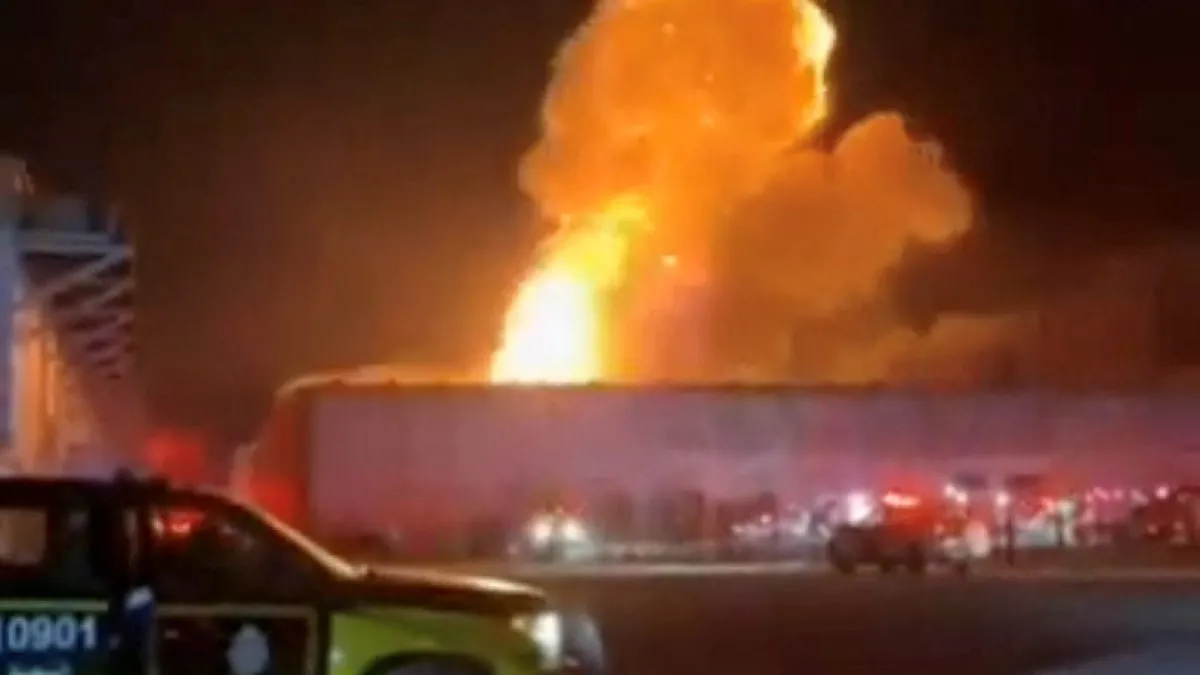
The United States has reinstated a naval blockade on Iranian ports and coastal areas, marking a sharp reversal of diplomatic efforts less than a month after signing a memorandum of understanding intended to advance peace. US Central Command stated the blockade follows Iranian attacks on commercial shipping in the Strait of Hormuz, with US forces conducting precision strikes on Iranian military targets, including missile sites and coastal defences.
CENTCOM confirmed that a wave of attacks began at 02:00 GMT on Wednesday and lasted seven hours. During this period, US fighter aircraft, drones, and naval vessels launched precision munitions against Iranian missile and drone sites, naval capabilities, and coastal defence systems. The command noted that dozens of military targets near the Strait of Hormuz and Iranian coastal areas were hit.
Iran’s Islamic Revolutionary Guard Corps launched retaliatory drone and missile attacks on US military assets in Bahrain, Kuwait, and Jordan. In Bahrain, air raid sirens were activated as the interior ministry urged residents to seek shelter. Kuwait’s military reported intercepting Iranian attack drones targeting a US logistics centre at Mina Abdullah, while the Jordanian military stated its air defences intercepted and downed four Iranian ballistic missiles that breached its airspace.
Iranian officials reported significant civilian casualties from the US strikes. The Ministry of Health stated that more than 260 people were injured, while other reports indicated that more than 30 civilians were killed in southern Iran. Iranian media also reported that US missiles hit a naval watchtower in Chabahar, which was described as a civilian facility used for maritime security and search-and-rescue operations.
Diplomatic channels have effectively collapsed. Iranian Deputy Foreign Minister Kazem Gharibabadi declared the recent MoU with the US invalid, arguing that Washington had actively undermined its commitments. The IRGC threatened to halt all energy exports from the Middle East, stating that regional oil and gas would be exported either for everyone or for no one. Concurrently, the US Treasury sanctioned cryptocurrency wallets linked to Iran’s central bank, freezing more than $130m.
US Defence Secretary Pete Hegseth met with Iraqi Prime Minister Ali al-Zaidi, urging Iraq to disarm Iran-aligned militias. Meanwhile, Iran’s UN representative accused the US of being an aggressor and failing to implement the peace accord. President Donald Trump also announced a reversal of plans to charge a toll on cargo through the Strait of Hormuz, opting instead for investment deals with Gulf states.