Gulf states pivot to laser defence as Iran war accelerates arms race
Economic pressures and geopolitical diversification drive rapid adoption of direct energy weapons, though technical limitations persist
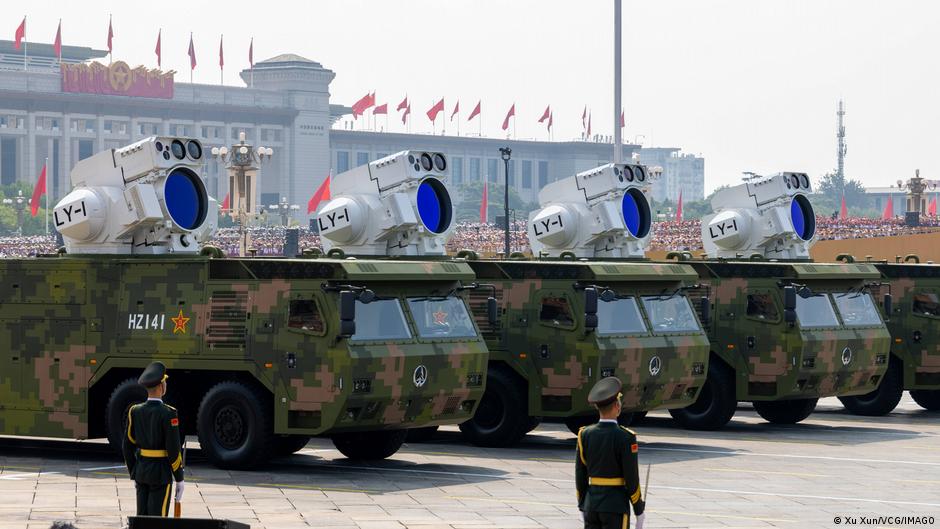
Gulf states are rapidly acquiring laser weapons systems from China, the United States and Israel to counter drone threats amid the ongoing Iran war. The United Arab Emirates has deployed an Israeli-made Iron Beam system, reportedly loaned by Israel, and is pursuing Chinese and American options while co-developing its own laser weaponry with European and US companies. Saudi Arabia is testing Chinese-made Silent Hunter units, with reports suggesting purchases of up to eight systems, while Oman was identified as a buyer following accidental photo leaks by a transport company in late 2025. Qatar is reportedly considering acquiring elements of the Turkish Steel Dome aerial defence system, which includes laser weaponry, following an Israeli attack on its capital in September last year.
Jared Keller, founder of the Laser Wars newsletter, stated that global laser weapons development accelerated significantly in April and May, with the UAE becoming the "world's busiest laser weapon market." Keller noted that several forces are converging to popularise these systems, including technological maturity and the proliferation of drones in combat. Although the US military first shot down a drone with a laser in testing in 1973, the technology is now smaller and more effective. Lasers are part of a group known as Direct Energy Weapons, which also includes high-power microwave weapons that cause internal malfunctions in targets.
The economic driver for this shift is the unsustainable cost curve of using expensive missiles to destroy cheap, mass-produced drones. Keller explained that it is not cost-effective to shoot down a drone costing hundreds of dollars with missiles that cost hundreds of thousands or even millions. Manufacturers of high-energy laser weapons often claim that each shot costs only between $3 and $5, prompting governments worldwide to pursue lower-cost countermeasures. Senior US defence officials have expressed a desire to field laser weapons at scale within the next three years, citing the Iran war as a catalyst for this shift.
However, lasers are not a silver bullet and face significant technical limitations. Laser beams travel in a straight line and can only be used at certain distances, with Israel's Iron Beam units covering only 10 kilometers at a time. They require a certain amount of dwell time to be effective, which can be difficult against fast-moving drones. Additionally, beams can be diffused or disrupted by humidity, rain, smog, fog, snow, sand, dust or sea spray. High temperatures in the Middle East can also damage sensitive components, requiring more energy for cooling, a issue reportedly raised by Saudis testing their Chinese-made lasers.
Andreas Krieg, a senior lecturer at King’s College London, noted that Gulf states are diversifying defence sources to reduce overreliance on the United States. He stated that overreliance on the US has not been fruitful and that Gulf states aim for mid- to long-term self-sufficiency. Krieg argued that the threat from Iran and Israel remains, necessitating a leaner, more self-sufficient air defence umbrella less reliant on American munitions. Meanwhile, Israel’s Iron Beam has been used to shoot down drones launched by Hezbollah, but the Israeli Air Force states it requires 14 additional batteries to be fully effective, which it currently lacks.