Gulf rift deepens as UAE-Israel defence pact contrasts with Saudi-led Quartet
A geopolitical divide is widening in the Middle East, with the UAE and Israel deepening military cooperation while Saudi Arabia strengthens ties with Egypt, Turkey, and Pakistan to pursue stability.
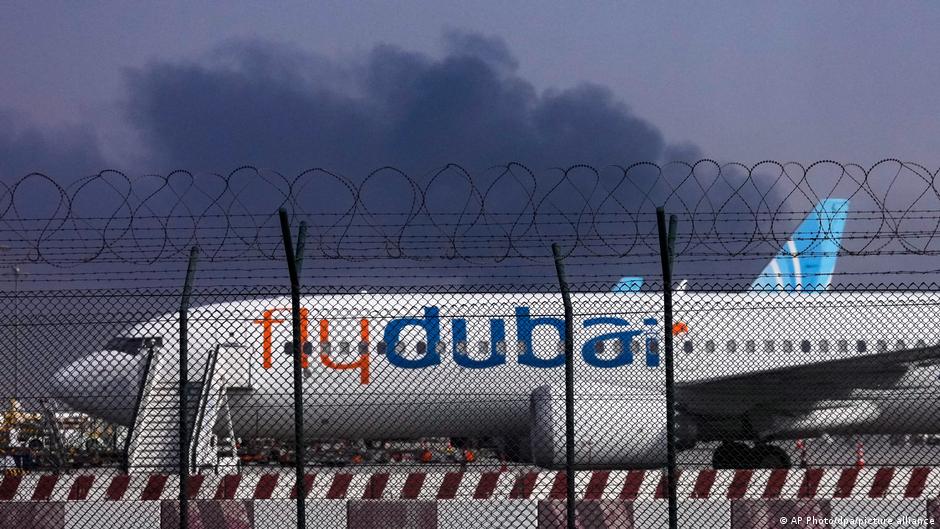
A significant geopolitical rift is emerging within the Gulf region, characterised by two diverging strategic alignments that reflect contrasting approaches to the ongoing conflict involving Iran. The United Arab Emirates and Israel are deepening cooperation, reportedly establishing a joint defence fund and facilitating the loan of aerial weaponry from Israel to the UAE to counter Iranian threats. In contrast, Saudi Arabia is strengthening ties with Egypt, Turkey, and Pakistan, forming a "Quartet" focused on stability and economic objectives. Analysts describe these alignments as temporary and unstable, driven by a "frantic scramble" to navigate a volatile environment rather than representing permanent strategic blocs.
Reports indicate that Israel and the UAE are establishing a joint defence fund to purchase weapons together, a development first published by Middle East Eye and cited by unnamed US officials. This financial and military integration was reportedly agreed to during a secret visit by Israeli Prime Minister Benjamin Netanyahu to the UAE, which was made public on the evening of May 13. The UAE subsequently denied the visit occurred. Prior to this, US Ambassador to Israel Mike Huckabee confirmed in Tel Aviv that Israel had loaned the UAE aerial defence weaponry to help defend against air attacks from Iran.
These moves have prompted commentary from experts such as Cinzia Bianco of the European Council on Foreign Relations, who noted that a decades-old Gulf order is fading. Marcus Schneider, who heads the Friedrich Ebert Foundation's regional project for peace and security in the Middle East in Lebanon, described the emerging blocs as a "hexagon" comprising the UAE and Israel, and a "diamond" consisting of Saudi Arabia, Pakistan, Turkey, and Egypt. Schneider stated that what connects Israel and the UAE is a current practice of "disruption" aimed at reshaping the Middle East and beyond.
Conversely, the so-called Sunni "diamond" is pursuing a different policy. Schneider described the grouping as adopting a more transactional approach, driven by a need for stability to achieve economic objectives. Saudi Arabia's growing concerns about Israel were outlined in a May op-ed by Prince Turki al-Faisal, former head of the Saudi intelligence agency, in the London-based newspaper Asharq Al-Awsat. The commentary, characterised as representing the Saudi government's point of view, warned that an Israeli plan to ignite war between Saudi Arabia and Iran would have plunged the region into ruin.
Despite the apparent divergence, analysts caution against viewing these changes as unresolvable ideological differences. Ibrahim Öztürk, a professor of economic development at the University of Duisburg-Essen, argued that these states are in a "frantic scramble" rather than executing a calculated grand strategy. Öztürk suggested that sustaining the Sunni quartet coalition is historically and economically impossible due to divergent regime types and dependencies. Similarly, Rachel Bronson of the Chicago Council on Global Affairs noted that while the UAE-Israel alliance is formidable in financial and technological terms, it faces heavy counterweights from regional powers such as Turkey, Pakistan, and Saudi Arabia.