Government and Bank of Japan intervene in foreign exchange market
Ministry of Finance and the central bank move to stabilise markets following a sharp surge against the US dollar on the night of 30 April
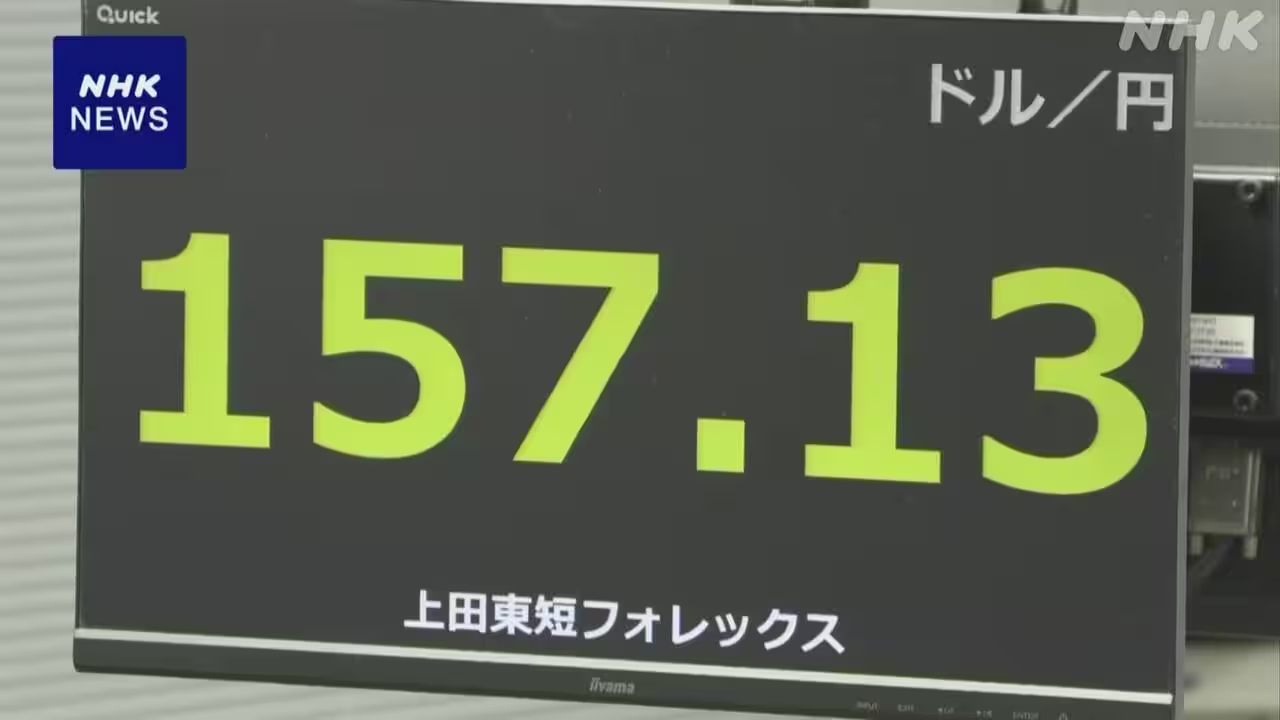
Foreign exchange markets witnessed a significant shift on the night of 30 April, as the Japanese yen surged sharply against the US dollar. The currency climbed into the 155 yen range, marking a period of rapid depreciation for the yen and heightened volatility in the broader market.
In response to this swift movement, sources indicate that both the Japanese Government and the Bank of Japan implemented market intervention. This coordinated action was designed specifically to address the rapid depreciation of the yen and stabilise the foreign exchange market against the appreciating dollar.
The intervention was formally confirmed by Finance Minister Sanmura on the morning of 1 May. While the full extent of his initial remarks was cut off in early reporting, the minister acknowledged the measures taken to counter the sharp currency fluctuations observed during the previous night.
The move comes amid a backdrop of significant volatility in the foreign exchange market, where vigilance regarding the yen's valuation had been mounting prior to the intervention. The sharp rise to the 155 yen level prompted the authorities to act swiftly to prevent further destabilisation.
Details regarding the specific mechanics or volume of the intervention rely on information from sources rather than official quantitative data released at the time of the report. The precise timing of the intervention relative to the peak exchange rate is not explicitly detailed beyond the general timeframe of the night of 30 April.
The Ministry of Finance and the Bank of Japan continue to monitor the situation as markets adjust to the intervention. The event underscores the ongoing sensitivity of the yen's valuation and the role of institutional actors in managing currency stability during periods of rapid change.