Google’s Android 17 update introduces motion dots to combat car sickness
The new Motion Assist feature uses device sensors to synchronise visual cues with vehicle movement, aiming to reduce nausea for smartphone users in transit.
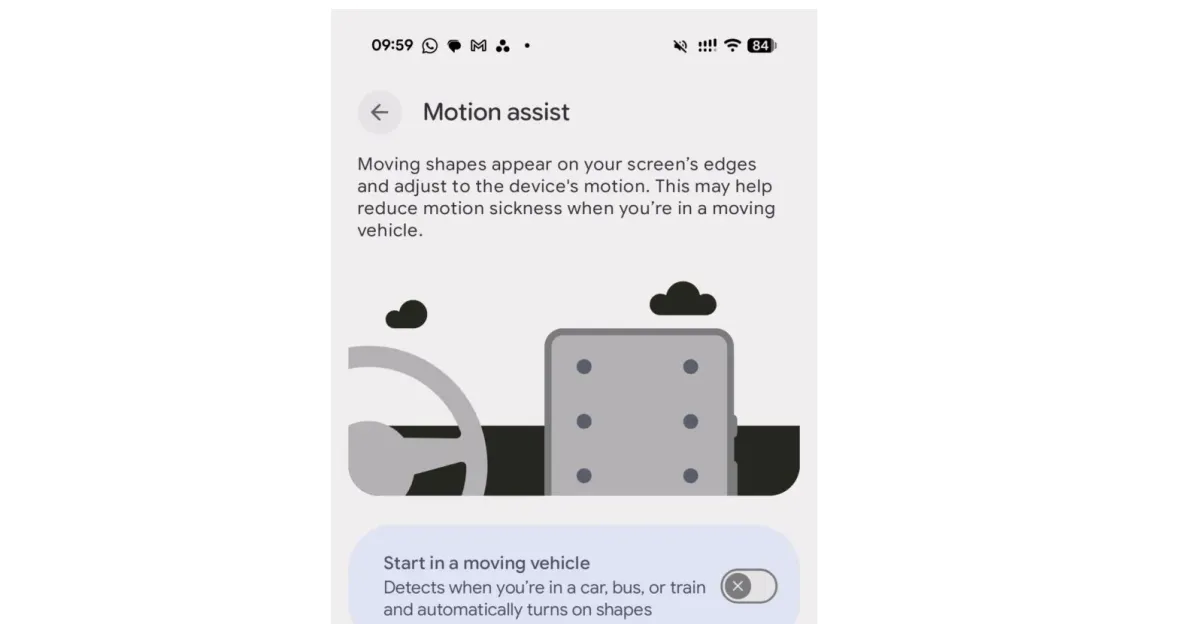
Google is rolling out a new feature for Android 17 designed to alleviate motion sickness for users operating their phones inside moving vehicles. Dubbed Motion Assist, the update mirrors Apple’s Motion Cues, which was introduced in 2024, and addresses the sensory conflict that occurs when a static display contradicts the inner ear’s perception of movement.
The technology utilises the device’s accelerometer and gyroscope to display moving dots around the periphery of the screen. These indicators move in harmony with the vehicle’s motion; for instance, when a car turns right, the dots sweep across the screen to the left, while braking causes the dots to slide forward. This synchronisation helps mitigate the nausea associated with reading or watching content while in transit.
Users can customise the appearance of the motion indicators, adjusting the opacity, shapes, and colours to their preference. The feature can be configured to activate automatically when the device detects a moving vehicle, or it can be toggled manually via a tile in the Quick Settings menu.
The rollout is currently occurring in phases, with some Pixel phones receiving the update first. According to reports from Android Authority, the feature has not yet arrived on all supported devices, indicating that availability remains limited even among early adopters.
For those who have received the update, Motion Assist is located within Google Settings under the section for "Your Profile and All Services." The phased approach suggests a broader distribution to other Android devices is expected, though a specific timeline for full availability has not been specified.
The effectiveness of the feature is grounded in the principle that visual cues aligned with physical movement reduce the dissonance experienced by the vestibular system. While the source notes that the technology works based on personal experience, the underlying science remains consistent with previous implementations on other platforms.