Google TV Freeplay expands into on-demand streaming amid rising subscription costs
The platform now offers over 10,000 titles and more than 300 live channels, marking a strategic shift in the competitive free streaming landscape.
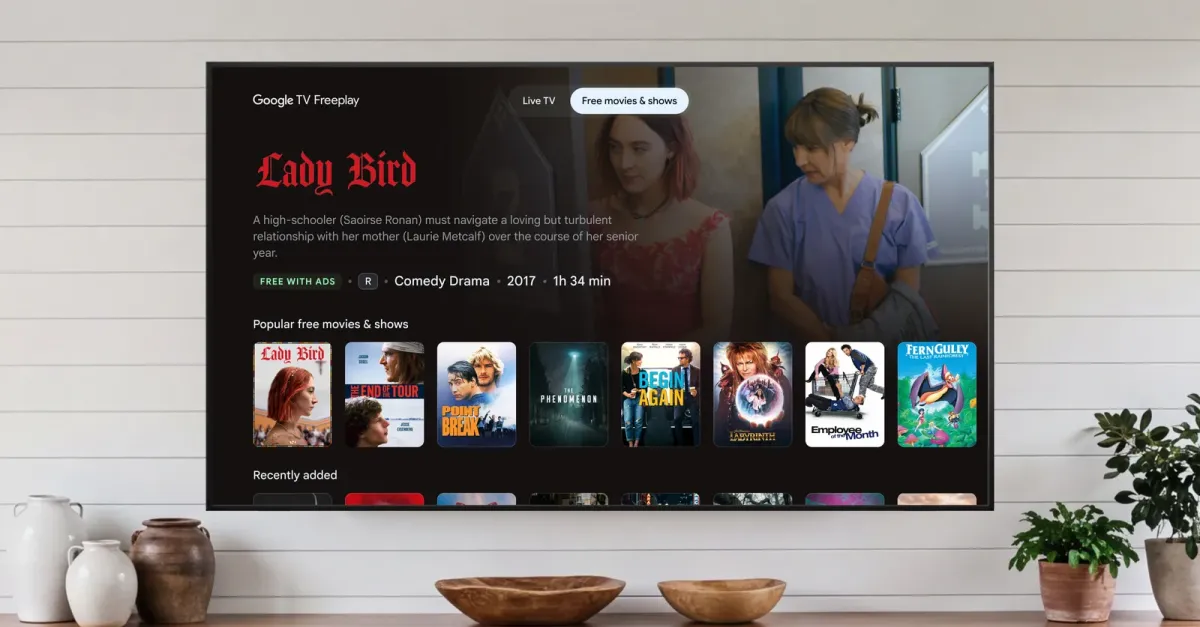
Google has updated its free, ad-supported streaming service, Google TV Freeplay, to support video on demand, allowing users to select specific content rather than relying solely on always-on channels. According to a report by The Verge, the service now provides access to a library of over 10,000 shows and movies, including titles such as Lady Bird, Hell’s Kitchen, and Seventeen Again.
The update also significantly expands the service’s live TV lineup, which now includes more than 300 channels covering news, sports, reality programming, and true crime. New additions to the live offering include World of Love Island, Yahoo! Sports Network, Bloomberg TV Plus, and The Martha Stewart Channel. Google has stated it plans to continue updating the Freeplay library throughout the year.
This move positions Google TV Freeplay within an increasingly crowded market for free and ultra-cheap streaming. The sector has seen growth as major streamers continue to raise subscription prices, prompting consumers to seek alternative viewing options. Google TV Freeplay now joins competitors such as Tubi, The Roku Channel, and Pluto TV in offering free, ad-supported content on demand.
Industry reports suggest that Disney Plus is also considering launching a free streaming tier, indicating a broader trend among major content providers to capture audiences sensitive to price hikes. The expansion of Google’s free tier represents a direct challenge to established players in the ad-supported video on demand (AVOD) space.
The shift from a linear, channel-based model to an on-demand library reflects a broader industry pivot. By offering a vast selection of specific titles alongside live news and sports, Google is attempting to retain users who might otherwise migrate to paid services or rival free platforms. The success of this strategy will likely depend on the volume and quality of content Google can secure for its ad-supported model.