Global May Day demonstrations highlight economic fallout of Middle East conflict
From the Philippines to Portugal, labour groups unite to demand policy changes and an end to the conflict, while regional governments face scrutiny over holiday work laws and economic stimulus packages
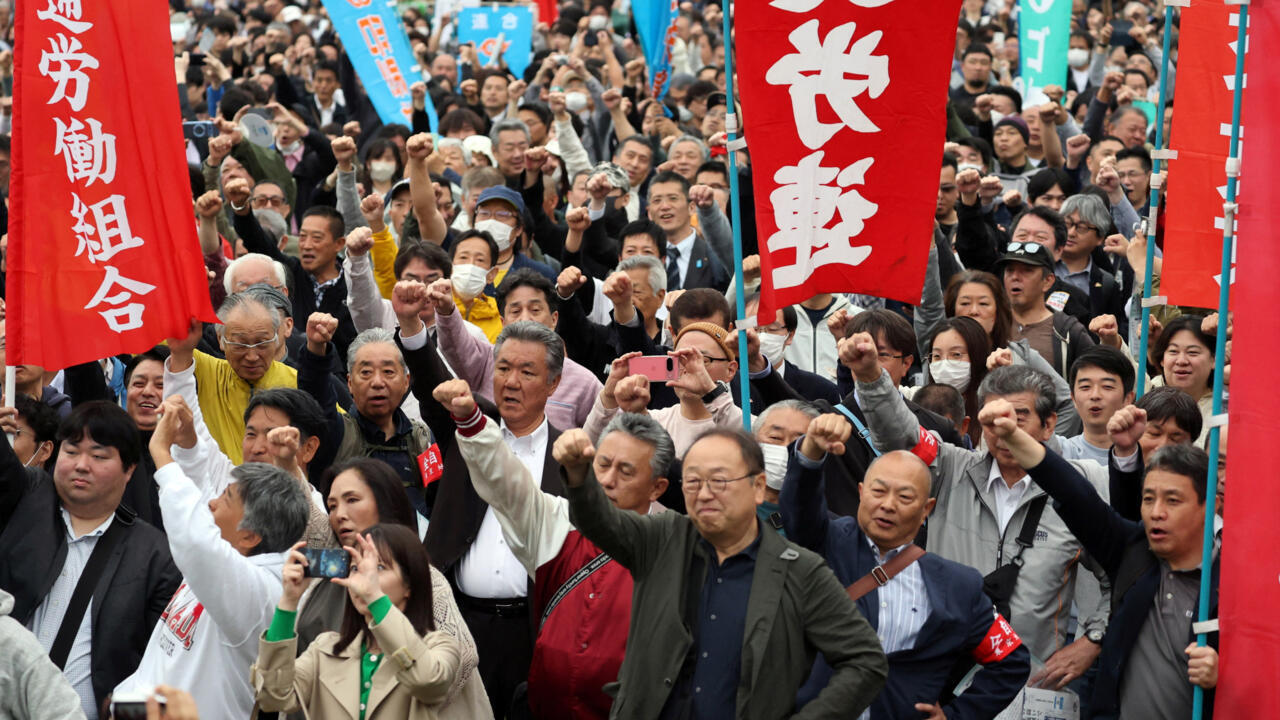
Workers across the globe gathered for May Day demonstrations on Friday, framing the protests not merely as a traditional celebration of labour but as a direct response to deteriorating living standards driven by the US-Israeli war on Iran. Organisers in major cities ranging from Islamabad to Istanbul argued that the conflict has inflated energy prices, forcing households to absorb costs they did not incur. The European Trade Union Confederation, representing hundreds of organisations across forty-one European nations, issued a statement asserting that working people refuse to pay the price for President Donald Trump's Middle East policies, warning that current conditions threaten to destroy jobs and living standards.
In the Philippines, the narrative of global economic instability was made local by leaders of Bayan and SENTRO, who highlighted unprecedented spikes in fuel prices as a primary driver for their demands. Renato Reyes of the left-wing group Bayan noted that the connection between the global crisis and local hardship is now widely understood by the workforce. Similarly, in Indonesia, the Indonesian Trade Union Confederation warned that worsening economic pressures have left workers living paycheck to paycheck, a situation exacerbated by the broader geopolitical tensions affecting energy markets.
The economic strain was particularly acute in Pakistan, where inflation is estimated at sixteen percent, largely driven by rising oil prices. The International Monetary Fund and allied nations provide significant financial support to the region, yet daily wage earners remain unable to participate in the celebrations. Mohammad Maskeen, a construction worker near Islamabad, questioned how families could afford necessities if they were forced to work instead of taking time off, illustrating the difficulty of balancing survival with protest participation in an economy heavily reliant on imported energy.
Regional policy disputes also dominated the demonstrations, with France serving as a focal point for debates over labour rights and holiday protections. In Paris, unions rallied under the slogan "bread, peace and freedom," linking domestic struggles to conflicts in Ukraine and the Middle East. The timing was significant as a recent parliamentary proposal sought to expand work requirements on May Day, the country's most protected public holiday. This move prompted a joint statement from unions declaring "Don't touch May Day," while Small and Medium-sized Businesses Minister Serge Papin defended the government's intent to allow essential sector staffing for bakeries and florists.
Across the channel in Italy, the government approved nearly one billion euros in job incentives aimed at curbing labour abuses and promoting stable employment ahead of the holiday. The measures included tax breaks designed to encourage the hiring of young people and disadvantaged women, while also addressing exploitation in platform-based work sectors. However, opposition parties dismissed the package as pure propaganda, suggesting the timing was a political maneuver rather than a genuine response to the economic pressures facing workers.
In Portugal, the focus remained on stalled negotiations regarding proposed labour law changes that unions claim would weaken their rights. Following a general strike last year, talks over expanding overtime limits and reducing benefits have remained deadlocked for nine months. Meanwhile, in the United States, where May Day is not a federal holiday, the coalition May Day Strong called for a "no school, no work, no shopping" economic blackout. This campaign, opposing the Trump administration's policies including immigration crackdowns, sought to shift the focus from traditional wage demands to broader political opposition.