Global equities slump as AI valuation doubts trigger semiconductor rout
Investors reassess artificial intelligence valuations following sharp declines in major chipmakers, even as geopolitical tensions ease with a US waiver on Iranian oil sanctions.
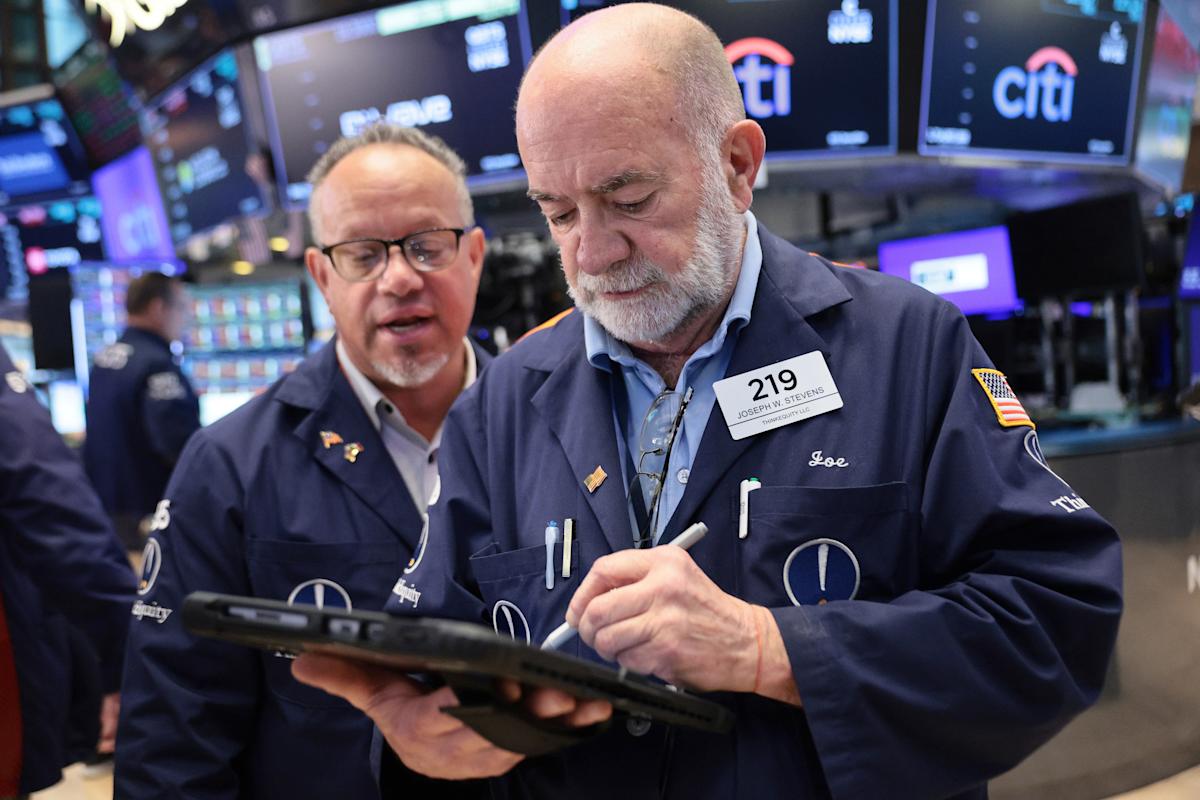
Global equity markets suffered significant losses on Tuesday, driven by a sharp sell-off in technology and semiconductor stocks that raised doubts about artificial intelligence valuations. The Nasdaq Composite fell approximately 2.4%, the S&P 500 declined 1.5%, and the Dow Jones Industrial Average slid between 0.6% and 0.7%. The rout was not confined to the United States; South Korea’s Kospi Composite index dropped 10%, led by over 12% losses in major chipmakers SK Hynix and Samsung Electronics. In Japan and Hong Kong, the Nikkei 225 and Hang Seng indexes dropped 3.6% and 1.8% respectively, while European benchmarks such as the FTSE 100 and Euro STOXX 50 also posted declines.
The sell-off in memory chip giants underscored growing questions about overstretched AI valuations, turning investor focus toward upcoming earnings reports. Micron shares dropped 12% in early trading, despite surging to a record close on Monday, ahead of its earnings release on Wednesday. Cerebras Systems and FedEx are scheduled to report earnings after the bell on Tuesday, providing further signals on the state of the chip market and logistics sector. Joo Won, head of the economic research division at Hyundai Research Institute, told AFP that the scale of the decline appeared excessive and could signal a broader process of reducing positions.
Concurrently, US-Iran negotiations showed progress, with the US issuing a 60-day waiver on oil sanctions and President Donald Trump declaring the Strait of Hormuz open. Brent and WTI crude futures both fell less than 1% following the announcement, with Brent trading near $78 a barrel and WTI above $74. The waiver permits the sale of some Iranian oil and petroleum products, citing productive talks in Switzerland. However, messaging remained mixed; Vice President JD Vance confirmed Iran agreed to allow nuclear inspectors, a claim disputed by Iranian spokesperson Esmail Baghaei, who called the assertion fake news.
In corporate developments, Walmart signed an agreement to purchase 176 megawatts of nuclear power from Constellation Energy for a new distribution centre in Illinois. This marks Walmart’s first purchase of nuclear energy, with the power sourced from Constellation’s Dresden nuclear plant under two 15-year terms beginning in 2029 and 2030. Constellation Energy shares shed roughly 3.1% in premarket trading, while Walmart picked up roughly 1%.
SpaceX shares continued their downward trajectory, threatening to push the company’s market capitalisation below $2 trillion after three consecutive days of losses. The stock fell as much as 5% to about $147, below its first-day opening price of $150. The decline came as the company settled less than a week from its initial public offering, which raised approximately $75 billion. Despite the volatility, the New York Times reported that 39 vessels passed through the Strait of Hormuz on Monday, marking the busiest traffic levels since the conflict began.