Global equities close out a turbulent week as bond yields and oil prices climb
Investors faced a difficult week as diplomatic deadlock in the Gulf pushed oil to one-month highs, while U.S. Treasury yields resumed their upward trajectory despite a surprise government intervention.
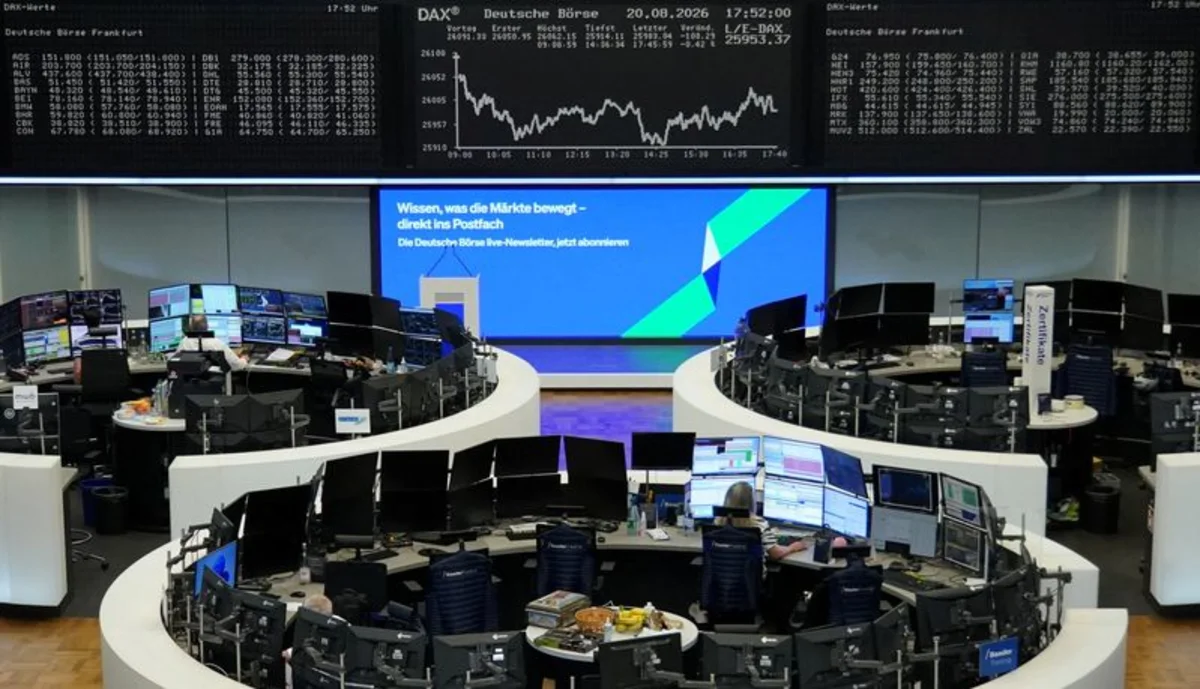
Global stocks finished a predominantly lower week on Friday, as persistent strain in bond markets and rising oil prices weighed on investor sentiment. The diplomatic deadlock in the Gulf region lifted crude oil to one-month highs, while the U.S. dollar fell nearly 1% against major currencies, hitting three-month lows.
U.S. government bond yields resumed their climb following a brief respite caused by a surprise intervention by the Treasury. The 30-year yield rose 3 basis points to 5.266%, while the 10-year yield increased 3.2 basis points to 4.73%. The 2-year Treasury yield saw the heaviest selling, rising 5 basis points for the day and 9 basis points for the week to 4.236% after a stronger-than-expected U.S. purchasing managers' report.
U.S. Treasury Secretary Scott Bessent stated the government could further increase repurchases of Treasuries and floated the idea of fiscal consolidation. However, analysts remained sceptical about the ability to curb a budget deficit exceeding 6% of gross domestic product, noting that interest charges alone are running at $1.2 trillion this year while the U.S. debt pile has just crossed $40 trillion.
The pressure on global markets was evident in major indices, with the Nikkei slipping 0.3% to record its largest weekly decline since mid-July. In Europe, the STOXX 600 index was set for its biggest weekly fall since early July, down nearly 1%. U.S. markets saw some support from a bumper earnings season, with major indexes up nearly 1% at midday Friday, though they remained down for the week by approximately 2%.
Oil prices remained elevated as Brent crude reached a one-month peak near $95 a barrel before settling at $94. Bessent expanded on President Donald Trump’s pledge of economic warfare against Iran, stating the U.S. would impose "the toughest sanctions in history" on the country. These threats dimmed hopes for a deal that would fully open the Strait of Hormuz, pushing Brent futures up more than 5% for the week.
Investors sought alternatives as the dollar weakened, with gold rising 1.45% to approximately $4,583 an ounce, touching its highest level in almost three months. Bitcoin also scaled a more than two-month high, rising almost 6% to $76,446, on track for a 20% weekly rise that would mark its largest gain in two and a half years.