Global bond sell-off deepens as borrowing costs hit multi-decade highs
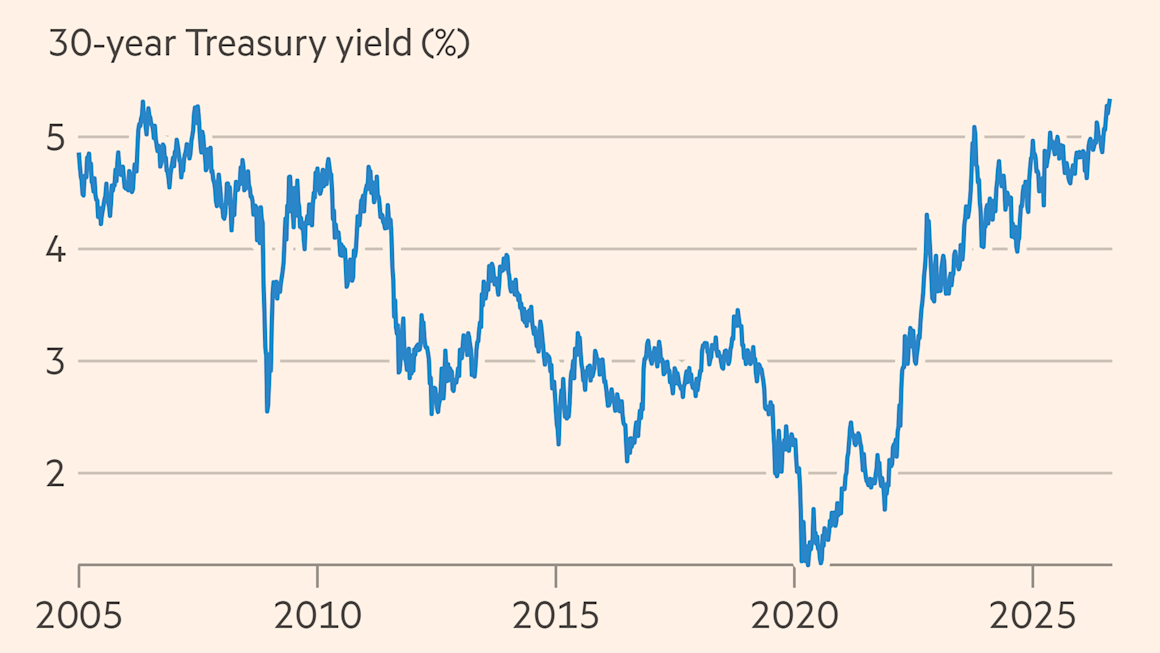
US 30-year Treasury yields reach 19-year peak of 5.322% as geopolitical tensions and AI-related debt issuance compound market volatility.
Global long-term government borrowing costs have surged to multi-decade highs, marking a significant repricing of risk in international debt markets. According to reporting by the Financial Times, the deepening bond sell-off is being driven by persistent concerns regarding inflation alongside the issuance of bonds linked to artificial intelligence.
The benchmark US 30-year Treasury yield climbed to approximately 5.322 per cent on Tuesday, reaching its highest level since 2002. This 19-year peak underscores a sharp increase in the cost of long-dated sovereign debt, reflecting investor demands for higher returns amid uncertain economic conditions.
The surge in yields has occurred against a backdrop of escalating geopolitical tensions, including a stalemate between the United States and Iran and incidents in the Strait of Hormuz. These developments have heightened risk-off sentiment, prompting capital flows into safe-haven assets and further pushing up yields on government debt.
Concurrently, equity markets have shown volatility in response to these macroeconomic shifts. US stock futures have moved based on inflation data and earnings expectations from major technology firms, including Cisco, Cerebras, and Applied Materials, highlighting the interconnected nature of debt and equity valuations.
The Financial Times notes that the specific driver of AI-related bond issuance is contributing to the broader sell-off, although the precise mechanics of this link remain complex. As governments face steeper costs to finance debt, the interplay between traditional macroeconomic fears and new technological financing demands continues to shape market dynamics.