German officials demand extremism law overhaul after Berlin Pride attack
Abdul Ballout, a known Islamist extremist, killed one person and injured 29 others at the Berlin Pride parade, prompting urgent debates on juvenile justice and security gaps.
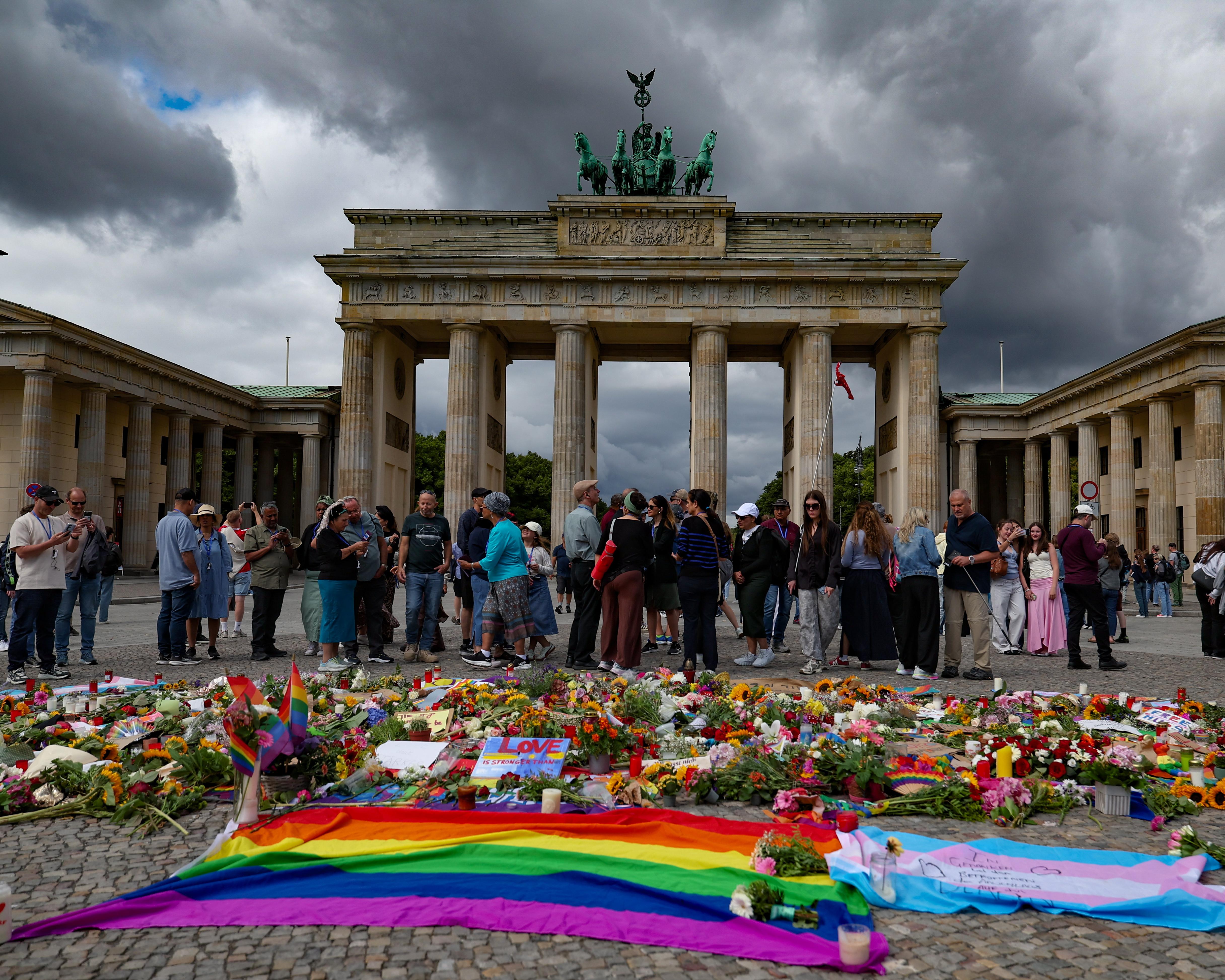
German authorities have intensified calls for stricter extremism legislation following a deadly attack at the Berlin Pride parade, where Abdul Ballout, a 21-year-old known Islamist extremist, killed a 65-year-old Polish woman and injured 29 others. Chancellor Friedrich Merz has pledged to address security vulnerabilities with “prudence but also determination”, while Berlin’s justice official Felor Badenberg has urged a fundamental review of juvenile criminal law provisions that allowed Ballout to remain free under sporadic police observation.
Ballout, a German national of Lebanese descent, is believed to have rammed a van into a crowd in Tiergarten park late on Saturday before attacking attendees with a large knife. He was shot dead by police on Sunday after running at officers with a bladed weapon during an arrest attempt in the Spandau district. Security services confirmed that Ballout was aware to authorities as an avowed Islamic State supporter who had previously attempted to join the group in Syria and was arrested in Lebanon before being repatriated to Germany.
In May, Ballout was convicted of preparing a serious act of subversive violence and sentenced as a juvenile to a year and 10 months in prison. The sentence was suspended, and he was released despite a history of arrests for bodily harm, extortion, and robbery. Badenberg, a member of Merz’s Christian Democratic Union (CDU), acknowledged public anger over the case, stating that perpetrators in such cases must be punished more severely and that current legal criteria for juvenile offenders require urgent examination.
The tragedy has ignited a fierce political debate ahead of key state elections in September in Berlin, Saxony-Anhalt, and Mecklenburg-Western Pomerania. The far-right Alternative für Deutschland (AfD), which is polling between 38 and 40 per cent in eastern states, has accused the federal government of failing to tackle Islamist radicalism and migration policy. AfD co-leader Alice Weidel criticised Merz for remaining silent on Islamism, while Berlin candidate Kristin Brinker blamed the attack on what she termed the “catastrophic migration policy of the last few years”.
Political analysts warn that the AfD is well-positioned to gain electoral ground from the attack, having already made the interplay between migration and internal security a central plank of its campaign. Guido Friebel, a political analyst at Goethe University in Frankfurt, noted that mainstream parties face a dilemma: ignoring the issue allows the AfD to claim sole responsibility for security, while adopting similar rhetoric risks strengthening the far-right’s agenda. Meanwhile, counter-extremism expert Hans-Jakob Schindler highlighted that there were more than 9,000 Islamists in Germany in 2025, with 1,940 in Berlin alone believed to be violent.