German lawmakers visit Taiwan, sparking Beijing’s diplomatic protest
A nine-day visit by the Berlin-Taipei Parliamentary Friendship Group has drawn sharp criticism from China, even as delegates highlight semiconductor cooperation and strategic autonomy.
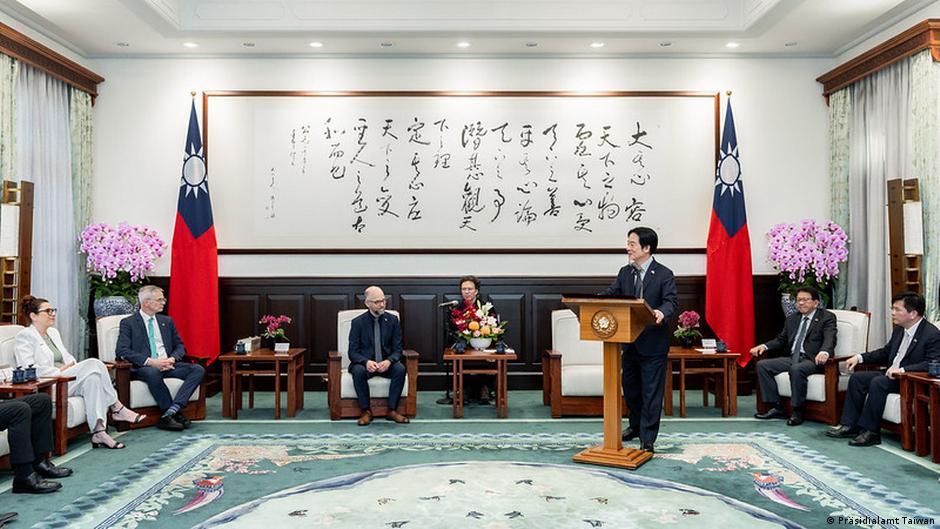
A five-member delegation from the Bundestag’s Berlin-Taipei Parliamentary Friendship Group has concluded a nine-day visit to Taiwan, a move that has triggered a formal protest from Beijing. The cross-party group, led by Green Party lawmaker Till Steffen, included representatives from the Christian Democratic Union (CDU), the Alternative for Germany (AfD), and the Left Party. The visit occurred concurrently with German Economic Affairs Minister Katherina Reiche’s trip to Beijing, highlighting the delicate balancing act Berlin must perform between its economic interests and diplomatic constraints.
Chinese Foreign Ministry spokeswoman Mao Ning stated that China opposes any form of official exchange between its diplomatic partners and Taiwan, viewing the self-ruled island as a breakaway province destined for reunification. Despite this, the delegation argued that maintaining close relations with Taiwan is essential for Germany’s economic security. Steffen emphasised that while Germany should continue to do business with Beijing, it must avoid becoming overly dependent on the Chinese market, particularly in critical sectors such as electric vehicle batteries.
The delegation cited joint research on future batteries and Taiwan’s leadership in the semiconductor industry as key drivers for this shift in focus. AfD member Rainer Kraft pointed to the €10 billion TSMC factory in Dresden, a joint venture with German firms Bosch, Infineon, and NXP, as a successful model of cooperation. Scheduled to begin production in 2027, the facility is viewed by the delegation as a vital step in securing Germany’s economic strength in the era of artificial intelligence and data centres. Kraft also noted historical precedents, recalling that China maintained diplomatic relations with both East and West Germany prior to 1990.
Taiwanese President William Lai Ching-te welcomed the delegation, praising the industrial partnership and the TSMC project as a contribution to global supply chains and shared democratic values. Lai thanked the group for its support in Taiwan’s international participation, framing the relationship through the lens of universal rights such as democracy and the rule of law. He avoided using terms like "country" or "nation" when referring to Taiwan, adhering to the diplomatic sensitivities surrounding the issue.
Steffen linked the deepening ties to broader European security strategies, referencing Chancellor Friedrich Merz’s emphasis on self-defence in the face of heightened threats from Russia and limited US support. Steffen asserted that Merz’s stance on self-defence applies to Taiwan as well, vowing that Germany would not look the other way if the island were threatened. He argued that the rules-based international order requires closer cooperation between Germany and Taiwan, asserting that China and the United States are the entities that have changed, not their respective positions.