German asylum rejections for Russian deserters hit near-zero under Dublin rule
Human rights advocates report that approval rates for Russian army deserters have collapsed since the new coalition government took office, despite evidence of mistreatment in occupied Ukraine.
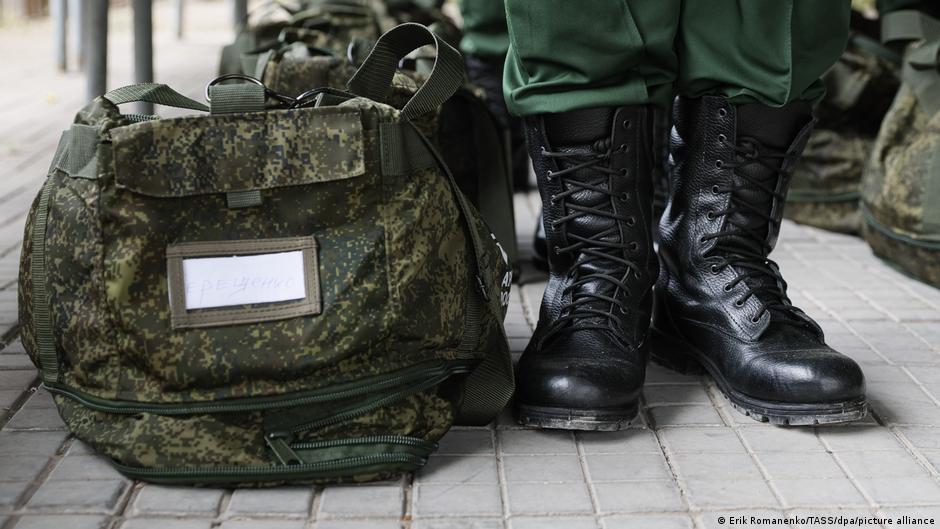
German authorities are systematically rejecting asylum applications from Russian army deserters, invoking the European Union’s Dublin Regulation to assign responsibility to the first member state of entry. This administrative approach has effectively halted protection for conscripts fleeing military service, with human rights activists noting that approval chances are now practically zero under the current coalition government.
The policy is illustrated by the case of Nikita Zvezdov, a Russian conscript who fled to Germany in December 2025 after facing harassment and pressure to sign a service contract. His application was rejected with deportation to Croatia scheduled for the end of July 2026. Zvezdov is currently sheltering in a church in North Rhine-Westphalia under a practice known as "church asylum," which has temporarily paused deportation proceedings.
Zvezdov was drafted in April 2024 and assigned to military unit 25573 near Ussuriysk. He reported that officers pressured conscripts to commit to longer service terms and subjected them to severe physical abuse, including beatings and forced exercise in gas masks. After signing a contract under duress, he was ordered to deploy to units near Melitopol in Russian-occupied Ukraine. He fled to Armenia in May 2024, subsequently travelling through Bosnia and Croatia before arriving in Germany.
Alexey Kozlov of Solidarus stated that while previous governments acknowledged conscientious objectors deserved protection, the current legal interpretation denies that deserters face a "real risk" of severe persecution. The Federal Office for Migration and Refugees confirmed that protection is granted only upon proof of individualised fear. However, media outlet Astra has documented hundreds of cases of illegal detention and mistreatment of deserters in occupied Ukrainian regions, describing improvised prisons where prisoners are subjected to torture and starvation.
Data from the German Bundestag indicates that 126 people were deported back to Russia in 2025. Zvezdov’s case highlights the precarious position of these applicants; if he is not deported to Croatia by July 30, 2026, responsibility for his asylum claim will revert to German authorities. Should his application be rejected at that stage, he plans to seek refuge outside the EU, stating he will not return to Russia for decades.