Gaza’s World Cup: Displacement and Infrastructure Collapse Dim Tournament Spirit
As the 2026 World Cup unfolds, residents in Gaza face chronic power and internet outages, repurposed stadiums, and security fears, replacing the joy of the tournament with exhaustion and anxiety.
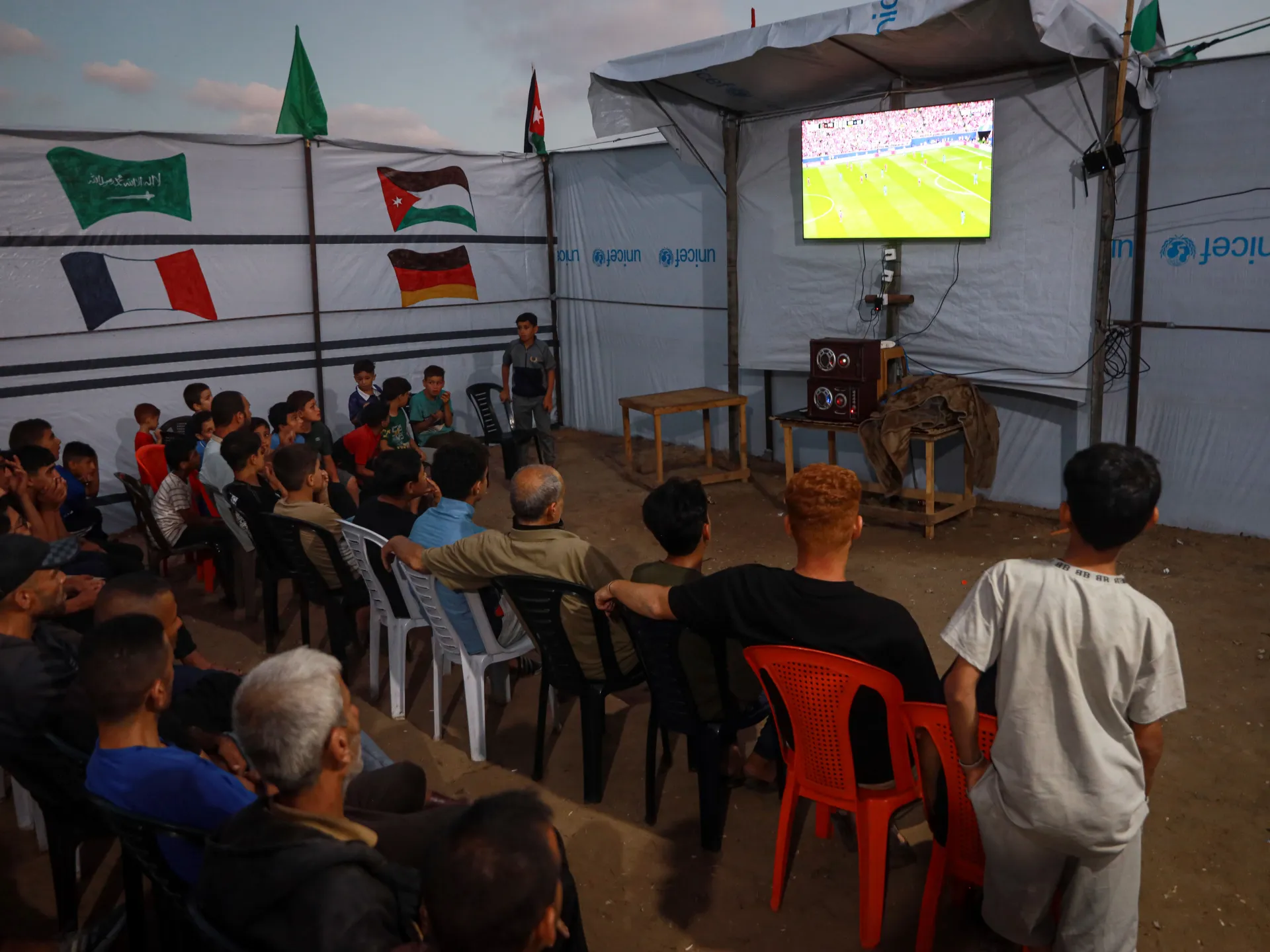
Palestinians in Gaza are experiencing significant difficulties watching the 2026 World Cup due to widespread displacement, infrastructure collapse, and security fears. Chronic shortages of electricity and internet connectivity, attributed to Israeli restrictions, have forced residents to rely on delayed broadcasts or unreliable neighbourhood generators. Traditional gathering spaces, such as the Yarmouk Stadium in Gaza City, have been repurposed as shelters for displaced families or destroyed. Despite these hardships, some residents have attempted to create makeshift viewing spaces to provide brief moments of relief, though these efforts are often marred by the trauma of war and fear of bombardment.
Sameeh Totah, a 43-year-old father of six displaced from the Zeitoun neighbourhood, describes the stark contrast between the 2022 World Cup and his current reality. Living in a tent near Yarmouk Stadium, Totah often relies on delayed broadcasts or highlights due to frequent network cuts. He recalls the 2022 tournament in Qatar as a time when electricity was available and families could gather comfortably in their homes. Now, he notes that knowing the result before watching removes the excitement, leaving only a need to ease stress in an environment with no privacy or comfort.
The war has fundamentally altered the relationship between Gazans and the sport. Yousef al-Nuaizi, a 21-year-old supporter of Portugal’s national team, reports that watching matches has become an exhausting logistical challenge. Al-Nuaizi recently walked long distances to find a cafe to watch a match, only to find it closed due to a lack of electricity. Even when he found a venue, exhaustion forced him to leave after just 40 minutes. He notes that basic necessities are scarce, with even accessing a toilet requiring an hour-long wait, and that the passion for the sport has largely disappeared among those traumatized by the conflict.
Yarmouk Stadium, once a venue for local football and cherished memories for residents like al-Nuaizi, now serves as a site of displacement. The stadium, located in an area where al-Nuaizi was forced out of his home in Shujayea, exemplifies how sports facilities across Gaza have been repurposed as shelters or destroyed. This loss of infrastructure has stripped away the social atmosphere that once accompanied the tournament, replacing celebrations with the harsh realities of living in tents and navigating a destroyed urban landscape.
Despite these conditions, some residents are attempting to recreate a sense of normalcy. Tariq al-Jadba, 26, operates a temporary cafe built from tarpaulins and wooden planks in displacement camps, using flags and football-themed artwork to mimic a tournament atmosphere. Al-Jadba notes that while Arab teams playing can temporarily revive excitement, the general passion for the sport has diminished. He and other fans watch matches under the constant fear of bombardment, relying on scarce fuel for generators to keep screens running.
The broader context of this struggle is the ongoing conflict, which Israel’s war has killed more than 73,000 Palestinians since October 2023. For residents like Totah, al-Nuaizi, and al-Jadba, the World Cup is no longer a source of joy but a reminder of what has been lost. While football remains embedded in Gaza’s culture, the ability to engage with it is severely constrained by the daily struggle for survival, security, and basic utilities.